/ Oct 21, 2026
Trending
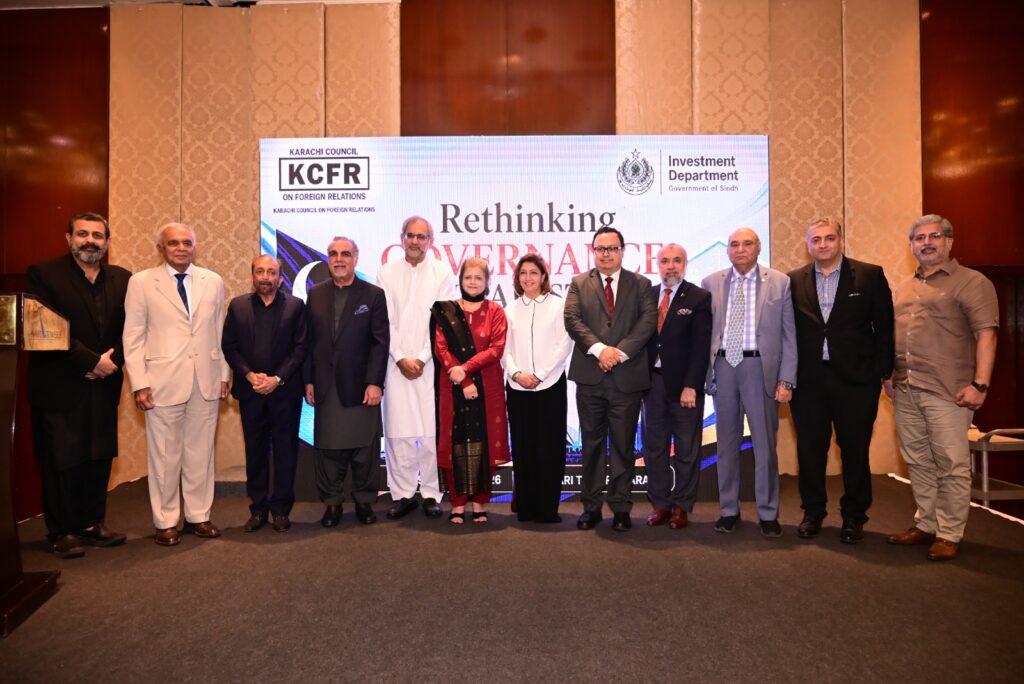
The Karachi Council on Foreign Relations (KCFR) hosted a high-level public discussion titled “Rethinking Governance in Pakistan”, bringing together political leaders, policymakers, parliamentarians, academics and analysts to examine the country’s governance challenges.
Participants discussed political, institutional and administrative obstacles affecting effective governance. They also explored possible reforms to strengthen institutions and improve public services.
The discussion focused on institutional stability, political reform, accountability and better coordination between federal and provincial governments.
Speakers stressed the need for a governance system that responds quickly to citizens’ needs and concerns.
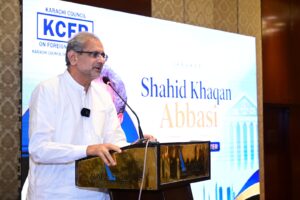
Former prime minister Shahid Khaqan Abbasi discussed Pakistan’s political and administrative landscape.
He highlighted the importance of institutional reform, democratic governance, effective public services and accountability.
Karachi Launches Town Premier League to Promote Grassroots Cricket
Abbasi said strong democratic institutions and effective state bodies could provide the foundation for political stability, better administration and sustainable development.
Nadra Panjwani, philanthropist and chairperson of KCFR, called for stronger institutional accountability and people-centred policymaking.
She said governance should go beyond the routine management of state affairs.
According to Panjwani, governments also have a responsibility to protect citizens’ welfare, dignity and prospects for a better future.
She stressed the importance of sustainable development and policies that place people at the centre of decision-making.
Former Sindh governor Imran Ismail highlighted what he described as self-created barriers to effective public administration.
He called for political reforms and greater devolution of financial powers to the grassroots level.
Ismail said a better distribution of authority and resources could improve administrative performance.
It could also help local governments address public problems more efficiently and give communities a stronger role in decision-making.
Dr Nasir Baig, a prominent analyst and host of Global Sach, linked Pakistan’s governance challenges to a growing trust gap between institutions and citizens.
He also discussed the impact of social and digital change on governance.
Baig said ordinary citizens remain one of Pakistan’s greatest strengths because of their resilience, determination and hard work.
He argued that the country needs a system that can use citizens’ abilities effectively and give them a meaningful role in decisions affecting their future.
Dr Farooq Sattar said Pakistan had reached a point where long-standing reforms could no longer be ignored.
He called for a more participatory form of democracy and said the country’s population had grown far beyond the representative capacity of existing elected institutions.
Sattar also highlighted Karachi’s untapped economic potential.
He described the current period as an important opportunity to restore confidence among international investors and unlock the city’s economic capabilities.
The seminar also attracted diplomatic representatives and foreign delegations.
Consuls general from Russia, the United States and Bangladesh attended the event, along with other political, diplomatic and public figures.
Students with visual and hearing disabilities from the Ida Rieu Welfare Association joined the speakers for a group photograph.
Members of the KCFR Board of Governors also participated in a group photograph with the speakers.
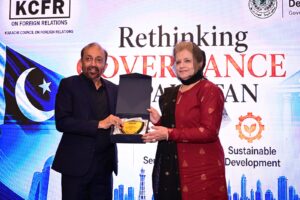
Later, KCFR Chairperson Nadra Panjwani presented commemorative gifts to Shahid Khaqan Abbasi, Imran Ismail, Dr Nasir Baig and Dr Farooq Sattar.
The seminar concluded with a joint group photograph, marking the end of a discussion focused on the future of governance, institutional reform and citizen-centred policymaking in Pakistan.













[…] Pakistan Needs Governance Reform to Strengthen Institutions, Speakers Say […]