/ Oct 21, 2026
Trending
Artificial intelligence is rapidly changing professional services, and Pakistan’s legal sector is now entering a new phase of that transformation.
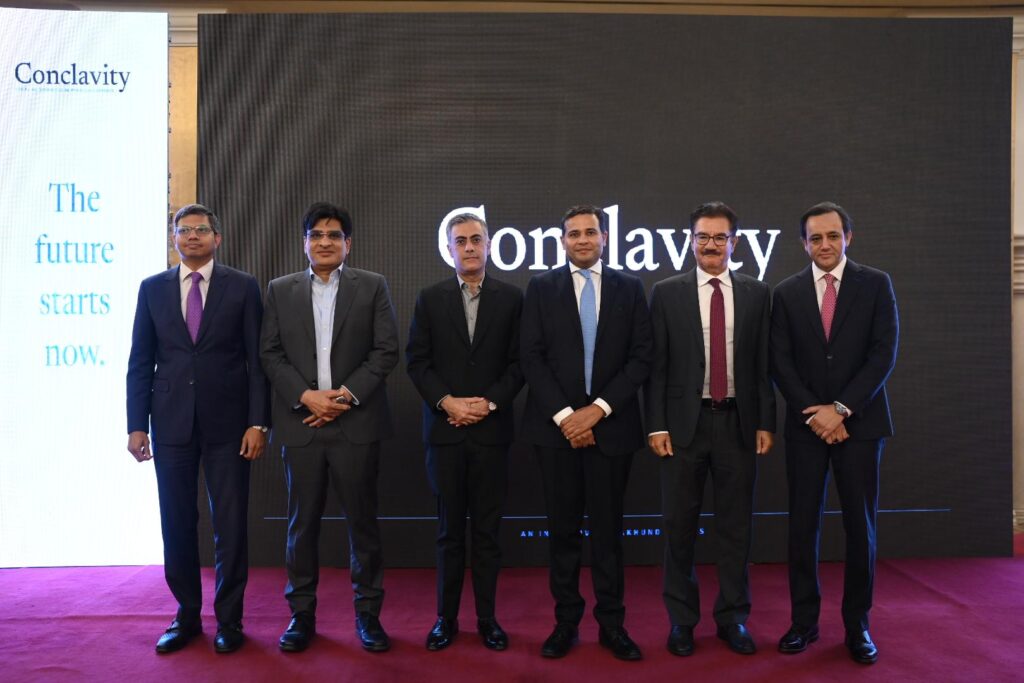
At the Mövenpick Hotel in Karachi, Rabel Z. Akhund, Managing Partner of Akhund Forbes, launched Conclavity, a legal intelligence platform designed specifically for Pakistani law.
The platform is built around Pakistani statutes and aims to help lawyers and businesses conduct legal research, draft documents and review contracts more efficiently. According to the company, the launch represents the first commercial legal AI tool of its kind developed in Pakistan by Pakistani lawyers for the country’s legal system.
The launch event brought together members of the judiciary, in-house counsel, banking and industry leaders, and clients of Akhund Forbes.
Proceedings began with a keynote address by Mr Justice Yousuf Ali Sayeed of the Sindh High Court. He discussed the limitations of artificial intelligence while also highlighting its potential to improve access to verified legal information.
Following the keynote, Rabel Akhund introduced Conclavity and demonstrated its capabilities. Nasim Beg of the Arif Habib Group later delivered the closing remarks.
SouthAsia Forum Nominates Faisal Siddiqui as Secretary General
The discussions focused on how technology could support lawyers without replacing professional judgment.
General-purpose AI systems can provide useful information across many fields. However, their broad internet-based training can create challenges for lawyers working with specific jurisdictions.
For Pakistani practitioners, those risks can include references to foreign legal doctrines, outdated legislation and inaccurate citations. In some cases, AI systems may even produce authorities that cannot be verified.
Conclavity takes a different approach. At its core is a maintained database of Pakistani legislation, including statutes, ordinances, rules and regulations.
The database also incorporates amendments to help the platform work with legislation currently in force. Furthermore, its answers can be traced to the relevant legal provisions, allowing lawyers to verify the basis of the information provided.
Conclavity is designed around three common areas of legal work: advising, drafting and reviewing.
For legal research, the platform answers questions about Pakistani law and provides statutory references. As a result, practitioners can move from a client question to the relevant legal provision more quickly.
In drafting, Conclavity can prepare initial versions of agreements, notices, board resolutions and other legal documents. Lawyers can then review and refine those drafts according to the specific circumstances of a matter.
The platform also supports contract review. It can assess contracts and other legal instruments against legislation currently in force and identify areas that may require further attention.
The developers emphasise that Conclavity is not intended to replace lawyers or provide independent legal advice.
Instead, the platform is designed to reduce the time spent on research and first drafts. This approach allows lawyers to focus more attention on professional judgment, strategy and client needs.
Security and confidentiality have also been incorporated into the platform’s design. The system is intended to provide a secure environment for the sensitive information routinely handled by legal teams.
Following the launch, Conclavity will initially be offered to a selected group of early adopters.
The first users will mainly include in-house legal teams and corporate clients. Their feedback will help guide the platform’s development before a broader release.
Additionally, future development is expected to expand the platform’s legal corpus beyond legislation.
Conclavity was developed under the leadership of Rabel Z. Akhund, Managing Partner of Akhund Forbes.
A University College London graduate and solicitor of England and Wales, Akhund previously practised at leading international law firms in London. He returned to Pakistan in 2008 and founded Akhund Forbes.
Over the past two decades, he has advised on major corporate, finance and infrastructure transactions in Pakistan. His experience in the country’s legal market has also influenced the development of Conclavity.
Akhund said the platform was developed in Pakistan specifically for Pakistani law. He added that its purpose is not to replace lawyers but to raise the standard and accessibility of legal work.
Justice Yousuf Ali Sayeed said lawyers and judges had long envisioned access to a reliable legal intelligence resource.
He also stressed that AI has important limitations. In particular, systems can present information as fact without sufficient grounding in verified sources.
According to the judge, Conclavity’s approach of linking responses to verified legal provisions could help address that risk.
Nasim Beg also highlighted the continuing importance of human interaction in legal practice. He suggested that AI could handle more routine work while allowing professionals to devote greater attention to analysis and judgment.
The launch marks a new development for Akhund Forbes, an established corporate and commercial law practice in Pakistan.
The firm advises financial institutions, corporations and governments on complex transactions, projects and disputes. It is also ranked as a top-tier firm by Chambers & Partners and The Legal 500, according to the company.
Conclavity represents an effort to bring that legal expertise into a technology platform. Rather than approaching Pakistani law from outside the profession, the product has been developed within a practising legal firm.
The firm says the platform will continue evolving through feedback from lawyers, businesses and other users. Ultimately, Conclavity aims to combine AI-assisted efficiency with verified Pakistani law and professional legal judgment.
















[…] Pakistan Launches Conclavity, a Legal AI Platform Built for Pakistani Law […]