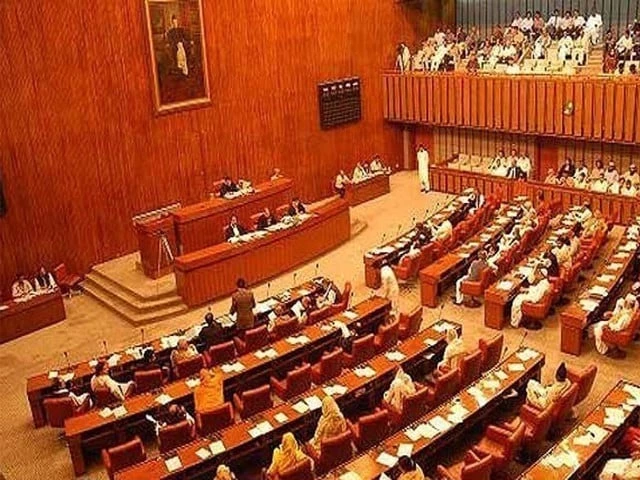
The Senate witnessed a tense exchange between the government and opposition on Tuesday over the medical treatment of PTI founder Imran Khan, with the opposition alleging that authorities had failed to comply with a Supreme Court directive. The dispute over Imran Khan treatment intensified after PTI senators sought permission to move a resolution calling for his treatment at Shifa International Hospital.
Presiding Officer Senator Shahadat Awan blocked the proposed resolution, ruling that the matter was sub judice. He said senators could raise the issue as a point of order but could not seek a formal resolution while the matter remained before the courts.
PTI Senator Ali Zafar argued that the government was constitutionally bound to implement Supreme Court decisions. Referring to Article 190 and other constitutional provisions, he said the apex court had ordered on August 18 that Imran Khan be shifted to Shifa International Hospital and that a medical board be established.
Zafar alleged that neither requirement had been fulfilled. He further claimed that the necessary cardiac examination facilities were unavailable at the Pakistan Institute of Medical Sciences (PIMS), accusing the government of altering the court’s directions.
Government rejects opposition’s allegations
Prime Minister’s Adviser Rana Sanaullah rejected the opposition’s claims and said judicial orders must be respected. However, he argued that determining whether a judgment had been properly implemented was ultimately the responsibility of the court.
Sanaullah said doctors had assessed Imran Khan’s condition as satisfactory before he was returned to prison. He maintained that authorities had decided at the last moment to move the PTI founder to PIMS because of the prevailing law and order situation.
According to the adviser, the government nevertheless ensured that Imran was examined by qualified doctors at the government hospital.
He also argued that the Supreme Court’s direction concerning treatment at a private hospital did not establish an applicable legal provision or precedent. The court, he said, would determine on September 16 whether its order had been followed.
PTI questions extent of medical examinations
PTI Senator Mushaal Yousafzai challenged the government’s account of Imran Khan’s medical assessment, questioning whether he had undergone blood tests or CT angiography.
She said officials were repeatedly referring to his blood pressure while, in her view, providing insufficient information about other examinations.
Yousafzai rejected claims that the PTI was using Imran’s health for political purposes. She said the party was raising the issue to place information before parliament and the public.
She also disputed the government’s suggestion that the Supreme Court judgment was unclear, arguing that the order contained no ambiguity about the treatment arrangements.
Opposition raises comparison with Nawaz Sharif
Senator Azam Swati criticised what he described as selective implementation of government decisions, referring to medical treatment and travel arrangements previously provided to former prime minister Nawaz Sharif.
Opposition Leader Allama Raja Nasir Abbas urged the government and Prime Minister Shehbaz Sharif to demonstrate political maturity and settle the dispute through dialogue.
He said Imran Khan’s supporters were Pakistani citizens and called for a political approach to resolving the continuing confrontation.
The dispute comes as the Supreme Court remains the central forum for determining whether the government’s actions complied with its August 18 directive.
Senate turns to Iran-Pakistan gas pipeline
The Senate also debated gas shortages, particularly in Balochistan, alongside the stalled Iran-Pakistan gas pipeline project.
Senator Raja Nasir Abbas argued that Pakistan should seek relief from US sanctions to allow progress on the pipeline. He said the project could have provided significant support to Pakistan’s industrial sector had it been completed earlier.
Federal Minister Ali Pervaiz Malik said international sanctions had prevented meaningful progress on the project. He added that Pakistan and Iran were continuing discussions in a friendly environment to explore possible solutions.
Malik said Iran had completed substantial work on its side of the project, while Prime Minister Shehbaz Sharif had established a steering committee to examine the legal and other challenges surrounding the pipeline.
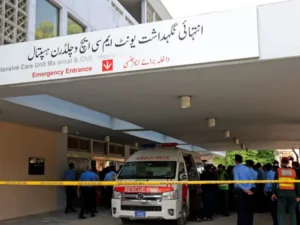
PIMS Hospital Fire Kills 14 Newborns as PM Orders Strict Probe
Medicine prices raise fresh concerns
The Senate also discussed rising medicine prices and delays in approving prices for essential drugs.
Senator Zeeshan Khanzada said approval for the prices of around 40 important and life-saving medicines remained pending. He warned that delays, combined with the rising cost of imported active pharmaceutical ingredients and higher taxes, were putting pressure on both patients and pharmaceutical companies.
Khanzada cautioned that prolonged delays could contribute to shortages of essential medicines.
Health Minister Mustafa Kamal defended the government’s recent progress in the pharmaceutical sector, saying Pakistan had increased medicine exports to 52 countries.
He said agreements worth $300 million had been signed following a conference with China and added that a World Health Organisation inspection was scheduled for October 1.
Kamal said successful completion of the inspection could help Pakistani pharmaceutical products gain access to markets in around 100 countries.
The minister also said prices for 35 medicines had been fixed during the previous month, while 52 cases had been finalised by the relevant committee and forwarded to the cabinet.
The Senate later approved a resolution paying tribute to the Holy Prophet Muhammad (PBUH) and highlighting his life and teachings ahead of Eid Milad-un-Nabi.
The sitting was subsequently adjourned until 10:30am on Friday.








[…] Senate Clash Deepens Over Imran Khan Treatment as Government Defends Its Position […]