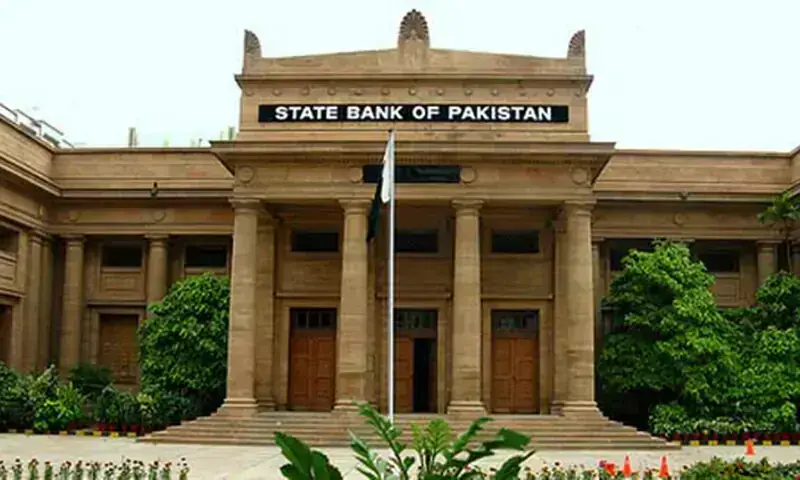
State Bank of Pakistan (SBP) Governor Jameel Ahmad has said prudent economic policies and structural reforms have strengthened Pakistan’s ability to withstand domestic and external shocks.
According to an SBP statement issued on Saturday, Ahmad discussed the country’s improving economic conditions and outlook with international investors during the IMF-World Bank Annual Meetings in Bangkok, Thailand, held from October 12 to 17.
Senior executives from leading global financial institutions attended the meetings. These included JPMorgan, Citibank, Jefferies, Deutsche Bank, Barclays, Bank of America, MSCI, Standard Chartered and Mitsubishi UFJ Financial Group.
The governor also met representatives of bilateral and multilateral partners, other central banks and international credit rating agencies.
Inflation Eases and Economic Growth Recovers
Ahmad said Pakistan had made progress in stabilising its economy despite external challenges.
Inflation fell sharply from elevated levels in FY2023 and moved close to the target range in FY2026, despite a significant oil price shock.
Meanwhile, real gross domestic product (GDP) growth recovered gradually after contracting in FY2023. Growth reached 3.7% in FY2026, while the SBP projected an expansion of 3.5% to 4.5% in FY2027.
Pakistan’s Outstanding Car Loans Rise to Rs407 Billion Despite Sales Slowdown
These developments, according to the governor, reflect the impact of economic stabilisation measures and ongoing structural reforms.
Foreign Exchange Reserves Rise to $21.5 Billion
Pakistan’s foreign exchange position has also improved significantly, Ahmad said.
Official foreign exchange reserves recovered from less than $3 billion in February 2023 to $21.5 billion as of October 9. At the same time, the SBP’s forward liabilities declined from more than $5.7 billion to less than $1 billion.
The central bank’s foreign currency purchases played a major role in rebuilding reserves. Ahmad noted that the country’s external debt stock had increased only marginally over the past three years.
An almost balanced current account in FY2026 also supported foreign exchange purchases. In addition, regulatory reforms targeting exchange companies and measures encouraging remittances through formal channels improved liquidity in the interbank foreign exchange market.
“Forex purchases are expected to continue, with the current account deficit projected to remain within 0-1pc of GDP in FY27,” he said.
Fiscal Position Strengthens
Ahmad also highlighted improvements in Pakistan’s public finances.
The country recorded a primary fiscal surplus for the third consecutive year in FY2026. Consequently, the public debt-to-GDP ratio has continued to decline.
A primary surplus occurs when government revenues exceed non-interest expenditures. Maintaining such a surplus can help reduce borrowing requirements and support debt sustainability.
IMF Agreement Supports Investor Confidence
The SBP governor said the Staff-Level Agreement with the International Monetary Fund (IMF) reflected Pakistan’s continued commitment to its economic reform programme.
According to Ahmad, these reforms have helped strengthen investor confidence and contributed to upgrades in Pakistan’s sovereign credit ratings.
They have also supported the country’s access to international capital markets despite challenging global economic conditions.
Pakistan’s economic outlook will continue to depend on maintaining policy discipline, sustaining foreign exchange reserves, controlling inflation and implementing reforms. The government and central bank will also need to manage external risks to preserve the gains achieved so far.











[…] Pakistan’s Economy More Resilient After Reforms, Says SBP Governor […]