Iranian President Masoud Pezeshkian said Tehran would immediately reciprocate if the United States returned to its commitments under an interim agreement reached in June, as the Hormuz Crisis deepened following a fresh exchange of attacks between the two countries.
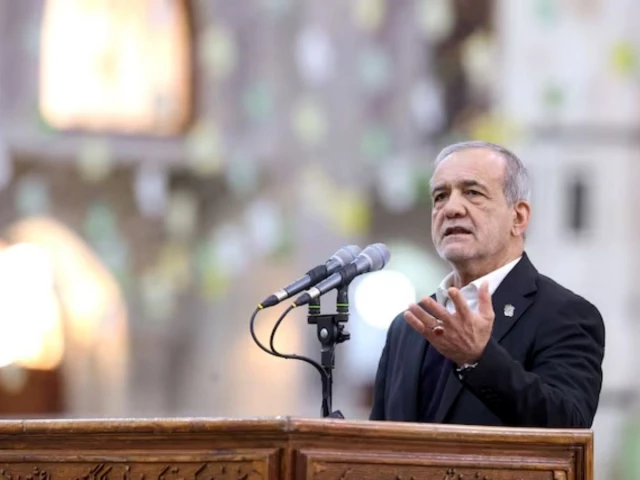
Speaking at the Shanghai Cooperation Organisation summit in Bishkek on Tuesday, Pezeshkian said Iran remained prepared to respond if Washington restored its obligations under the memorandum of understanding. His comments came after the United States struck Larak Island and Iran launched retaliatory attacks on two US military bases in Jordan.
Pezeshkian was referring to an interim arrangement negotiated between Tehran and Washington in June as part of efforts to halt a war that began with US and Israeli strikes on Iran on February 28. The agreement subsequently broke down amid disagreements over how its provisions should be implemented.
Iran has repeatedly linked freedom of navigation through the Strait of Hormuz to Washington’s compliance with the agreement. The strategically important waterway is a major route for global oil shipments, making any disruption a significant concern for energy markets.
Iran says economy can withstand sanctions
Iran’s Central Bank Governor Abdolnasser Hemmati meanwhile sought to reassure the public and international markets that the country had sufficient foreign currency despite intensified US sanctions and mounting economic pressure.
Addressing US President Donald Trump, Hemmati said Iran possessed adequate foreign-currency resources. He also said the central bank was prepared to inject $2 billion into the foreign exchange market, according to Iran’s semi-official Tasnim news agency.
Hemmati rejected claims that Iran’s economy was collapsing, saying the country continued to receive foreign-currency revenues and had domestic reserves and other resources. He said some details could not be disclosed for security reasons.
The central bank governor attributed the recent decline in the Iranian rial largely to psychological pressures and dismissed suggestions that the country had entered hyperinflation.
He acknowledged that unemployment had increased following the conflict and damage to infrastructure. Small and medium-sized businesses, he said, would receive priority for financial support during the second half of the Iranian calendar year.
Tehran warns against further US attacks
Iran’s military leadership issued a separate warning that any location used to launch attacks against Iranian territory would become a target.
The Armed Forces General Staff and the Khatam al-Anbiya Central Headquarters said Washington was continuing to use the territory, airspace and military facilities of regional countries for operations against Iran.
The statement said Tehran respected the sovereignty of neighbouring states but would not accept further aggression. Iranian authorities warned that any additional US attack would trigger a significantly stronger response.
The statement pointed to recent operations by the Islamic Revolutionary Guard Corps and the Iranian army as evidence of Iran’s ability to retaliate.
Iranian military authorities also called on the United States to leave the region and warned countries facilitating American military operations against Iran that they could face retaliation.
Washington considers limited action around Hormuz
The United States is reportedly considering limited military strikes aimed at preventing Iran from rebuilding radar and missile systems near the Strait of Hormuz.
According to a report by Axios, US Central Command developed a potential plan over the previous week, with Defence Secretary Pete Hegseth supporting the proposal. However, the plan had not received presidential approval before the latest exchange of attacks.
US officials said the reported objective would be to reduce the threat posed to commercial shipping, US Navy vessels and military aircraft operating around the strategic waterway.
The latest Iranian attacks on US military positions in Jordan could influence President Donald Trump’s decision, according to officials cited in the report.
Trump has meanwhile warned that the United States would respond forcefully to Iranian attacks.
Tanker hit near Strait of Hormuz
Tensions around the waterway intensified further after three unidentified projectiles struck a tanker as it was leaving the Strait of Hormuz near Oman.
The United Kingdom Maritime Trade Operations agency said the incident occurred about 17 nautical miles east of Khasab while the vessel was completing its outbound transit.
No casualties or environmental damage were reported. Authorities launched an investigation and advised vessels operating in the area to exercise caution and report suspicious activity.
The incident adds another layer of uncertainty for international shipping at a time when the strategic waterway is already at the centre of the US-Iran confrontation.
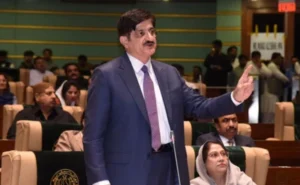
Sindh Unity Firm as Murad Ali Shah Rejects Calls for Division
Iran accuses EU of following Washington
Iran also accused the European Union of abandoning its independence by supporting US sanctions against Tehran.
Foreign Ministry spokesman Esmaeil Baghaei criticised the bloc for backing American economic measures while maintaining its own Blocking Statute, legislation designed to protect European companies from certain extraterritorial foreign sanctions.
Baghaei questioned how the EU could oppose the extraterritorial application of foreign sanctions in principle while supporting Washington’s measures against Iran.
He argued that European backing for US pressure was incompatible with calls for regional de-escalation and stability.
Iran’s criticism came after renewed fighting around Larak Island and Iranian retaliatory attacks against locations used by US forces in Jordan and the United Arab Emirates.
Trump has separately intensified his maximum-pressure campaign against Tehran, threatening severe economic consequences for countries and institutions that provide Iran with financial support.
Trump claims Hormuz remains open
Despite the escalating military confrontation, Trump said the Strait of Hormuz remained in what he described as “extremely good shape”.
Speaking at the White House, Trump claimed that US naval assistance had helped around 30 ships pass through the waterway each night.
He argued that the continued movement of oil tankers had helped prevent oil prices from rising as sharply as some analysts had expected.
Trump also described Iran as a “failed nation”, citing severe inflation, economic difficulties and problems within its military structure. He claimed that Iran’s currency, armed forces and leadership had suffered major damage during the conflict.
Iran has rejected Washington’s claims about the state of its economy, while its central bank says it retains sufficient foreign-currency resources to support the market.
With military strikes, sanctions and threats surrounding one of the world’s most important energy routes, the confrontation between Washington and Tehran remains a major risk to regional security and global oil supplies.







[…] Iran-US Tensions Rise as Tehran Offers Deal and Washington Weighs Strikes […]