US-Iran Talks entered another uncertain phase on Tuesday as conflicting statements from Washington and Tehran cast doubt over the status of negotiations, while fresh security concerns in the Strait of Hormuz and political tensions across the region added to fears of further instability.
US President Donald Trump said negotiations with Iran were underway and described the current diplomatic effort as Tehran’s “last chance” to reach an agreement. Speaking at the White House, Trump said discussions were taking place at the request of regional partners, including Saudi Arabia, the United Arab Emirates and Qatar. He maintained that the United States remained open to diplomacy after recently postponing a large-scale military operation against Iran.
Iran, however, denied that any direct negotiations with Washington were taking place. Foreign Ministry spokesman Esmail Baghaei said no meetings had been scheduled and confirmed that Iranian officials had no plans to travel abroad for talks. He added that the only ongoing discussions involved Oman and focused on managing navigation through the Strait of Hormuz.
More than 100 words into the latest developments, US-Iran Talks remain overshadowed by growing security concerns after a cargo vessel reported being struck by an unidentified projectile near the Strait of Hormuz. The United Kingdom Maritime Trade Operations (UKMTO) said the vessel was sailing about 20 nautical miles northeast of Khasab, Oman, when it transmitted a distress message. Authorities have launched an investigation, while vessels operating in the area have been advised to remain vigilant. No group has claimed responsibility for the incident.
Shipping activity through the strategic waterway also remained limited. Market data showed only six commercial vessels transited the Strait of Hormuz on Monday, underscoring continuing concerns over maritime security along one of the world’s busiest energy corridors.
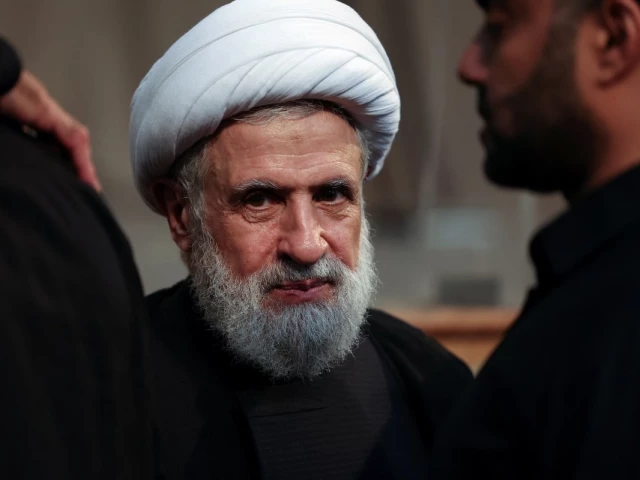
Meanwhile, Hezbollah Secretary-General Naim Qassem criticised Lebanon’s direct negotiations with Israel, arguing that they had produced only political concessions without delivering lasting security. Speaking during an Arbaeen commemoration in Baalbek, Qassem also criticised Lebanese President Joseph Aoun, accusing him of abandoning a neutral leadership role. He further claimed that only the Iran-US memorandum of understanding had succeeded in halting Israeli attacks and urged Lebanese leaders to engage directly with Hezbollah rather than relying on Washington.
Wafflix Owner Death Mystery Deepens as CCTV Reveals Mir Raza Ali’s Final Hours
Iranian President Masoud Pezeshkian reiterated that Tehran had no intention of expanding regional conflict but stressed that Iran would firmly defend its sovereignty, territorial integrity and national interests against any external threat.
Regional diplomacy also intensified as Qatar called for greater coordination among Gulf Cooperation Council members to implement the US-Iran memorandum of understanding. During separate discussions with senior officials from Saudi Arabia, the United Arab Emirates, Kuwait, Oman and Bahrain, Qatari Prime Minister and Foreign Minister Sheikh Mohammed bin Abdulrahman Al Thani emphasised the importance of dialogue, regional cooperation and ensuring freedom of navigation through the Strait of Hormuz.
At the same time, Saudi energy giant Aramco reported a sharp rise in second-quarter earnings as higher global oil prices boosted revenues. The company announced net income of $32.7 billion, a 44 percent increase from the same period last year, attributing the strong performance to supply disruptions linked to regional tensions. Aramco’s first-half earnings reached $65.2 billion, while Chief Executive Amin H. Nasser said the company had maintained uninterrupted production despite challenging conditions.
Iran also issued fresh warnings regarding maritime security. Senior military adviser Mohsen Rezaei claimed Tehran had previously prepared strikes against three sites in Ukraine before cancelling the operation following what he described as an apology from Kyiv. He further warned that Iran would not permit foreign naval vessels to use maritime routes outside those recognised by Tehran, saying any hostile vessel violating its designated routes could become a military target.
Financial markets reacted cautiously to the evolving situation. Brent crude prices initially fell on hopes that diplomacy could ease tensions, while global stock markets posted gains. However, analysts warned that uncertainty surrounding negotiations and continued security incidents in the Gulf could quickly reverse market sentiment.
Observers say the dispute over the Strait of Hormuz remains one of the most significant obstacles to any broader agreement. While Washington insists previous understandings require unrestricted maritime access, Tehran maintains that it retains sovereign authority over shipping through the strategic waterway.
With diplomacy continuing alongside heightened military preparedness and ongoing regional tensions, analysts believe the coming days could prove critical in determining whether negotiations succeed or the crisis enters another period of confrontation.







[…] US-Iran Talks Face Fresh Uncertainty as Hormuz Tensions Persist and Hezbollah Criticises Lebanon’… […]