The KSE-100 Index came under renewed selling pressure on Wednesday as fresh US-Iran strikes pushed oil prices higher and heightened concerns about supply disruptions and prolonged instability in the Middle East.
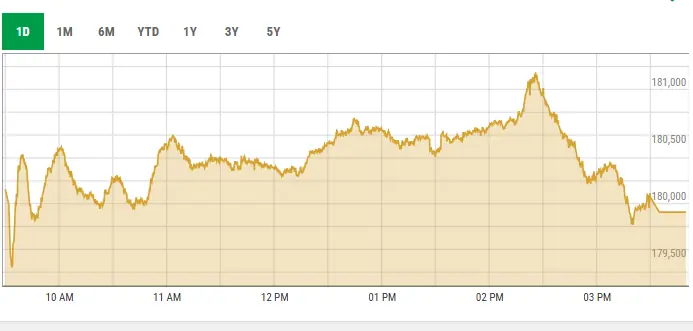
The benchmark index fell 1,250.34 points, or 0.71%, to 175,216.65 by 1:14pm, with selling pressure visible across automobiles, cement, commercial banks, exploration companies, power generation and oil marketing companies.
The market opened sharply lower as investors reacted to the latest escalation in the Middle East and its potential impact on global energy markets. By 9:34am, the index had dropped 1,663.16 points, or 0.94%, to 174,803.83.
The index moved between an intraday high of 175,841.83 and a low of 174,701.13, compared with the previous close of 176,466.99.
Oil Prices Add to Market Pressure
Oil prices extended their gains in early Wednesday trading after the United States and Iran exchanged strikes overnight. The latest escalation intensified concerns that disruption to regional energy supplies could persist, while hopes for a quick easing of tensions appeared to weaken.
The increase in international oil prices has raised fresh concerns for Pakistan, which remains heavily dependent on imported energy. Investors are assessing how higher crude prices could affect the country’s import bill, inflation and the operating costs of businesses.
The renewed geopolitical uncertainty has therefore added another layer of pressure to an already cautious market.
Stingrays Draw Crowds at Karachi’s Sea View as Experts Warn of Decline
Heavy Selling Hits Key Sectors
Selling was broad-based at the Pakistan Stock Exchange, with several major sectors coming under pressure as investors reassessed the economic implications of the Middle East crisis.
Automobile, cement and banking stocks faced selling alongside exploration and production companies, power generators and oil marketing firms.
The decline reflected concerns that prolonged geopolitical tensions could increase energy costs and place additional pressure on corporate earnings. Higher fuel and transportation expenses could also affect businesses and consumers if elevated oil prices persist.
Despite the decline in the KSE-100 Index, trading activity remained relatively strong. Around 153.68 million shares changed hands during the session, while the total traded value reached Rs10.82 billion.
Investors Watch Regional Developments
Market participants are now closely monitoring developments between Washington and Tehran, particularly any developments that could affect oil supplies and shipping routes in the region.
For Pakistan, a sustained increase in global oil prices could have wider economic consequences, including higher import costs, inflationary pressure and increased expenses for energy-intensive companies.
The latest market decline highlights the sensitivity of Pakistan’s equities to external geopolitical shocks. Investors are likely to remain cautious until there is greater clarity over the duration and economic impact of the renewed US-Iran confrontation.