/ Sep 10, 2026
Trending
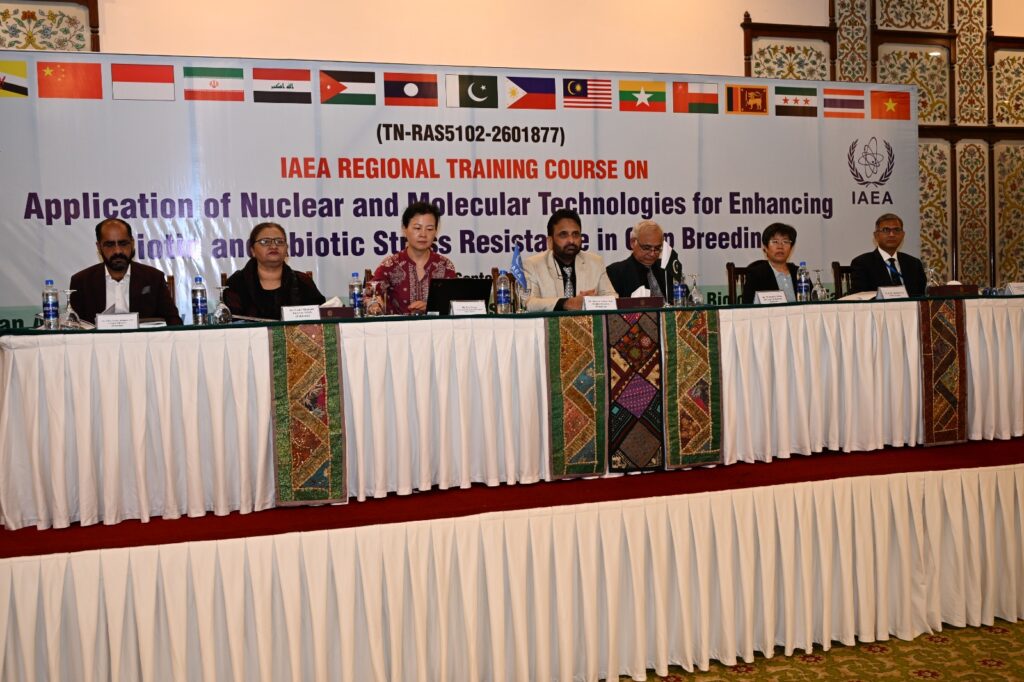
A two-week regional training course on climate-resilient crop breeding has concluded at the Nuclear Institute for Agriculture and Biology (NIAB) in Faisalabad. The International Atomic Energy Agency (IAEA) organised the course with NIAB, a constituent institution of the Pakistan Atomic Energy Commission (PAEC).
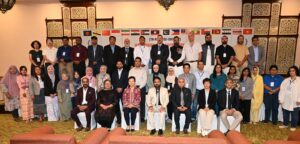
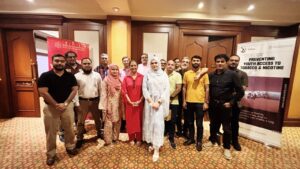
The course focused on the application of nuclear and molecular technologies to improve crop resistance to biological and environmental stresses. It brought together 34 participants from 17 countries, including six participants from Pakistan.
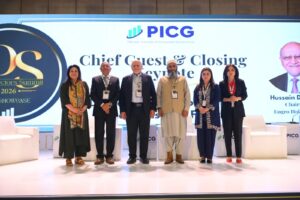
Dr. Shakeel Abbas Rofi, Member (Science) at PAEC, attended the concluding ceremony as chief guest. He congratulated the participants and highlighted PAEC’s role in Pakistan’s socio-economic development through peaceful nuclear applications.
He said PAEC’s specialised agriculture and biotechnology institutes are working to develop climate-resilient crops, support sustainable farming and strengthen national food security.
Dr. Rofi said PAEC operates four specialised institutes in agriculture and biotechnology: NIA, NIAB, NIFA and NIBGE. These institutions support research aimed at addressing climate-related challenges in agriculture.
He also highlighted PAEC’s wider contribution to Pakistan. According to him, the commission operates 21 cancer hospitals that serve nearly 80% of the country’s cancer patients.
PAEC’s six nuclear power plants also contribute around 3,500 megawatts to the national electricity grid, he said.
Dr. Rofi further pointed to PAEC’s role in advanced research and human resource development through institutions such as PIEAS, KINPOE, CHASCENT and PINSTECH.
He noted that NIAB serves as an IAEA Collaborating Centre for nuclear techniques in food and agriculture. The status reflects the institute’s expertise and longstanding cooperation with international partners.
The course addressed growing threats to agriculture, including irregular rainfall, rising temperatures, salinity, pests and diseases.
Participants studied nuclear and molecular techniques that can help breeders develop stronger crop varieties. The training included mutation breeding and molecular tools for improving resistance to drought, salinity, pests, diseases and temperature extremes.
The programme also covered modern approaches such as molecular screening, genotyping and phenotyping. Participants learned about marker-assisted selection, genome editing, functional genomics, association mapping and DNA sequencing.
Experts also introduced big-data analytics and artificial intelligence for precision breeding.
The climate-resilient crop breeding training combined lectures with practical laboratory sessions and institutional visits at NIAB and the National Institute for Biotechnology and Genetic Engineering (NIBGE).
Participants gained hands-on experience in DNA extraction and analysis, genotyping-by-sequencing, mutation breeding, molecular screening, metabolite analysis and association mapping.
Prof. Dr. Yunbi Xu and Dr. Huijun Guo from the Institute of Crop Sciences at the Chinese Academy of Agricultural Sciences supported the programme as international experts.
Pakistani scientists and other resource persons also contributed to the training.
The course took place under IAEA Technical Cooperation Project RAS5102, titled “Promoting Resilient and Sustainable Agrifood Systems through Innovative Nuclear and Related Techniques.”
IAEA Programme Management Officer Ms. Lin Yang congratulated participants on completing the programme.
She thanked the Government of Pakistan and PAEC for their support. She also recognised NIAB’s contribution as an IAEA Collaborating Centre.
Yang praised the participants for their active involvement in the interactive training programme.
Established under PAEC in 1972, NIAB has more than five decades of experience in agriculture and biological research.
Its work has received IAEA/FAO Outstanding Achievement Awards in 2015 and 2021. Its Bio-saline Agriculture Technology has also reached more than 12 countries through cooperation with the IAEA.
Dr. Mian Abdur Rahman Arif, Course Director and Principal Scientist at NIAB, said the programme brought different techniques and approaches together under one training framework.
He said the approach helped participants understand how these technologies can work together in practical crop-breeding programmes.
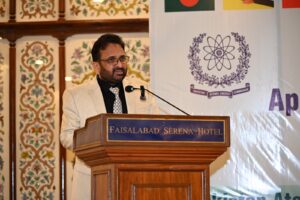
Dr. Uszma Maqbool, Director NIAB, delivered the vote of thanks. She acknowledged the contributions of the IAEA, international experts, resource persons, participants and the organising team.
During the ceremony, Dr. Rofi distributed certificates among the participants.
The successful completion of the course highlights the longstanding cooperation between PAEC and the IAEA in the peaceful use of nuclear science and technology.
Through institutions such as NIAB, PAEC continues to share scientific expertise and strengthen international cooperation. These efforts also support climate resilience, sustainable agriculture and food security in Pakistan and the wider region.

Copyright © 2026 99News. All Rights Reserved.







[…] IAEA-PAEC Training Course on Climate-Resilient Crop Breeding Concludes at NIAB […]