The Iran-US conflict intensified on Monday after the United States carried out its ninth consecutive night of air strikes against Iranian military targets. Iranian media reported explosions in several cities as both sides exchanged fresh attacks, raising fears of a wider regional conflict and renewed disruption to global energy supplies.
The US military said the latest operation targeted facilities used to support attacks on commercial shipping and maritime traffic in the Strait of Hormuz. According to US Central Command (CENTCOM), the strikes hit military command centres, air defence systems, coastal surveillance sites, missile and drone launch facilities, maritime assets and communications networks.
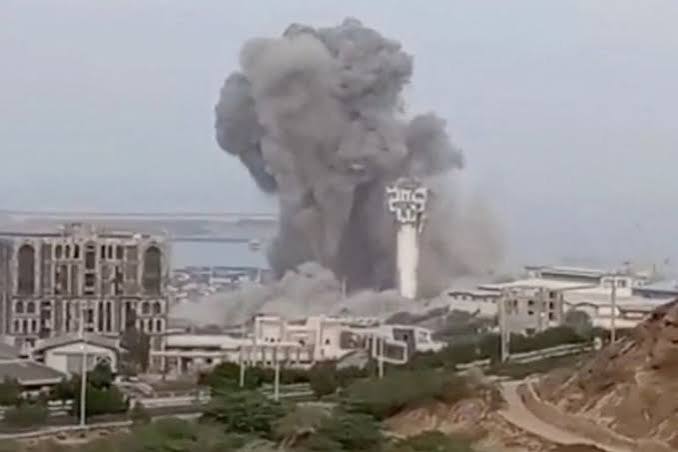
Iranian media reported explosions in Sirik, Jask, Tabriz, Chabahar, Konarak, Bandar Mahshahr and Bandar Imam Khomeini. State broadcaster IRIB and the Fars News Agency said air defence systems responded in several southern and southeastern cities as explosions echoed across the country.
WhatsApp Username: New Reservation Feature Rolls Out to Selected Users
Reports also indicated explosions near Khvormuj in Bushehr province, while Tabriz in northwestern Iran came under attack for the first time since the latest escalation began.
The latest strikes followed the confirmation that a third US service member had died in recent days. The deaths came as fighting continued despite the collapse of a month-old ceasefire agreement.
Iran responded by launching missile and drone attacks targeting US military assets in the region. The Islamic Revolutionary Guard Corps (IRGC) said it struck US aircraft at Aqaba Airport in Jordan, targeted facilities at Muwaffaq Salti Air Base in Azraq and attacked the Ali Al Salem Air Base in Kuwait. Authorities in Bahrain also activated air raid sirens following the attacks.
Speaking in Washington, President Donald Trump said US forces had struck Iran “very hard” in response to the deaths of American service members.
“We hit them very hard again tonight,” Trump said, adding that the operation honoured the US troops killed in Jordan and Iraq.
Trump also repeated that the United States would not allow Iran to obtain a nuclear weapon.
Meanwhile, US Secretary of State Marco Rubio said Washington remained open to diplomacy but insisted that any negotiations must produce meaningful results. He also urged allied nations to help safeguard shipping through the Strait of Hormuz, one of the world’s busiest energy corridors.
The maritime confrontation continued as both countries increased pressure on commercial shipping. Washington said it was enforcing restrictions on Iranian ports, while Tehran warned vessels against using routes through the Strait of Hormuz that it considered unsafe.
The IRGC claimed two oil tankers exploded while attempting to pass through what it described as an unsafe shipping corridor. It warned that the route would remain unsafe for oil and petrochemical shipments as long as US military operations continued. However, US officials disputed the Iranian account.
CENTCOM said it had redirected six commercial vessels and disabled another ship to enforce what it described as full compliance with its maritime restrictions.
The conflict, which began after US and Israeli strikes on Iranian targets on 28 February, has killed thousands of people, mostly in Iran and Lebanon, while disrupting energy markets and increasing concerns over global inflation and regional stability.








[…] Iran-US: US Launches Ninth Consecutive Night of Strikes as Hormuz Tensions Deepen […]