News Elementor – News WordPress Theme 2023. Powered By BlazeThemes.
World
Hormuz Crisis: US and Iran Exchange Fresh Strikes as Gulf Tensions Escalate
July 13, 2026
Hormuz Crisis intensified on Monday as the United States and Iran exchanged fresh military strikes across the Gulf, threatening regional stability, disrupting shipping through the Strait of Hormuz and undermining ongoing diplomatic efforts to secure a lasting ceasefire.
The latest escalation marked the largest exchange of attacks since the ceasefire reached in April, with both sides expanding military operations while negotiations continued through regional mediators.
Iran announced it would suspend compliance with the Islamabad Memorandum of Understanding, signed in June to halt the fighting, if Washington failed to fulfil its commitments.
Foreign Ministry spokesman Esmaeil Baqaei said the agreement was facing a serious crisis.
“There is no doubt that this document is in crisis,” Baqaei said, adding that Tehran would continue responding whenever the other side failed to honour its obligations.
Despite the heightened tensions, he confirmed that Iran remained engaged in talks with mediators from Qatar, Pakistan and Oman to prevent further escalation.
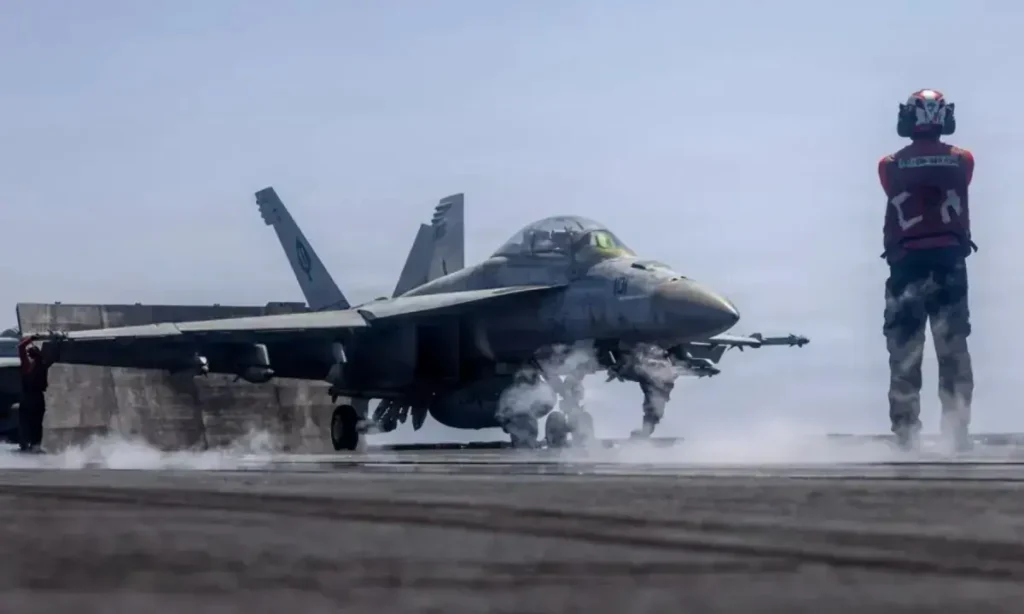
The US Central Command (Centcom) said American forces carried out precision strikes on dozens of Iranian military targets overnight. The operation involved aircraft, naval vessels and drones targeting facilities that Washington said supported attacks on international shipping through the Strait of Hormuz.
Centcom said the operation began at 2am Pakistan time on Sunday, less than 24 hours after another wave of strikes that reportedly hit 140 Iranian military targets.
Iranian state media reported that the latest US attacks killed two people and struck multiple locations across southern and western Iran, including Bandar Abbas, Qeshm Island, Khuzestan province and a water pumping station in Mahshahr.
Iran’s Foreign Ministry condemned the attacks, saying they had returned insecurity to the Strait of Hormuz and undermined diplomatic efforts aimed at restoring regional peace.
The renewed fighting centred on the strategically important Strait of Hormuz, a vital route for global energy supplies. Iran’s Islamic Revolutionary Guard Corps (IRGC) claimed the waterway had been closed, while the United States maintained that commercial shipping remained free to transit the strait.
Growing concerns over supply disruptions pushed global oil prices higher, with US benchmark West Texas Intermediate (WTI) crude rising by as much as 4.5 per cent to nearly 74 dollars per barrel.
Pakistan continued diplomatic efforts to ease the crisis. Deputy Prime Minister and Foreign Minister Ishaq Dar spoke with Iranian Foreign Minister Abbas Araghchi on Sunday, calling for immediate de-escalation and renewed dialogue.
The IRGC also announced missile and drone attacks on military facilities in Bahrain, Jordan and Kuwait that host US forces.
According to Iranian state media, missiles struck Prince Hassan Air Base in Jordan, while separate attacks targeted Bahrain’s Sheikh Isa Air Base and the Ali Al Salem and Ahmad Al Jaber military bases in Kuwait.
The IRGC claimed the strikes damaged fuel storage facilities and ammunition depots and warned that continued US military operations in the Strait of Hormuz would increase risks to global oil and gas markets.
Authorities across the Gulf responded quickly. Bahrain activated air raid alerts and said its forces intercepted several missiles and drones. Kuwait’s military reported intercepting hostile aerial targets, while Jordan said its air defence systems destroyed four Iranian missiles.
The escalation followed an Iranian attack on a commercial vessel in the Strait of Hormuz on Sunday, forcing the crew to abandon the ship after it caught fire.
Iran later declared that the Strait of Hormuz would remain closed until what it described as the end of American military intervention in the region. The United States rejected the claim and insisted that the waterway remained open for lawful international navigation.
Shipping activity through the Strait of Hormuz has already slowed significantly. Industry data showed tanker traffic fell to its lowest level in two months as shipping companies reduced movements and many vessels switched off public tracking systems because of security concerns.
Maritime analysts warned that any prolonged disruption to shipping through the Strait of Hormuz could tighten global energy supplies, increase oil prices and create further instability in international energy markets.