US President Donald Trump’s new executive order on childhood vaccines has sparked criticism from doctors and public health experts, who say the policy could confuse parents and leave more children vulnerable to preventable diseases.
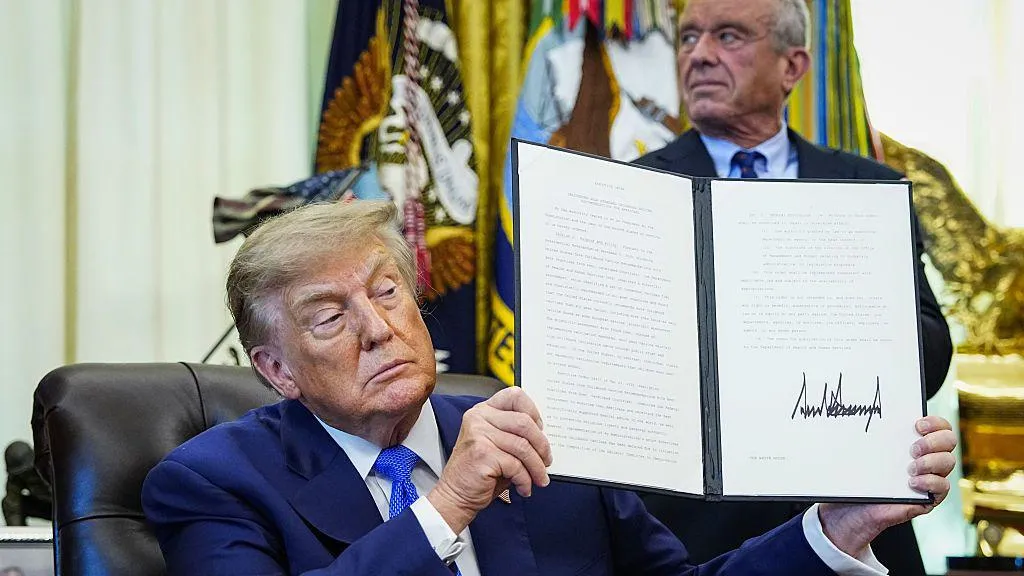
Trump signed the order on Monday. It calls for routine federal recommendations covering 11 diseases instead of the previous 18. Vaccines for diseases including flu, Covid-19, hepatitis A and B, rotavirus, RSV and bacterial meningitis would move into high-risk or shared-decision categories.
The order also directs officials to pursue separate measles, mumps and rubella vaccines instead of the combined MMR shot. However, individual measles, mumps and rubella vaccines are not currently licensed in the United States. Experts say developing and approving them could take years.
Questions over the 72-shot claim
During the signing ceremony, Trump claimed American children could receive as many as 72 vaccine injections.
Health experts say that figure requires important context. It can count repeated annual doses, including flu and Covid-19 vaccines, as well as combination vaccines. It therefore does not mean that a baby receives 72 injections during early childhood.
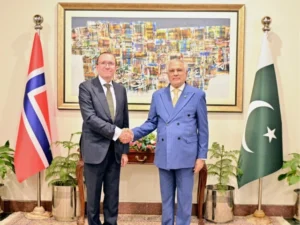
Norway Praises Pakistan’s Role in Iran-US Crisis as Islamabad and Oslo Deepen Ties
Vaccine schedules also differ between countries because health risks, healthcare systems and vaccination policies vary. The World Health Organization said national immunisation schedules rely on decades of research and assessments of disease risks and the ages when people face the greatest vulnerability.
Experts challenge MMR changes
Trump has promoted splitting the MMR vaccine into three separate injections. Medical groups say there is no new scientific evidence showing that separating the vaccine would improve safety or effectiveness.
Merck and GSK currently produce the combined MMR vaccine for the US market. Individual vaccines for measles, mumps and rubella have not been available in the country since Merck stopped producing them separately in 2008.
Merck has said that developing separate vaccines could require years of testing, regulatory approval and manufacturing work. Experts also warn that additional appointments could increase the chances of delayed or missed vaccinations.
Autism claims face scientific challenge
The policy has also renewed debate over claims linking vaccines with autism.
Trump and Health Secretary Robert F. Kennedy Jr. have repeatedly raised questions about a possible connection. However, decades of research involving millions of children have found no credible evidence that vaccines cause autism.
The American Academy of Pediatrics and other medical organisations have rejected the claim. They argue that the scientific question has already received extensive study and that the available evidence does not establish a causal relationship.
What changes for American families?
The executive order does not immediately remove access to vaccines. The White House has said the federal Vaccines for Children programme will continue.
However, the practical impact could vary because individual states set many school-entry vaccination requirements. The order also directs the Justice Department to challenge state laws that conflict with its approach to parental rights and exemptions.
Medical organisations have warned that conflicting messages from federal authorities could make it harder for parents to understand which vaccines their children need and when they should receive them.
The WHO has defended evidence-based immunisation schedules, saying countries should use scientific evidence when deciding how and when to vaccinate children.
The debate now puts the Trump administration’s vaccine policy under intense scrutiny as health officials, doctors and vaccine manufacturers assess the possible consequences of the changes.









[…] Trump’s Vaccine Order Faces Scrutiny as Experts Challenge Claims About Childhood Shots […]