/ Oct 14, 2026
Trending
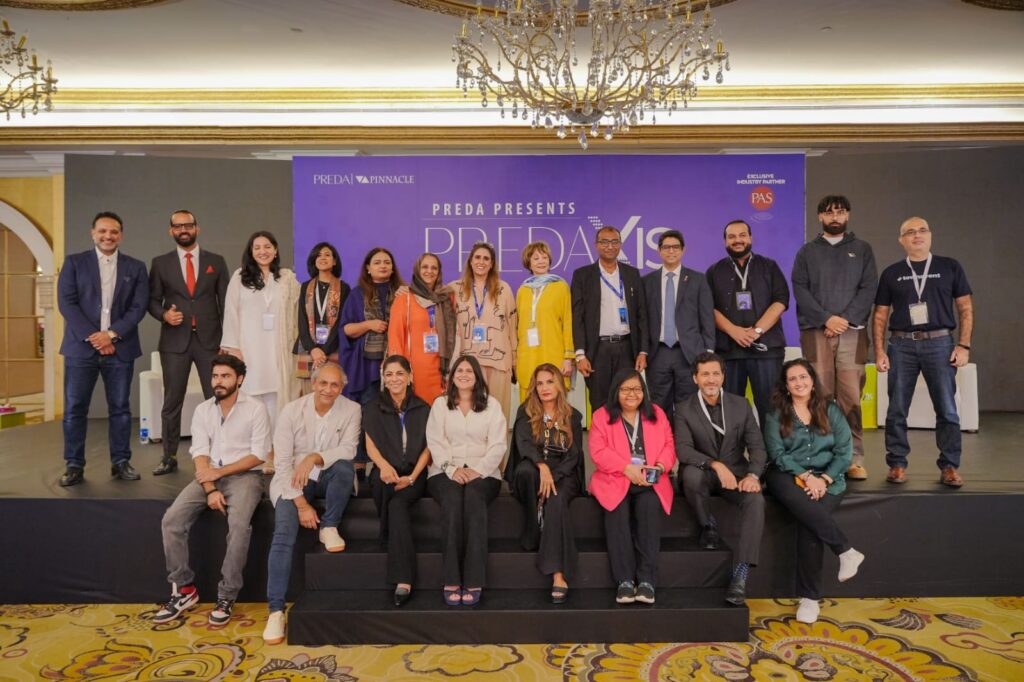
PREDAXIS made its debut in Karachi as Pakistan’s communications industry came together for a day of discussion on artificial intelligence, creativity, reputation, events, digital media and the changing agency-client relationship.
Mohsin Naqvi’s Leadership Comes Under Focus as Work Takes Centre Stage
Hosted by the Pakistan Public Relations, Event Management, Digital and Activations Association (PREDA), the inaugural conference took place at the Mövenpick Hotel Karachi. It brought together business leaders, marketers, agency professionals, digital specialists, event experts, creators, academics and media practitioners.
The conference focused on open dialogue, knowledge-sharing and greater cooperation across industries. Speakers examined how technology and changing audience habits are reshaping communications, marketing and public engagement.
Academy Award-winning filmmaker Sharmeen Obaid-Chinoy delivered the opening keynote. She spoke about connection, influence and purpose-driven collaboration.
Obaid-Chinoy said major change does not always begin with money, technology or power. She said it often starts when someone imagines a different future and refuses to accept the status quo.
She also stressed the importance of ordinary people’s memories in shaping history.
Her address set the tone for a conference focused on ideas, leadership and the need to create meaningful change.
PREDA’s executive committee said the conference was created to bring together industries that shape influence, culture, commerce and public trust.
The committee includes Selina Rashid, Frieha Altaf, Shanaz Ramzi, Fareshteh Aslam, Sarfraz Niazi and Hasan Rizvi.
They said PREDA aims to improve professional standards, encourage collaboration and help build a stronger communications industry in Pakistan.
The conference featured seven panel discussions covering major developments across the communications sector.
The sessions included the Agency Client Nexus, the Reputation Economy, Influencers and the New Attention Economy, the Experience Economy, The Business of Being Human, The Pitch Room and The Next Ecosystem.
Discussions explored the impact of AI, the rise of creators, changing brand partnerships and the growing importance of experience-led marketing.
Speakers also discussed human-centred leadership and the need for stronger cooperation between different parts of the industry.
During the session on reputation and AI, speakers examined how artificial intelligence is changing visibility, trust and influence.
Hasan Rizvi, CEO of BBPR, raised questions about how businesses should measure reputation in an AI-driven environment.
Fareshteh Aslam, CEO of Talking Point, stressed the importance of adding personal values when using AI tools.
The discussion reflected a wider concern across the industry. AI can improve speed and efficiency, but businesses still need human judgement to make meaningful decisions.
During his afternoon keynote, Imtisal Abbasi, Managing Partner at IAL Saatchi & Saatchi, shared three key observations about technology and creativity.
He said technology does not destroy value but moves it to new areas. He also argued that AI changes the questions businesses ask.
According to Abbasi, the ability to judge information and ideas carefully will become a major competitive advantage.
The Agency Client Nexus panel focused on one of the industry’s long-running challenges: the relationship between agencies and clients.
Aly Mustansir, Brand Consultant and Trainer at AlyM Brand Consulting, called for stronger partnerships based on trust, transparency and shared business goals.
Frieha Altaf, CEO of Catwalk, highlighted concerns about unpaid pitches. She said agencies often invest significant resources in preparing pitches, only to see briefs change or ideas appear elsewhere.
Sarah Sadiq, Director Marketing at FrieslandCampina, stressed the need for greater transparency and trust across the entire ecosystem.
The discussion showed that agencies and brands are looking for clearer expectations, stronger partnerships and better communication.
The Influencers, Creators & The New Attention Economy panel examined how audience behaviour is changing brand communication.
Speakers discussed the growing value of authentic storytelling and stronger creator-brand relationships.
Rizwan Ahmed, Founder and Chief Storyteller at Viral Edge, also called for greater government recognition and transparency around Pakistan’s growing creator industry.
The discussion highlighted how creators are becoming an important part of the wider marketing and communications economy.
The Events: The Experience Economy session examined how brands are using experiences to build stronger connections with audiences.
Speakers discussed immersive events, audience engagement and the role of technology in creating memorable experiences.
Amina Rashid Khan, Partner at RAKA Events, said AI can help generate new ideas and improve audience engagement.
The session showed how event management is moving beyond traditional gatherings towards more interactive and technology-driven experiences.
Technology was also a major theme during The Business of Being Human panel.
Selina Rashid, CEO of Lotus PR and The Lotus Advisory, highlighted the continuing importance of empathy, authenticity and human-centred leadership.
She said these qualities remain important as technology changes the way businesses plan campaigns, design events, manage public relations and use digital platforms.
Qamar Abbas, Executive Director of the Pakistan Advertisers Society, said human emotions remain one of humanity’s greatest strengths.
He also warned that people must become more empathetic as technology becomes more powerful.
The Pitch Room session focused on the changing expectations between brands and agencies.
Saira Awan, President of the TCS Group of Companies, said agencies need to understand what clients actually want before developing a pitch.
She noted that a company may have several possible uses for the same budget. These could include advertising, outdoor campaigns or corporate social responsibility projects.
Madiha Saeed, GM Foods Pakistan and Bangladesh at Unilever, said a strong pitch begins with a clear brief.
She added that the best briefs are often delivered through direct, in-person communication.
Syed Usman Qaiser, CMO of J., said brands should view agencies as partners. He also stressed the importance of understanding the costs agencies face while delivering their work.
The final discussions focused on the future of Pakistan’s communications and technology ecosystem.
Dr Adil Haider, Founder and CEO of Boston Health AI and Chief AI Officer at CIMED, said future competition could shift from individual companies to entire ecosystems.
He also warned that the expansion of AI could lead to significant job losses.
The conference also explored stronger cooperation between startups and government institutions.
Jehan Ara, Founder and CEO of Katalyst Labs, pointed to funding challenges facing Pakistani startups. She said many local companies struggle to attract investment and expand internationally.
Despite these challenges, she stressed that Pakistan has strong talent and significant potential.
The conference featured speakers and moderators from leading organisations across Pakistan and abroad.
They included Adil Ahmed, Dr Adil Haider, Ali Habib, Afsheen Rizavi, Ali Rashid Khan, Aly Mustansir, Aman Hussain, Amina Rashid Khan, Aqsa Manzoor, Azam Jalal Khan, Fareshteh Aslam, Frieha Altaf, Hasan Rizvi, Jehan Ara, Madiha Saeed, Mehrunisa Azhar, Osamah Nasir, Qamar Abbas, Rizwan Ahmed, Sadaf Malik, Saira Awan Malik, Sarah Ahmed, Sarah Sadiq, Sarfraz Niazi, Selina Rashid, Shanaz Ramzi, Sherdil Khan, Shomaila Loan, Sidra Iqbal, Suleman Ansar Khan, Syed Usman Qaiser, Tehmina Khaled, Umair Kazi, Umer Ghumman, Usman Arshad Khan, Zeeshan Sikander, Zofeen T. Ebrahim and Zubair Mallick, among others.
The event was hosted by PREDA. Pinnacle X served as the Organising Partner, while the Pakistan Advertisers Society was the Exclusive Strategic Partner.
The Institute of Business Management and MiTE Institute joined as Academic Partners. Istehari served as Founding Partner, while PWL (Padel Walay Loug) was the Community Partner.
TownEvents served as Registration Partner and Pak Vision provided Technical Support. Pepsi joined as Beverages Partner and Tapal as Tea Partner.
The inaugural PREDAXIS conference marked a significant step for PREDA as it seeks to bring Pakistan’s public relations, events, digital and activations industries closer together.
The association said its wider goal is to promote professional excellence, ethical standards, industry cooperation and stronger capabilities across the sector.











[…] PREDAXIS Opens New Dialogue on AI, Creativity and Pakistan’s Changing Communications Industry […]