The launch follows the introduction of GPT-6 Astra earlier this month. OpenAI described Astra as its most powerful model for coding, computer-based tasks and other demanding workloads.
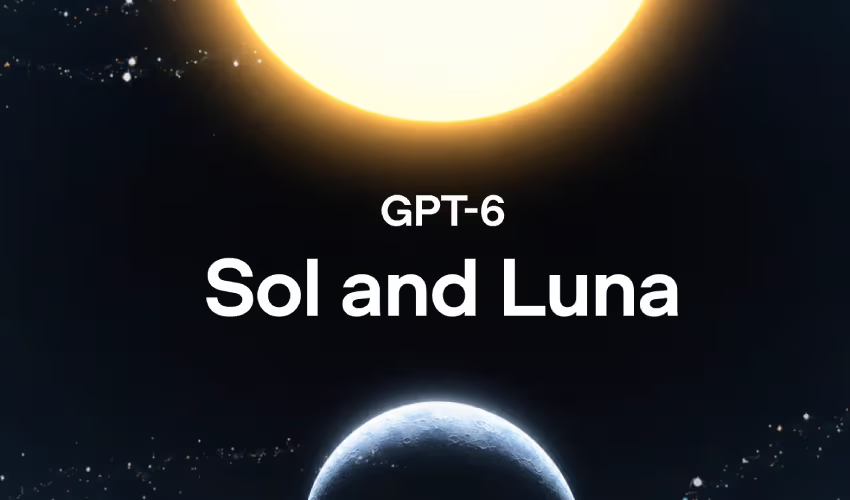
The company says Sol and Luna bring some of Astra’s capabilities to more efficient systems.
OpenAI has positioned the two models for different types of workloads. Sol focuses on complex tasks, while Luna targets high-volume operations with clearly defined goals.
GPT-6 Sol Targets Complex AI Tasks
OpenAI designed GPT-6 Sol for demanding workloads such as coding and advanced knowledge work.
The company says Sol can handle complex tasks while delivering improved efficiency.
By contrast, GPT-6 Luna targets routine, high-volume workloads.
OpenAI highlighted document summarisation, information extraction and routine question answering as suitable uses for Luna.
Abrar Ahmed Rises to No. 1 in ICC T20I Bowling Rankings
The different models give developers more options when selecting an AI system for specific workloads.
OpenAI Cuts GPT-6 API Prices
Cost represents one of the biggest changes in the new models.
OpenAI says GPT-6 Sol and Luna will cost 50% less through its API than their GPT-5.6 predecessors.
The company attributed the reduction to improvements in caching and inference efficiency.
Lower API costs could help developers run AI applications at greater scale.
Businesses could also use the models for larger workloads while managing computing expenses.
OpenAI Reports Fewer Model Errors
OpenAI also reported improvements in factual accuracy and coding performance.
According to the company, GPT-6 Sol makes about half as many mistakes as its predecessor on an internal factuality test.
The evaluation used de-identified real-world conversations where users had previously flagged model errors.
OpenAI said the results put Sol at a reliability level comparable with GPT-6 Astra.
The company also reported better coding accuracy.
However, these performance figures come from OpenAI’s own evaluations. Results can vary across benchmarks, tasks and model configurations.
OpenAI Faces Growing Anthropic Competition
The new models arrive as competition in the AI industry continues to intensify.
OpenAI claims GPT-6 Sol and Luna outperform Anthropic’s leading models, including Fable and Opus, across several tasks.
However, benchmark results depend on testing methods, model settings and the specific tasks involved.
Anthropic also released its latest Opus 5.5 model shortly before OpenAI announced Sol and Luna.
The close timing highlights the rapid pace of new model releases across the AI industry.
GPT-6 Sol and Luna Begin Rolling Out
OpenAI says GPT-6 Sol and Luna are available through ChatGPT Work and Codex for most paid accounts.
Developers can also access both models through the ChatGPT API.
Luna is additionally available through the desktop app and to Free and Go users.
OpenAI said it would gradually expand access to both models across the ChatGPT app and website.
The rollout gives users and developers access to different GPT-6 systems based on workload, performance and cost requirements.











[…] OpenAI Launches GPT-6 Sol and Luna With Lower API Costs […]