TEHRAN: Iran has warned that it would respond in kind if the United States used a nuclear weapon against the country, adding to growing tensions between Tehran and Washington and raising fresh concerns about a wider regional conflict.
Iranian lawmaker Fada Hossein Maleki, a member of parliament’s National Security and Foreign Policy Commission, made the remarks in an interview with Iranian news outlet Khabar Online on Wednesday.
Asked about the possibility of a US nuclear strike, Maleki said he could not rule out an “ill-considered action” by President Donald Trump. However, he said he did not believe Trump would take such a step because it could trigger a dangerous global conflict.
“If such an action is taken, the Islamic Republic of Iran will also respond,” Maleki said, adding that Tehran’s response would depend on the type of weapon used.
When asked directly whether Iran would use a nuclear weapon if the US launched one against Iran, Maleki replied: “Whatever the US uses, Iran will respond to it.”
Maleki did not explicitly claim that Iran possesses nuclear weapons.
Tehran warns against further US action
The Iranian lawmaker also warned Washington against launching additional military operations.
He said Iran had “multiple options” and could respond at the same level or even beyond the level of any US action.
“Many of Iran’s weapons and military capabilities have not yet been unveiled,” Maleki said.
He described Tehran’s current military posture as moving from defence toward what he called “active and offensive deterrence.”
His comments come as stalled diplomatic efforts between Iran and the United States face further uncertainty.
Maleki accused Trump of failing to honour commitments under a memorandum of understanding between the two sides.
He said Iran would not return to negotiations unless Washington fulfilled its previous commitments. He also said unresolved issues, including the Strait of Hormuz, would remain difficult to address without progress.
Maleki said Iran’s discussions with Oman represented a separate bilateral process and that Tehran had rejected US participation in those talks.
Iran issues warning to Gulf states
Iran’s military also issued a separate warning to Gulf countries on Wednesday.
Armed forces chief of staff Ali Abdollahi said any Gulf state that assists or facilitates US military operations would effectively become involved in those operations.
“We wish to warn that any assistance or facilitation provided to the aggressor US military amounts to participation in the US military operation,” Abdollahi said, according to Iran’s Mehr news agency.
The warning places additional pressure on Gulf states that maintain security and military partnerships with Washington.
Khatami questions calls for war
Former Iranian President Mohammad Khatami also criticised calls for an expanded conflict with the United States.
Khatami questioned what he described as a belief among some Iranians that the country’s survival depends on war.
He said national policy could not rely solely on anger or emotion, particularly after the killing of an Iranian commander.
“My feelings were also wounded when they killed our commander,” Khatami said, according to reports citing Iranian media.
He argued that decisions affecting the country must instead focus on Iran’s broader national interests.
Khatami’s comments offered a rare public challenge to arguments favouring a prolonged military confrontation with Washington.
South Korea caught in wider Iran dispute
The conflict is also affecting US relations with South Korea.
South Korean Foreign Minister Cho Hyun said Trump’s decision to reduce joint military exercises appeared partly aimed at pressuring Seoul to support Washington’s position on the Iran conflict.
Cho said the US message involved several unresolved issues, including South Korea’s investment commitments.
Seoul has pledged to invest $350 billion in the United States under a trade agreement signed last year. However, the South Korean government has yet to finalise the details.
Cho said Washington had provided Seoul with proposals for potential investment projects.
South Korea and the United States announced Wednesday that annual military exercises would be shortened from 11 days to five. Some field training will also be reduced.
South Korean Unification Minister Chung Dong-young said the changes could potentially help create conditions for another meeting between Trump and North Korean leader Kim Jong Un.
UAE reports Iranian missile launches
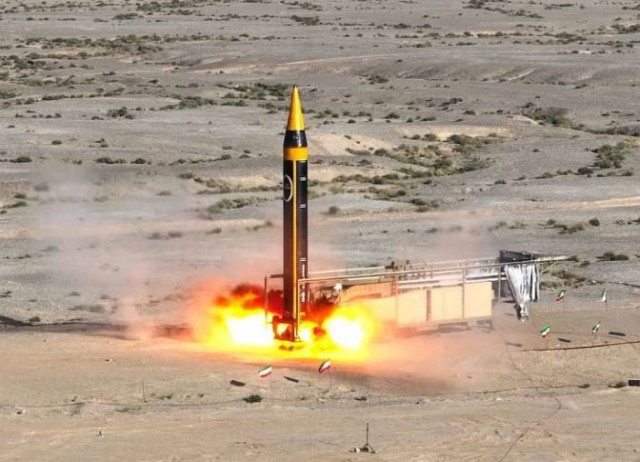
The United Arab Emirates said it detected two ballistic missiles launched from Iran on Tuesday.
The UAE Defence Ministry said the missiles appeared to target maritime traffic. Both missiles fell into the sea.
Iranian Foreign Ministry spokesperson Esmaeil Baghaei rejected the UAE’s account, describing it as “baseless.”
The reported launches prompted the UAE to suspend trade activities, commercial exchanges and financial transactions with Iran until further notice.
The UAE said the escalation threatened regional and international peace and security.
The incident came shortly after a 60-day period for US-Iranian peace talks expired without a breakthrough.
The failure to reach an agreement has heightened fears of further escalation and increased pressure around the Strait of Hormuz, a critical route for global energy shipments.
The UAE Interior Ministry later told residents that the situation was safe after an earlier missile warning.
The UAE has also accused Iran of attacking state-owned ADNOC vessels travelling through the Strait of Hormuz. Iran has not claimed responsibility for those incidents.
Iran’s Revolutionary Guards have previously threatened action against vessels using the strategic waterway if they are linked to Tehran’s adversaries or fail to follow Iranian directives.
Ghalibaf arrives in Baghdad
Iranian Parliament Speaker Mohammad Bagher Ghalibaf arrived in Baghdad on Wednesday for talks with Iraqi officials.
He travelled with a high-level delegation, according to the Iraqi News Agency.
Ghalibaf said the visit would focus on strengthening cooperation between Iran and Iraq in economic, political, cultural, social and security matters.
He was also expected to meet senior Iraqi officials and figures from the economic and cultural sectors.
Ghalibaf described relations between Tehran and Baghdad as “very important and fundamental” to regional developments.
He also said the Middle East could witness a “new order” in the future.
US and UAE discuss regional security
US Secretary of State Marco Rubio spoke with UAE National Security Adviser Sheikh Tahnoon bin Zayed Al Nahyan on Tuesday.
The US State Department said the two officials discussed regional security issues, including Lebanon and coordination over Iran.
Rubio also stressed the importance of maintaining freedom of navigation through the Strait of Hormuz.
The UAE’s decision to suspend trade with Iran has added another layer to the growing regional pressure on Tehran.
Former Disneyland Peter Pan Performer Defends TikToker Amid Stalking Controversy
Cargo ship damaged off Yemen
Maritime tensions also continued off Yemen’s western coast.
The UK Maritime Trade Operations centre said a cargo ship was struck by multiple unidentified projectiles on Tuesday.
The incident occurred around 40 nautical miles, or 74 kilometres, southeast of Mokha.
UKMTO said the vessel was unmanned when it was hit. The damage resulted in what authorities described as a “complete constructive loss.”
Authorities are investigating the incident.
UKMTO urged vessels operating in the area to exercise caution and report suspicious activity.
The latest developments underline the growing risks across the Middle East, with nuclear rhetoric, missile incidents, maritime threats and stalled diplomacy adding pressure to an already fragile regional security environment.







[…] Iran Warns of Retaliation as Nuclear Threats Push Region Toward New Crisis […]