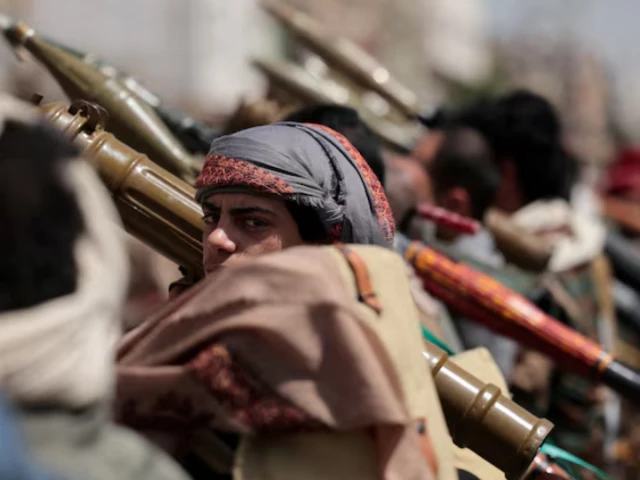
Tehran/Marib, August 12, 2026: The Iran war entered another tense phase as fighting, attacks on shipping and diplomatic tensions continued across the Middle East, while Yemen’s National Resistance Forces reported the death of one of their officers in clashes with the Houthis.
The forces said Colonel Yahya Mohammed Mohsen al-Qadhi died during fighting with the Houthi group. Their statement did not identify the location or exact timing of his death.
Officials held al-Qadhi’s funeral on Tuesday in the western Yemeni city of Mokha. They later buried him at the Guardians of the Republic cemetery.
Several National Resistance Forces commanders and fellow fighters attended the ceremony. They pledged to continue their campaign under the leadership of Presidential Leadership Council Vice President Tariq Mohammed Abdullah Saleh.
The forces said they would continue fighting until government forces restore all Yemeni territory and end the Houthi movement’s control.
The National Resistance Forces operate mainly across parts of Taiz and Hudaydah provinces in western Yemen.
Yemen has experienced a relative reduction in large-scale fighting since April 2022. However, clashes have increased again in recent weeks across several provinces, including Marib, Al-Jawf, Al-Dhalea and Taiz.
The renewed fighting comes as Yemen continues to face a severe humanitarian and economic crisis. The Saudi-led coalition supports forces aligned with Yemen’s internationally recognised government, while Iran faces accusations of backing the Houthis.
Tensions have also intensified around the Strait of Hormuz, one of the world’s most important energy routes.
Shipping data showed that vessel traffic through the strait fell to eight ships on Tuesday. Kpler data put the figure below the 10-day average of about 12 vessels.
Only one coal carrier had exited the strait, while the remaining vessels continued their journeys through the waterway.
The decline came as shipowners avoided the strategic route amid continuing hostilities in the region. The Strait of Hormuz normally carries a significant share of global oil and liquefied natural gas shipments.
Iranian officials have also issued stronger warnings over the waterway.
Mohsen Rezaei, Iran’s top security official, said the Strait of Hormuz would remain closed unless Washington accepted Tehran’s conditions for ending the conflict.
Those demands include the release of frozen Iranian assets and an end to conflicts across the region, including in Lebanon and Gaza.
Rezaei said the waterway would not reopen while the United States maintained its current policy towards Iran.
The comments followed stronger rhetoric from US President Donald Trump, who has alternated between threats of further military action and claims that a settlement could emerge soon.
Trump has also warned Iran that Washington could continue applying economic pressure or launch further military action.
Iranian officials have responded with their own warnings. Mohammad Reza Naqdi, an adviser to the commander of Iran’s Islamic Revolutionary Guard Corps, said Iran had gained valuable battlefield experience during the conflict.
Naqdi claimed that US military strength appeared weaker than Iranian officials had previously believed.
He also said the Revolutionary Guard was developing the ability to conduct operations on foreign soil if its leadership ordered such action.
The growing confrontation has affected commercial shipping in nearby waters.
The United States reported that a Navy MH-60 helicopter fired two Hellfire missiles to disable the steering system of a Panama-flagged cargo ship. US Central Command said the vessel had ignored repeated warnings linked to a naval blockade of Iranian ports.
Maritime sources told Reuters that the ship came under fire off Pakistan while travelling towards the Gulf of Oman.
In the Red Sea, Yemen’s Transport Ministry reported that four crew members died in a suspected Houthi attack on the Egyptian-owned Tihamah cargo vessel near the Bab el-Mandeb Strait.
Two Yemeni rescuers from an anti-Houthi military group also died, according to Yemen’s Coast Guard.
The incident would mark the first reported deaths aboard commercial shipping from a Houthi attack since the Iran conflict began.
The Houthi-affiliated Saba news agency separately reported an attack on a Saudi vessel carrying military equipment near Bab el-Mandeb. The report did not identify the ship, and Saudi authorities had not immediately responded.
The Houthis also claimed missile and drone strikes against military positions in Marib and Mokha.
Houthi military spokesman Yahya Saree said the group targeted military deployments, weapons depots and command centres. He claimed the strikes caused dozens of deaths and injuries.
Saudi Arabia did not immediately comment on the claims. Riyadh has said it does not maintain forces inside Yemen and that its role focuses on supporting forces aligned with Yemen’s recognised government and protecting its borders.
Pakistan Esports Team Meets Ambassador in Paris Ahead of Global Competition
Iran’s parliament is also preparing legislation that could further tighten control over the Gulf.
Ibrahim Azizi, chairman of the parliament’s National Security and Foreign Policy Committee, said a proposed bill would restrict military and commercial vessels from countries Tehran considers hostile.
Under the proposed legislation, such vessels would need Iranian authorisation before entering the Gulf.
Iranian lawmakers say the bill aims to strengthen Tehran’s authority over the Strait of Hormuz and surrounding waters. The parliamentary committee approved a related measure on August 9.
Meanwhile, diplomatic efforts between Pakistan and Iran have continued despite the regional tensions.
Iranian President Masoud Pezeshkian praised Pakistan’s efforts to strengthen bilateral relations during a meeting with Pakistan’s Interior Minister Syed Mohsin Raza Naqvi in Tehran.
Pezeshkian said Iran wanted to expand cooperation with Pakistan in political, economic, trade, cultural and security affairs.
He also highlighted the historical and people-to-people links between the two countries. The Iranian president called for greater use of existing opportunities to expand bilateral cooperation.
Naqvi said his visit aimed to follow up on agreements reached during the recent visit of Iran’s Interior Minister Eskandar Momeni to Pakistan.
The Pakistani minister reaffirmed Islamabad’s commitment to strengthening ties with Tehran. He also called for faster implementation of existing agreements and closer cooperation between the two countries.
As fighting continues across multiple fronts, tensions around the Strait of Hormuz remain a major concern for global energy markets. Any prolonged disruption could further affect oil supplies, shipping routes and economies across the region.










[…] Iran War Deepens as Hormuz Crisis, Yemen Clashes and US Tensions Escalate […]