Long before “female-led” became a familiar marketing term, Pakistani television writers were creating women who worked, made difficult choices and pushed back against expectations. These stories often placed women at the heart of the plot without treating their independence as something that needed an explanation.
The Pakistani dramas listed below span more than three decades. Some were watched on VHS before satellite television became common in Pakistani homes. Others arrived much later, when television audiences had begun demanding more complex stories about women.
Despite their different eras and themes, the six dramas share a central idea. Their female characters are ambitious, vulnerable and determined to shape their own lives.
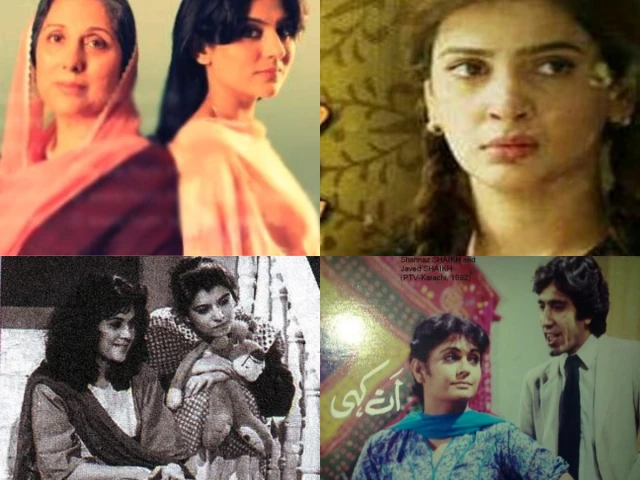
Ankahi (1982)
Screengrab: Ankahi/YouTube
Written by Haseena Moin, Ankahi starred Shehnaz Sheikh alongside Javed Sheikh, Behroze Sabzwari and Qazi Wajid.
Shehnaz Sheikh played Sana Murad, a young woman with little money, limited qualifications and plenty of confidence.
After her father dies, Sana faces a difficult financial situation. She decides to take responsibility for supporting her family.
A chance meeting with a company chairman eventually helps her secure a job. The problem is that she has little idea how to perform it.
What follows is a largely comic story about Sana learning to navigate professional life.
Her confidence often gets her into trouble. It also helps her survive situations that might have defeated someone with more conventional qualifications.
Sana’s character stood out because the drama allowed her to be imperfect. She could make mistakes, speak her mind and still remain at the centre of the story.
Tanhaiyaan (1985)
Photo: Tanhaiyaan/IMDb
Written by Haseena Moin and directed by Shahzad Khalil, Tanhaiyaan starred Marina Khan, Shehnaz Sheikh and Behroze Sabzwari.
The story follows two sisters who lose their parents and their family home.
They suddenly have to figure out how to rebuild their lives with little support.
The tragedy forms the foundation of the drama. Yet the story is not defined by loss alone.
The sisters find work and begin earning their own money. The drama does not treat their decision as unusual or controversial.
Instead, it allows them to deal with work, friendships, relationships and everyday problems.
That approach made the drama particularly striking for its time.
Humour and warmth run alongside the hardships. The result is a story that remains memorable for its characters rather than simply for its reputation as a classic.
Maat (2011)
Screengrab: Maat/YouTube
Written by Umera Ahmad, Maat starred Saba Qamar and Aamina Sheikh.
The drama follows two sisters from a lower-middle-class family whose choices take them in very different directions.
Saman, played by Saba Qamar, pursues comfort and social status through marriage.
Her older sister Aiman takes another path. She faces difficult circumstances but gradually builds a life through patience and resilience.
For much of the story, Aiman appears to be the sister who has lost.
She is overlooked and underestimated by people around her. Even Saman treats her as an afterthought.
The passage of time changes that picture.
Twenty-five years later, Saman is left alone and regretful, while Aiman has built a home and raised a son.
Maat explores a form of strength that does not always look powerful in the moment.
Its central message comes through the sisters’ contrasting choices rather than through simple declarations about right and wrong.
Durr-e-Shehwar (2012)
Screengrab: Durr-e-Shehwar/YouTube
Durr-e-Shehwar explores marriage, sacrifice and the gap between expectations and reality.
Samina Peerzada and Sanam Baloch played different versions of the central character.
Durr-e-Shehwar enters marriage expecting love and companionship. Instead, she encounters emotional distance from her husband and hostility from her mother-in-law.
Her daughter Shandana grows up believing that her parents had a perfect marriage.
That belief changes when she discovers what her mother actually endured.
The contrast between perception and reality becomes the heart of the drama.
The story examines how different generations understand marriage and compromise.
It also asks how much a person should sacrifice to keep a relationship together.
Rather than presenting marriage as either completely successful or completely broken, Durr-e-Shehwar explores the difficult space between the two.
Digest Writer (2014)
Photo: Digest Writer/IMDb
Saba Qamar plays Fareeda, a lower-middle-class college student whose family gives greater importance to her brother.
Writing becomes Fareeda’s escape.
She begins publishing stories under the pen name Rashk-e-Hina. Her work gives her a sense of identity that she cannot find elsewhere.
A producer named Rida eventually discovers her writing and offers her an opportunity to adapt it for television.
The opportunity appears to be the breakthrough Fareeda needs.
Instead, it exposes her to a difficult professional environment.
She faces industry egos, betrayal and pressure from her family.
The drama does not suggest that talent alone solves every problem.
Fareeda eventually gains recognition, but success comes with significant personal costs.
That element gives Digest Writer much of its lasting appeal.
The drama treats female ambition as something real and complicated. It shows that achieving professional success can require difficult personal choices.
India: Water Cannons Used as Jharkhand Youth Protest Exam Irregularities
Udaari (2016)
Screengrab: Udaari/YouTube
Udaari takes a much darker approach to female resilience.
At its centre is Zebo, a child whose life is devastated by abuse from her stepfather.
The drama does not allow that trauma to define her entire identity.
Instead, Zebo’s story gradually becomes one of survival and resistance.
Her widowed mother initially struggles to understand the danger posed by the man she married.
Once she realises what is happening, she turns her guilt into action.
She leaves her old life behind to protect her daughter and begins again under a new identity.
Meera, a singer who lives nearby, also becomes an important source of support for Zebo.
She encourages the young girl to speak about what happened instead of carrying the trauma in silence.
One of the drama’s most memorable moments comes in the courtroom.
Zebo refuses to accept the shame that society often places on survivors of abuse.
Instead, she presents herself as a survivor and confronts the person responsible for her suffering.
The scene captures the central message of Udaari: surviving abuse is not a source of shame.
A changing picture of women on Pakistani television
Taken together, these six dramas reveal how Pakistani television has portrayed women across different generations.
Sana Murad in Ankahi uses confidence to find her place in the workplace.
The sisters in Tanhaiyaan build independent lives after losing their family home.
Aiman in Maat discovers that patience and resilience can outlast superficial success.
Durr-e-Shehwar confronts the hidden cost of compromise in marriage.
Fareeda in Digest Writer fights for recognition in a male-dominated professional environment.
Zebo in Udaari refuses to let trauma determine the rest of her life.
The stories are very different, but their female characters share an important quality.
They are not simply written as victims or heroes.
They make mistakes. They struggle. They work. They love. They lose. They fight back.
That complexity is perhaps why these dramas continue to resonate with audiences.
From Sana finding her way into an office to Zebo finding the courage to speak in court, Pakistani television has repeatedly shown that powerful female characters do not need to be perfect.
They simply need the freedom to be fully human.






[…] From Ankahi to Udaari: Pakistani Dramas That Put Women at the Centre […]