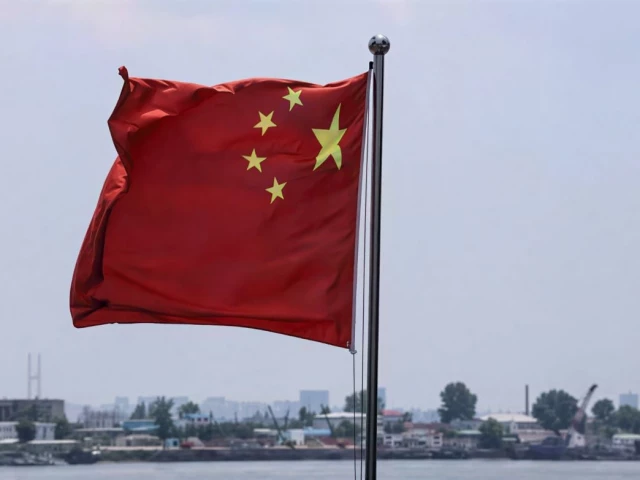
China Economy has emerged at the centre of renewed global debate as Beijing intensifies its defence of an economic strategy that prioritises advanced manufacturing over consumer spending ahead of key trade discussions with the United States and the European Union.
Chinese President Xi Jinping is expected to hold additional face-to-face meetings with US President Donald Trump later this year, while the European Union has set an October deadline for Beijing to address growing trade disputes. Western governments have increasingly criticised China’s industrial policies, pointing to its expanding trade surplus and the impact of low-cost exports on global manufacturing.
Beijing, however, has shown little indication that it intends to significantly alter its economic direction. A meeting of senior Communist Party leaders reaffirmed support for targeted economic measures instead of the broad consumer-focused stimulus and structural reforms that Western governments and many economists have long advocated.
More than 100 words into the debate, the China Economy remains firmly anchored to an investment-led development strategy that officials argue has been critical to the country’s rapid industrial and technological rise. China’s Ministry of Commerce recently rejected accusations of industrial overcapacity, describing such claims as based on “logical flaws” and driven by political motives. The Communist Party’s flagship journal Qiushi also defended relatively low household consumption, describing it as a historically justified outcome of China’s development model while acknowledging that gradual adjustments would eventually become necessary.
Analysts believe Beijing’s latest messaging reflects growing confidence rather than a willingness to compromise. Xu Tianchen, Senior Economist at the Economist Intelligence Unit, said China aims to improve international understanding of its policies while also making clear that it will not accept what it considers discriminatory measures against Chinese companies and products.
Chinese leaders continue to argue that the country’s economic model benefits the global economy by producing affordable and increasingly sophisticated products while investing heavily in science and advanced technology. Premier Li Qiang recently rejected warnings about a potential “China Shock 2.0,” instead promoting what he described as a “China Opportunity 2.0” that could support global economic growth.
PSX Rallies as Falling Oil Prices Spark Massive Buying Across Pakistan Market
Many international economists remain unconvinced. Eswar Prasad, Professor of Trade Policy at Cornell University and former China Director at the International Monetary Fund, said China’s heavy dependence on exports, combined with weak domestic demand, makes it difficult to portray its export-driven model as a universal benefit for consumers around the world.
Trade tensions have intensified after previous US tariff measures failed to significantly weaken China’s manufacturing strength. Beijing maintained leverage through its dominant position in the production of rare earth minerals, which remain essential for numerous high-tech industries worldwide. Meanwhile, the European Union has strengthened its own industrial policies to protect domestic manufacturers, while German Chancellor Friedrich Merz recently criticised China for maintaining an undervalued currency.
Economists say Beijing appears increasingly confident that it can manage trade disputes without making major policy concessions. Alicia Garcia-Herrero, Chief Asia-Pacific Economist at Natixis, said China’s approach resembles its strategy during previous tariff disputes with Washington by extending negotiations while maintaining its existing policy framework.
Despite its firm public stance, Beijing has begun slowing investment growth by tightening oversight of local government spending. Chinese officials have also acknowledged growing supply-demand imbalances and pledged to address deflationary competition among manufacturers, while continuing to promise measures aimed at boosting consumer demand without announcing sweeping structural reforms.
Several international studies continue to raise concerns about China’s economic model. The Organisation for Economic Cooperation and Development (OECD) recently estimated that government subsidies explain market share gains for nearly 60 percent of Chinese companies. Research from the Bank of Italy concluded that weak domestic consumption and manufacturing overcapacity account for approximately 75 percent of China’s export growth. Meanwhile, the McKinsey Global Institute reported that China adds roughly three times more productive assets annually than Europe and the United States combined, although those investments generate significantly lower capital returns.
Analysts believe these findings will keep China’s industrial policies at the centre of trade negotiations with Washington and Brussels, as both sides seek to balance economic cooperation with growing concerns over global competition and market fairness.












[…] China Defends Economic Model as Trade Pressure Builds Ahead of US and EU Talks […]