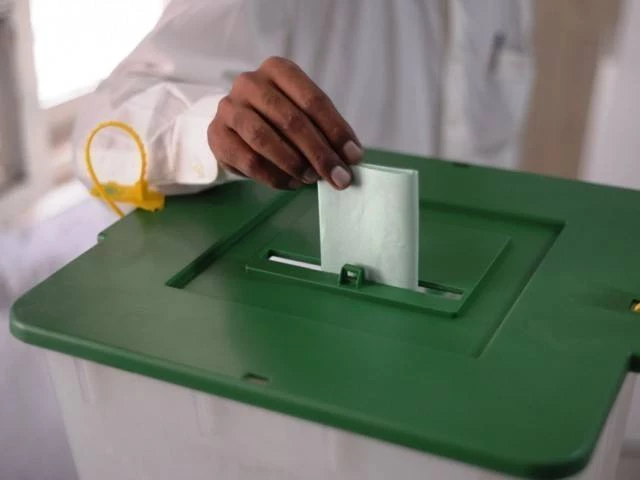
Polling began on Monday in four constituencies of Bagh and Haveli in the Poonch Division, marking the third phase of the Azad Jammu and Kashmir (AJK) general elections and setting the stage for closely fought contests that could shape the formation of the next government.
The AJK election is being held in three phases after the Election Commission revised the original polling schedule. Voting in the Mirpur Division took place on July 27, while the second phase covered Muzaffarabad Division and 12 constituencies reserved for Kashmiri refugees settled in Pakistan on August 2. The third phase is being held in the Poonch Division on August 10.
A total of 460,371 registered voters are eligible to cast ballots across the four constituencies, including 238,664 men and 221,707 women.
The Election Commission has established 803 polling stations with 1,254 polling booths to facilitate voting. A total of 82 candidates are competing for the four seats, with several senior political figures among the contenders.
The four constituencies going to the polls are LA-14 Bagh-I, LA-15 Bagh-II, LA-16 Bagh-III and LA-17 Bagh/Haveli Kahuta.
The contests have attracted candidates from the Pakistan Muslim League-Nawaz (PML-N), Pakistan Peoples Party (PPP), Jamaat-e-Islami (JI), Muslim Conference, Istehkam-e-Pakistan Party (IPP), independents and other political groups.
AJK Prime Minister Faisal Rathore is contesting from Haveli, while former prime ministers Sardar Attique Ahmed Khan and Sardar Tanveer Ilyas Khan are among the prominent candidates in Bagh and Dhirkot. PML-N Senior Vice President Mushtaq Minhas is also in the race.
Other notable contestants include Awam Dast-e-Bazu party candidate Sajid Iqbal Abbasi from Dhirkot and Khawaja Tariq Saeed from Haveli.
The JI has fielded Brigadier (retd) Muhammad Khan, while the PPP candidates include Zia-ul-Qamar and Qamar Zaman. The PML-N candidates include Mir Akbar, Mohsin Aziz and Faisal Azad.
The Bagh-Haveli contests have gained additional importance because the PML-N emerged as the largest parliamentary party after the first two phases. The party currently holds 24 seats, while the PPP has 10 seats.
The third phase could therefore determine whether the PML-N strengthens its position or whether rival parties can narrow the gap and complicate efforts to form the next government.
The PPP has already raised allegations concerning the conduct of polling at several stations in LA-15 and LA-16.
PPP Vice President Senator Sherry Rehman expressed concern over reported delays at several polling stations and alleged that party polling agents were prevented from entering stations 119 and 120 in LA-16.
She also alleged that a PPP polling agent was removed from polling station 158 in LA-15 and called on the Election Commission to intervene to ensure transparent and uninterrupted voting.
PPP-Parliamentarians Secretary General Nayyar Hussain Bukhari separately accused the PML-N of continuing what he described as alleged rigging during the third phase.
Bukhari said the PPP had repeatedly informed the chief election commissioner and the Election Commission secretary about alleged irregularities. He questioned why officials were offering explanations and assurances instead of immediately addressing the complaints.
The PPP had earlier submitted several complaints to the AJK Election Commission concerning polling arrangements in LA-15 and LA-16.
Iran Sets Conditions for Hormuz Reopening as US-Israel Rift Deepens
In one complaint involving LA-15, the party alleged that roads leading to polling stations in Banni Marisara had been blocked and claimed ballot papers were being illegally stamped at 12 polling stations.
The party said the alleged roadblocks prevented voters, polling staff and political agents from reaching the stations and demanded immediate action from election authorities.
The PPP also alleged that polling staff had failed to reach stations 143 and 144 in Hatala Pader, delaying the start of voting. It asked the Election Commission to arrange replacement staff if the assigned personnel could not reach the stations.
At polling station 158 in Makhdoom Kot, LA-15, the PPP alleged that its polling agent had been forcibly removed and prevented from carrying out his duties. The party demanded that the agent be allowed to return and that the time lost during his absence be officially recorded.
In LA-16, the PPP alleged that its polling agents were barred from entering stations 119 and 120 while ballot papers were being stamped.
The party said excluding its agents from polling stations undermined their ability to monitor the process and called for immediate access.
Another PPP complaint concerned polling station 141 in Paintpoi, LA-16, where the party alleged that voting had not started because assigned staff had not arrived. According to the complaint, voters were waiting outside the station.
The Election Commission has deployed additional security personnel at sensitive and highly sensitive polling stations across the four constituencies.
Police and other law-enforcement agencies have been deployed to maintain order and protect voters, polling staff and election material.
AJK Chief Election Commissioner Justice (retd) Ghulam Mustafa Mughal instructed polling staff to remain impartial and follow the electoral code of conduct.
Polling is scheduled to continue until 5pm. Vote counting will begin at polling stations immediately after voting ends, with candidates’ polling agents permitted to remain present during the count and obtain copies of results under election procedures.
The third phase is taking place against a backdrop of heightened security concerns in parts of the Poonch Division and neighbouring areas.
The Election Commission had postponed polling in seven remaining constituencies covering Rawalakot, Poonch and Sudhnoti because of security concerns. Voting in those constituencies could take place later, potentially by August 20, depending on the political and security situation.
The security concerns followed violent clashes in Rawalakot between police and members of the proscribed Joint Awami Action Committee (JAAC) after the group attempted to enter the city during the first phase of the election process.
Videos circulating online showed scenes of unrest and claims of casualties, although the details could not be independently verified.
Authorities said JAAC supporters opened fire on police after refusing to disperse, resulting in injuries to officers. The group, however, accused security forces of using excessive force and claimed that several of its supporters were killed.
The government has since maintained that the law and order situation in parts of Poonch and Sudhnoti remains fragile.
The first phase of the AJK elections concluded with polling across the Mirpur Division, while the second phase covered nine constituencies in Muzaffarabad Division and 12 refugee seats.
Voting in LA-27 Muzaffarabad-I and LA-28 Muzaffarabad-II was initially postponed after heavy rain, landslides and adverse weather prevented election staff and polling material from reaching several stations.
The delayed polling was later conducted under heightened security arrangements. The PML-N won LA-27 Muzaffarabad-I, while the PPP secured LA-28 Muzaffarabad-II, completing the second phase.
The Election Commission subsequently notified the results of all 21 constituencies contested during the second phase.
With the PML-N entering the third phase as the largest party and the PPP seeking to expand its parliamentary strength, the Bagh-Haveli contests have emerged as a crucial test of the political balance in AJK.
The results from the four constituencies could determine whether the PML-N consolidates its advantage or whether opposition parties make enough gains to create a more competitive path toward government formation.







[…] AJK Election: Bagh-Haveli Vote Puts PML-N’s Lead to a Crucial Test […]