/ Sep 18, 2026
Trending
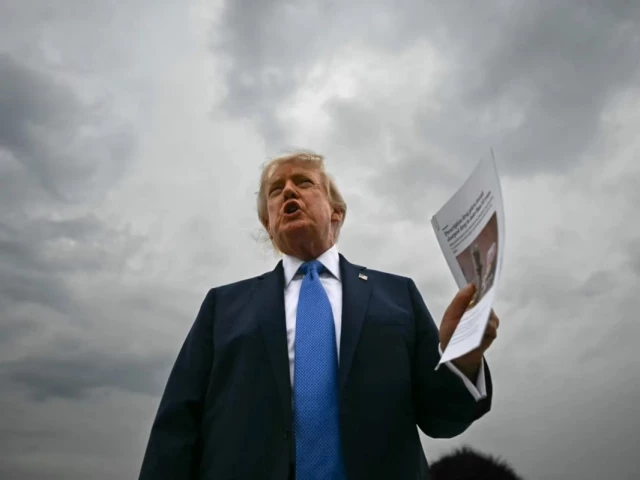
US President Donald Trump is set to address the United Nations next week as the six-month war with Iran continues to reshape the Middle East and raise concerns over global energy supplies.
Trump previously presented the US strikes on Iran’s nuclear facilities as a major success and said the campaign had helped bring peace between Israel and Iran.
However, the conflict has continued, while Iran and its allies have maintained pressure across the region. Reuters reported that Houthi forces in Yemen have also made gains along the Red Sea coast, creating additional risks for international shipping.
The developments have complicated Washington’s efforts to contain the conflict and have raised questions among US allies about the future of regional security.
Iran has remained defiant despite sustained military and economic pressure from the United States.
The conflict has also affected major shipping routes. Traffic through the Strait of Hormuz remains significantly below its recent average, while concerns have grown over the Bab el-Mandeb Strait at the southern entrance to the Red Sea.
The Houthi advance has added another layer to the crisis. The group has intensified attacks on Saudi targets while gaining positions along Yemen’s Red Sea coast.
PIMS Fire Death Toll Rises to 15 After Newborn Dies
Reuters reported that Saudi Arabia and Houthi forces exchanged strikes on September 17, while civilians fled parts of Yemen’s Red Sea coast by boat.
The United Nations migration agency said renewed fighting has displaced at least 112,000 people inside Yemen, with nearly 3,000 others fleeing by sea to Djibouti.
Trump had said US strikes had severely damaged Iran’s nuclear programme.
However, experts cited by Reuters assessed that the attacks had set the programme back rather than completely eliminating Iran’s nuclear capabilities.
Iran has continued to retain highly enriched uranium stockpiles, according to the Reuters report.
The Trump administration has maintained that the strikes achieved their objectives and that increased sanctions and maritime pressure are damaging Iran’s economy.
Iran has consistently denied seeking nuclear weapons.
The competing assessments are likely to remain part of the international debate as Trump prepares to address world leaders.
The Houthi advance has created a difficult strategic choice for Washington.
The United States wants to protect freedom of navigation through the Red Sea, but deeper military involvement could place additional pressure on US forces already engaged in the Iran conflict.
A senior Trump administration official told Reuters that Washington was focused on protecting freedom of navigation while encouraging regional partners to take the lead in dealing with security challenges.
Saudi Arabia has sought greater US support against the Houthis. However, Trump has so far resisted calls for direct US military intervention.
Reuters previously reported that the rapid Houthi advance has threatened the Bab el-Mandeb Strait, a major global shipping corridor.
The conflict has also created uncertainty in global energy markets.
The Strait of Hormuz previously carried a significant share of global oil and gas shipments. Reduced traffic through the waterway has increased concerns over supply disruptions.
The Bab el-Mandeb Strait has emerged as another potential pressure point after Houthi forces expanded their presence along Yemen’s Red Sea coast.
Oil prices have remained volatile amid concerns over Saudi supply and shipping disruptions. On September 18, Brent crude was trading around $103 per barrel after concerns over Saudi supply disruptions eased somewhat.
The United States and Iran have held intermittent talks despite the continuing conflict.
The US State Department has also confirmed that senior Iranian officials, including President Masoud Pezeshkian and Foreign Minister Abbas Araqchi, will be allowed to attend the UN General Assembly. Their delegation will face travel restrictions while in the United States.
Trump has said he hopes the war is approaching its end. However, Reuters reported that analysts expect the conflict could continue beyond the upcoming US midterm elections.
The UN General Assembly is therefore set to provide an important diplomatic forum as Washington, Tehran and regional governments confront the continuing military, economic and humanitarian consequences of the conflict.

Copyright © 2026 99News. All Rights Reserved.