Iran has tied the reopening of the Hormuz waterway to a series of demands from the United States, including compensation for damage caused by military strikes, an end to sanctions and military threats, and the restoration of Iranian assets, as tensions continue to reshape the Middle East.
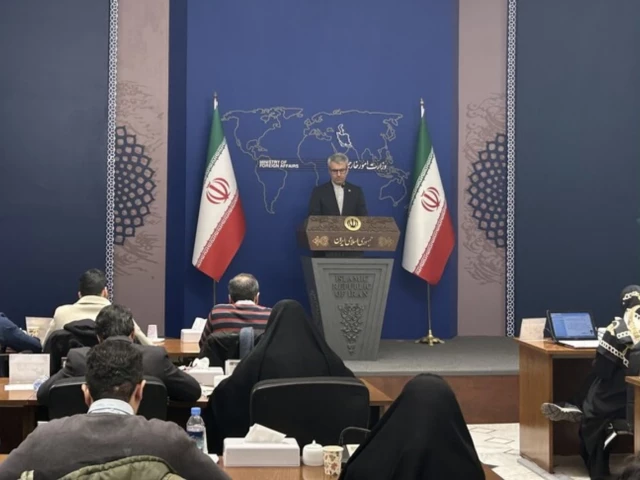
Iranian Foreign Ministry spokesperson Esmaeil Baghaei said on Monday that Tehran had no reason to believe a new defence agreement between Pakistan, Türkiye and Saudi Arabia was directed against Iran.
Baghaei said the Makkah Joint Defence Agreement reflected a growing recognition among regional countries that the United States could not guarantee lasting security in the Middle East and had itself become a source of instability.
He said regional security arrangements should be based on the geopolitical and historical realities of the region and should be comprehensive and inclusive. Such arrangements, he argued, could help strengthen security and prevent further instability.
Baghaei also said Iran would not enter direct negotiations with Washington as long as the United States continued to violate an interim agreement between the two countries.
The Iranian position comes as Tehran and Oman move closer to an agreement on new shipping lanes through the Strait of Hormuz. Iranian Foreign Minister Abbas Araghchi said the agreement had reached its final stages but stressed that a shipping deal alone would not guarantee the reopening of the strategic waterway.
Iran has demanded compensation for damage caused by US military action and wants Washington to end further threats against Tehran. Other demands include the lifting of sanctions, the release of frozen Iranian assets and the removal of a US naval blockade in the Gulf.
Iran has also called for an end to what it describes as aggression against its regional allies in Lebanon, Palestine, Yemen and Iraq.
Araghchi said Iran and the United States were not engaged in direct talks, although messages were continuing to pass between the two sides through intermediaries.
A US official told Reuters that Washington was prepared to lift its blockade of Iranian ports once an agreement was reached to restore commercial shipping without impediments. The official said US actions would remain linked to Iran’s implementation of its commitments.
The possible arrangement would establish new shipping lanes through the strait once the wider conditions were met. However, questions remain over the management of vessel traffic and the security arrangements required to restore normal commercial operations.
The prolonged disruption has already affected global energy markets. Oil prices rose on Monday as traders assessed the possibility of continued restrictions on one of the world’s most important energy routes.
Brent crude futures for October delivery climbed 1.09% to $84.46 a barrel, while US West Texas Intermediate futures for September increased 0.84% to $78.84.
Westpac said uncertainty remained high as the conflict entered its sixth month and described the Strait of Hormuz as effectively closed.
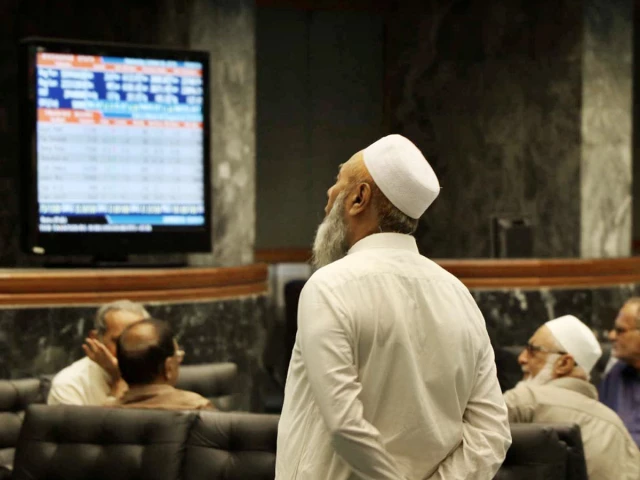
The energy market volatility came despite gains in major Asian stock markets. Japan’s Nikkei 225 rose 2.1%, South Korea’s Kospi gained 0.7%, while Hong Kong’s Hang Seng Index advanced 0.6%.
The diplomatic dispute has also coincided with a major change in Iran’s national security leadership.
Tehran has appointed former Islamic Revolutionary Guard Corps commander Mohsen Rezaei as secretary of the Supreme National Security Council, replacing Mohammad Baqer Zolqadr.
The appointment was announced late Sunday by the office of President Masoud Pezeshkian’s deputy director of communications. Iranian authorities did not immediately provide a reason for the change or indicate whether it would result in a shift in policy.
Zolqadr had been appointed to the position in late March after his predecessor, Ali Larijani, was killed in an air strike during the conflict involving Iran, the United States and Israel.
Rezaei, 71, commanded Iran’s Islamic Revolutionary Guard Corps from 1981 to 1997 and played a major role during the Iran-Iraq war. He later served as secretary of Iran’s Expediency Discernment Council for more than two decades and held the position of vice president for economic affairs from 2021 to 2023 under former President Ebrahim Raisi.
Supreme Leader Mojtaba Khamenei separately appointed Rezaei as his representative on the Supreme National Security Council, citing his experience, including his role during the Iran-Iraq war.
Khamenei appointed Zolqadr as his political adviser in the same decree.
The Supreme National Security Council is formally chaired by Iran’s elected president and brings together senior military, intelligence and government officials. The body coordinates security and foreign policy, while the supreme leader retains ultimate authority over major state matters.
The leadership change comes as Iran faces continued pressure from Washington and Israel while attempting to maintain its regional influence and cope with the economic impact of sanctions and disrupted trade.
Tensions between the United States and Israel have also become more visible as Washington pushes for an end to fighting across Gaza, Lebanon and Iran.
Israeli broadcaster Channel 13 reported that US Central Command chief Admiral Brad Cooper delivered a message to Israeli officials during a visit to Israel, urging progress toward closing the three active fronts.
Sindh Governor Hails Defence Agreement as New Hope for Muslim Unity
The report said Washington wanted Israel to reduce its military operations, while Israeli officials insisted that the country must retain the ability to strike Iran if Tehran continues developing its nuclear programme or rebuilding its ballistic missile capabilities.
In Lebanon, the United States is pushing for further Israeli withdrawals from positions inside the security zone in the south.
Washington is also seeking progress in Gaza and supporting the deployment of a multinational force that includes troops from countries such as Morocco and Uganda.
Israeli security officials have reportedly objected to US demands to halt targeted killings and reduce military operations in Gaza. Channel 13 said those demands did not explicitly appear in all proposals currently under discussion.
A senior Israeli military officer cited by the broadcaster said Washington’s message was to move toward closing the three fronts.
The disagreement comes as US President Donald Trump has signalled a more restrained approach toward Iran.
Trump said in an interview with Axios that Washington was taking a low-key approach while monitoring Iran’s economic difficulties, including inflation and financial pressure.
The US approach has drawn criticism from some lawmakers. Democratic Senator Chris Murphy said President Trump had lost the war with Iran and argued that continued fighting was weakening the United States while strengthening Tehran.
Murphy said he would support even a difficult agreement if it could end the conflict and reopen the Strait of Hormuz.
He also warned that the economic cost of the war was increasing for Americans as prices continued to rise.
The regional conflict has meanwhile expanded through Iran’s allies in Yemen.
The Houthi movement said it had attacked Saudi Aramco’s Jazan refinery on Sunday, shortly after Saudi Arabia signed a defence agreement with Türkiye and Pakistan.
Saudi Arabia’s Energy Ministry confirmed that a fire broke out at the refinery but said it was later extinguished and caused no injuries. The ministry did not immediately provide a cause.
Türkiye’s Foreign Minister Hakan Fidan said the new defence agreement between Türkiye, Pakistan and Saudi Arabia was not directed against Iran or any other country. He described it as a broader commitment to regional security.
The Houthis have also targeted shipping around the Red Sea and Gulf of Aden, another major maritime corridor for international trade and energy supplies.
Yemen’s military said on Monday that seven people, including military personnel and civilians, were killed in a Houthi attack on the Red Sea port city of Mokha.
The military said air defences intercepted and destroyed 11 Houthi drones involved in the attack.
The United States has also intensified its maritime operations around Iran.
US Central Command said American forces had redirected 55 commercial vessels, disabled two and boarded two others while enforcing its blockade against Iran.
CENTCOM said US sailors were operating aboard the USS Ross, one of more than 20 American warships deployed to the Middle East in support of military missions, including enforcement of the blockade.
The command did not provide further details about the vessels involved or explain the circumstances surrounding the reported actions.
The developments have created a complex diplomatic and military situation in which the reopening of the Strait of Hormuz is closely linked to wider negotiations between Tehran and Washington.
Iran says it is prepared to restore commercial shipping if the United States meets its demands, while Washington has linked the removal of restrictions to Iran fulfilling its own commitments.
The emerging agreement between Iran and Oman could provide a framework for restoring safe passage, but the wider dispute remains unresolved.
For global markets, the continued uncertainty around the waterway remains a major concern. Any prolonged disruption could keep pressure on oil prices, increase shipping costs and add to inflation risks in energy-dependent economies.
The coming weeks are therefore likely to determine whether diplomatic efforts can bridge the gap between Tehran and Washington or whether the standoff surrounding the region’s vital maritime corridor will continue.









[…] Iran Sets Conditions for Hormuz Reopening as US-Israel Rift Deepens […]