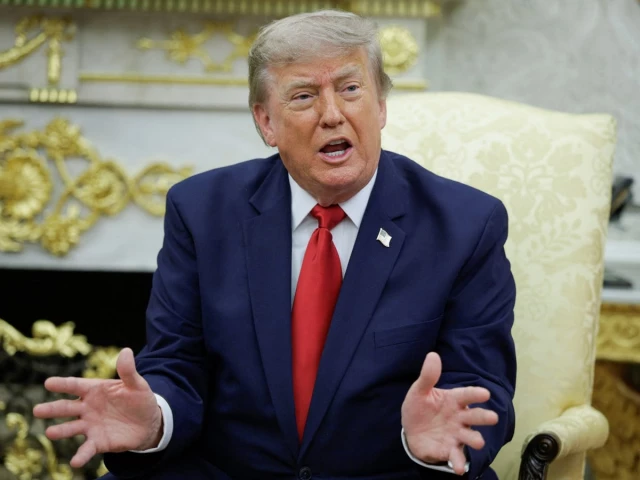
WASHINGTON: Birthright Citizenship returned to the center of the US immigration debate on Thursday after President Donald Trump signed two new executive orders aimed at limiting automatic citizenship for certain children born in the United States, despite the Supreme Court recently rejecting a broader version of the policy.
The new directives take a narrower approach than Trump’s previous executive order, which the Supreme Court ruled unconstitutional on June 30. However, the White House argues the latest measures address specific historical exceptions to the 14th Amendment rather than broadly restricting citizenship for children born in the country.
The administration has made limiting birthright citizenship one of its top immigration priorities. In particular, it has focused on what officials describe as “birth tourism,” where pregnant foreign nationals travel to the United States to give birth so their children automatically receive US citizenship.
White House Targets Birth Tourism
Speaking during the signing ceremony in the Oval Office, White House adviser Stephen Miller announced that the administration had officially banned the practice of birth tourism through the new executive order.
According to a 2020 analysis by the Center for Immigration Studies, between 20,000 and 25,000 women traveled to the United States for birth tourism during a one-year period between 2016 and 2017. Meanwhile, the United States recorded approximately 3.6 million births in 2025.
The executive orders also seek to restrict citizenship rights for children born to foreign government employees stationed in the United States and children of individuals classified as alien enemies. In addition, the administration said the policy could eventually apply to US territories if Congress approves related legislation.
Centrum Air Opens Karachi–Tashkent Route, Giving Pakistan Direct Access to Central Asia
Legal Challenges Expected
Legal experts expect the new executive orders to face immediate court challenges. Critics argue the administration is attempting to bypass the Supreme Court’s recent decision by narrowing the scope of the policy while still challenging constitutional protections.
The American Civil Liberties Union (ACLU) predicted the orders would fail in court. Similarly, immigrant rights organizations said the Constitution guarantees citizenship to nearly everyone born on US soil.
Deborah Fleischaker, a former Biden administration official now with UnidosUS, said the Supreme Court had already confirmed that birthright citizenship remains a constitutional guarantee that no president can change through executive action.
Zain Lakhani of the Women’s Refugee Commission warned that the new measures could affect pregnant women seeking lawful entry into the United States. She urged the government to issue guidance that fully complies with the Supreme Court’s ruling.
Trump Criticizes Supreme Court Decision
President Trump described the Supreme Court’s June 30 ruling as “a very unfortunate decision.” He argued that businesses had developed around birth tourism and insisted his administration would prevent people from using the practice to obtain US citizenship.
Trump’s earlier executive order, signed on his first day back in office in 2025, instructed federal agencies not to recognize citizenship for children born in the United States if neither parent was a US citizen or lawful permanent resident. The Supreme Court later struck down that policy, ruling it violated the Constitution.
The 14th Amendment has traditionally guaranteed citizenship to nearly everyone born in the United States, with only limited exceptions such as children of foreign diplomats or members of an occupying enemy force.
Chief Justice John Roberts wrote in the court’s opinion that the authors of the 14th Amendment intentionally extended citizenship to every free-born person in the country. He emphasized that citizenship represents the right to participate fully in American society and remains protected under the Constitution.











[…] Trump Revives Birthright Citizenship Fight with New Executive Orders Despite Court Setback […]