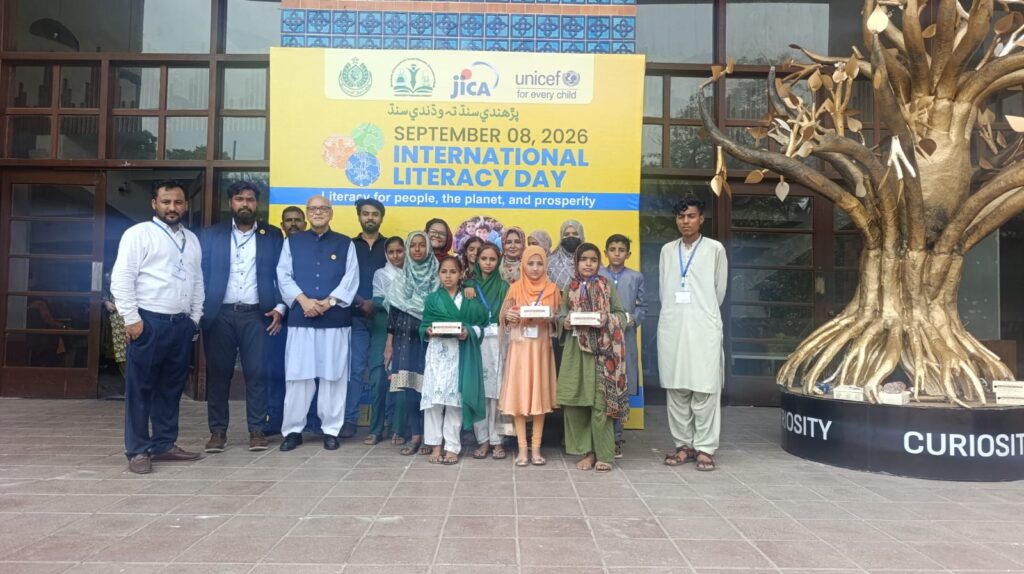
Teach the World Foundation (TTWF) marked International Literacy Day 2026 by showcasing its Digital MicroSchool model at the Arts Council of Pakistan, Karachi.
The interactive classroom demonstration formed part of an event organised by the Directorate of Literacy and Non-Formal Education, School Education & Literacy Department, Government of Sindh.
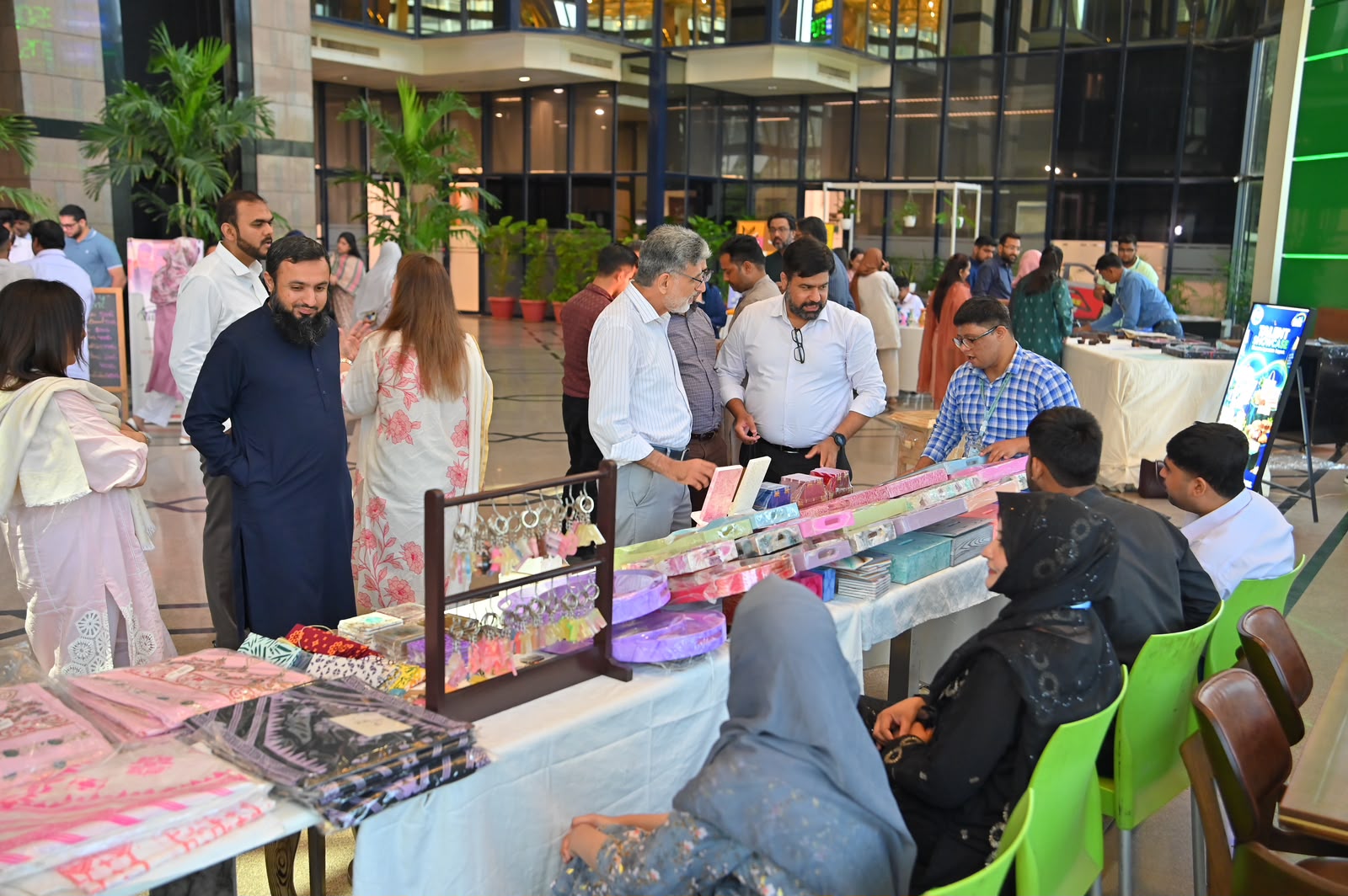
The event brought together government representatives, educationists, development partners and civil society organisations. It focused on solutions for inclusive and sustainable education.
Digital MicroSchool Model Demonstrated
TTWF created a functional digital non-formal learning space for visitors.
The demonstration showed how out-of-school children can develop foundational literacy and numeracy skills through digital tools.
Students use software-equipped tablets with interactive and gamified learning content. Trained local facilitators guide them throughout the learning process.
The model is designed for community-based spaces. This allows children in underserved areas to access structured learning without requiring a conventional school building.
Solar Power Supports Off-Grid Learning
A mobile solar power unit operated the entire TTWF demonstration.
The setup highlighted how digital education can continue in communities with limited or unreliable electricity.
The solar-powered approach also supports the Foundation’s focus on environmentally responsible learning solutions.
PSO Hosts KVTC Exhibition to Promote Vocational Skills and Inclusion
TTWF said the model can help address infrastructure barriers that prevent children in underserved communities from accessing quality basic education.
TTWF Calls for Practical Education Solutions
Arshad Anis, President of Teach the World Foundation, said Pakistan needs practical approaches to address the education gap.
“With millions of out-of-school children across Pakistan, we cannot afford to rely on traditional solutions alone,” Anis said.
He described the International Literacy Day event as an important platform for presenting practical education solutions.
According to Anis, the Digital MicroSchool model aims to bring learning opportunities directly to underserved communities while helping children move toward formal schooling.
Flexible Learning Model Targets Out-of-School Children
TTWF designed its Digital MicroSchool model around compact community learning spaces.
The programme uses tablets equipped with adaptive software to support interactive learning. Locally recruited facilitators receive training to guide students.
The model also uses flexible daily shifts. This allows one location to serve multiple groups of students.
TTWF said the combination of digital tools, trained facilitators and solar power can help expand access to foundational education in areas with limited infrastructure.
TTWF Focuses on Literacy and Numeracy
Teach the World Foundation is a non-profit organisation focused on foundational literacy and numeracy for out-of-school children in underserved communities.
The organisation works to expand access to basic education through technology-based and community-focused learning models.
Its International Literacy Day 2026 demonstration in Karachi highlighted how digital learning and renewable energy can work together to support education in communities facing infrastructure challenges.









[…] Teach the World Foundation Showcases Solar-Powered Digital MicroSchool in Karachi […]