By Sanobar Nadir
Hasbuna Allahu wa Ni’mal Wakeel.
These words have long inspired the men and women who guard Pakistan’s waters. For them, faith and duty remain closely connected. Both demand courage, discipline and determination.
September 8 provides an opportunity to remember the sailors who defended Pakistan during some of its most difficult hours. It also honours the martyrs and veterans whose service helped shape the country’s maritime defence.
The Legacy of the 1965 Dwarka Operation
A navy’s strength does not depend only on the number of ships it operates. Its real strength also comes from the character of its personnel, the quality of training and the discipline they bring to every mission.
The Pakistan Navy has highlighted these qualities throughout its history.
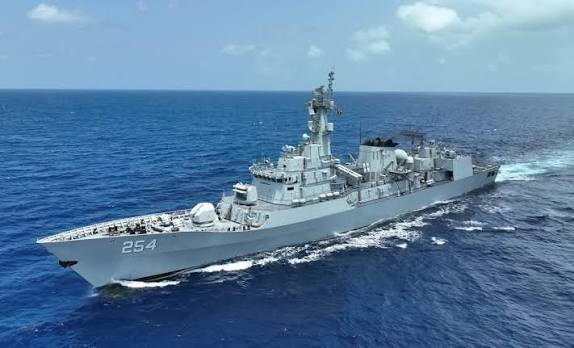
On the night of September 7–8, 1965, seven Pakistan Navy warships moved towards the Indian coastal town of Dwarka. The task group included PNS Babur, PNS Khyber, PNS Badr, PNS Jahangir, PNS Alamgir, PNS Shah Jahan and PNS Tipu Sultan.
Sindh Governor Meets Chinese Consul General in Karachi, Discusses Regional Peace and Cooperation
The operation targeted shore installations and a radar facility that Pakistan said supported Indian military operations.
The ships moved through darkness as the crews prepared for a demanding mission. According to Pakistan’s account, the bombardment struck the radar station and other installations.
The operation, commonly known in Pakistan as Operation Somnath, later became part of the Pakistan Navy’s historical narrative of the 1965 war.
The mission demonstrated the importance of planning and coordination. It also reinforced a central lesson of military service: equipment alone cannot guarantee success. Training, discipline and teamwork remain equally important.
Naval Warfare Has Entered a New Era
Maritime security has changed significantly since 1965.
Modern naval forces must now prepare for long-range missiles, unmanned aircraft, cyber threats and satellite surveillance. Electronic warfare and information systems have also become important parts of the maritime battlespace.
The Pakistan Navy conducts exercises to prepare its personnel for these challenges.
These exercises bring together ships, submarines, aircraft, marines, special forces and unmanned systems. Crews use the drills to test equipment, improve communication and strengthen coordination.
The goal goes beyond demonstrating military capabilities. Exercises also allow commanders and crews to identify weaknesses and improve their response to complex situations.
SEASPARK-2026 Tests Maritime Readiness
The Pakistan Navy demonstrated this approach through SEASPARK-2026, a major maritime exercise held in Karachi.
The exercise brought together naval ships, submarines, aircraft, unmanned systems, marines and special forces. It tested their ability to operate together in a rapidly changing security environment.
The drills combined conventional maritime operations with activities in the information domain.
SEASPARK-2026 also highlighted the importance of decision-making and endurance. Participants had to coordinate movements, communications and responses across multiple operational areas.
For a modern navy, readiness depends on more than acquiring advanced platforms. Constant training and effective coordination also determine how quickly a force can respond to a changing situation.
Protecting Pakistan’s Maritime Economy
Naval readiness also has an economic dimension.
Pakistan relies heavily on the sea for trade, energy supplies and international connectivity. Shipping routes and ports therefore carry national importance.
The Pakistan Navy’s maritime responsibilities extend beyond the coastline. Protecting sea-based economic links remains an important part of national security.
During periods of regional tension, naval forces must remain prepared to monitor maritime activity and protect the country’s interests.
Pakistan’s military narrative around Marka-e-Haq has also highlighted the Navy’s role during periods of heightened tensions with India. According to that account, naval units maintained surveillance and readiness across Pakistan’s maritime domain.
The episode illustrates how modern maritime operations can combine traditional naval platforms with aircraft, unmanned systems, surveillance technology and information capabilities.
Supporting Peace Beyond Pakistan’s Waters
A strong navy does not serve only during wartime.
The Pakistan Navy also participates in multinational exercises and maritime cooperation initiatives. Such activities address shared challenges, including piracy, terrorism, trafficking and threats to commercial shipping.
Pakistan Navy ships have also participated in international maritime security and anti-piracy missions beyond the country’s territorial waters.
These operations help support the security of important international sea routes. They also demonstrate Pakistan’s stated commitment to maritime stability and cooperation.
The Navy’s Humanitarian Role
The Navy’s responsibilities extend beyond security operations.
When coastal communities face storms, floods or other emergencies, naval personnel can provide humanitarian assistance and rescue support.
The skills required during such missions are similar to those required during military operations. Personnel must work under pressure, communicate effectively and respond quickly.
A warship can transport relief supplies as well as military equipment. Helicopters can support surveillance and rescue missions. Sailors trained to defend the country can also help civilians during emergencies.
This humanitarian role represents another dimension of naval service.
The Navy’s duty does not begin and end with war. It also includes helping Pakistan’s people when they face difficult circumstances.
Remembering Those Who Served
September 8 remains an important day for remembering Pakistan’s naval personnel.
The nation honours the sailors who took part in the 1965 Dwarka operation and remembers the martyrs and veterans who served the country.
The occasion also recognises the men and women who remain on duty today. Many serve far from their families and away from public attention.
Their responsibilities continue around the clock.
The sea does not stop for darkness, storms or uncertainty. Maritime forces must remain prepared regardless of the conditions.
Technology will continue to evolve. Ships and weapons will change, while new security challenges will emerge.
Yet the fundamental qualities of naval service remain the same: faith, courage, discipline and commitment.
Wherever Pakistan’s flag flies at sea, its sailors carry a responsibility to defend the country, serve its people and remain prepared for the challenges ahead.
Pakistan Navy remains a force built not only on ships and technology, but also on the people who stand ready to serve.