/ Oct 22, 2026
Trending
By: Izmi Herlani
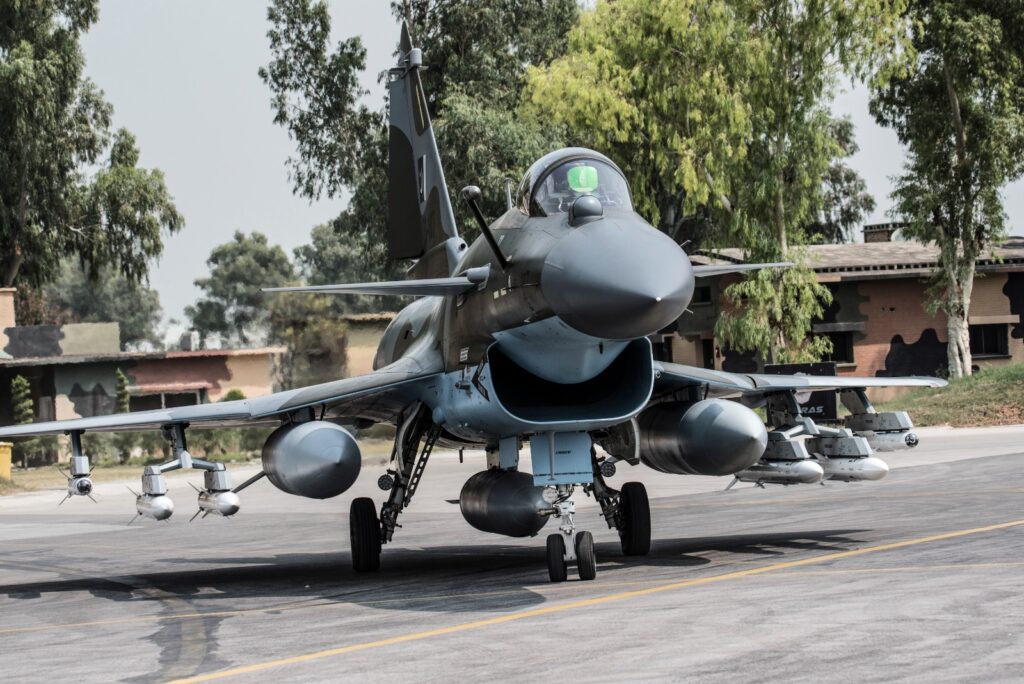
There are moments in a nation’s history when events speak louder than words. They echo through fighter engines, radar screens and command centres. They also live in the quiet work of pilots, engineers, technicians and controllers.
For Pakistan, that story is closely linked to the Pakistan Air Force.
Established in 1947, the force began its journey with limited resources and major security challenges. It inherited a demanding mission: protect the airspace of a newly independent country.
The early years brought uncertainty and pressure. Yet those challenges helped shape the force’s culture of discipline and determination.
The PAF’s history includes major conflicts and periods of rapid transformation. The experiences of 1965 and 1971 influenced its approach to training, planning and capability development.
Over the following decades, the force continued to rebuild and modernise. Each challenge brought new lessons. Each technological shift created new demands.
Today, airpower extends far beyond the traditional fighter aircraft.
Modern conflict can begin without a single aircraft crossing a border. It can involve cyber operations, electronic warfare, unmanned systems, satellite-enabled capabilities and rapidly changing information.
The Pakistan Air Force has increasingly focused on this broader battlespace.
Under the leadership of Air Chief Marshal Zaheer Ahmed Baber Sidhu, the PAF has promoted the concept of a connected, technology-driven and multi-domain force. The approach places emphasis on information, integration and rapid decision-making.
Modern air combat depends on the ability to detect, identify and respond quickly.
A radar may detect a target. Another sensor can confirm it. Intelligence systems can combine the information. Command centres can assess the situation and direct a response.
Electronic warfare can affect the electromagnetic environment. Cyber capabilities can target digital networks. Data links can connect platforms and commanders.
The result is an integrated operational chain rather than an isolated aircraft mission.
This approach is often described through the concept of the kill chain. Its effectiveness depends on how quickly different systems can share information and support a decision.
In this environment, aircraft remain important. However, they form only one part of a much larger system.
The modern battlespace includes air, space, cyber and the electromagnetic spectrum. It also includes unmanned platforms, artificial intelligence, information systems and long-range precision capabilities.
These domains can work independently. Their greater value, however, comes from integration.
That shift has also increased the importance of indigenous technology.
The establishment of the National Aerospace Science and Technology Park reflects Pakistan’s broader effort to strengthen domestic aerospace research and technological development.
For the PAF, local innovation can reduce dependence on foreign suppliers. It can also support the development of systems suited to Pakistan’s specific security requirements.
Technology, therefore, is not simply a modernisation tool. It has become part of strategic planning.
The military confrontation between Pakistan and India in May 2025 placed regional airpower and military technology under intense scrutiny.
Pakistan described its response, including Operation Bunyan-un-Marsoos, as a demonstration of integrated military capabilities. India presented its own account of the confrontation.
The episode highlighted the importance of more than aircraft numbers. Modern conflict can depend on intelligence, electronic warfare, command and control, communications, precision weapons and the speed of decision-making.
The confrontation also renewed debate about network-centric warfare and the role of unmanned and electronic systems.
For military planners, such episodes provide lessons about readiness, coordination and technological integration.
The broader lesson is clear: possessing advanced platforms does not automatically guarantee operational effectiveness. Forces must also be able to connect their systems, interpret information and act under pressure.
One of the central ideas in modern warfare is the attempt to disrupt an opponent’s ability to make effective decisions.
Strategic paralysis does not necessarily mean destroying an entire military force.
Instead, it can involve disrupting communications, confusing information flows, affecting sensors and placing pressure on command structures.
A force may possess aircraft, weapons and personnel. Yet those assets become less effective if commanders cannot communicate securely or build a reliable picture of the battlefield.
The electromagnetic spectrum has therefore become a major part of military competition.
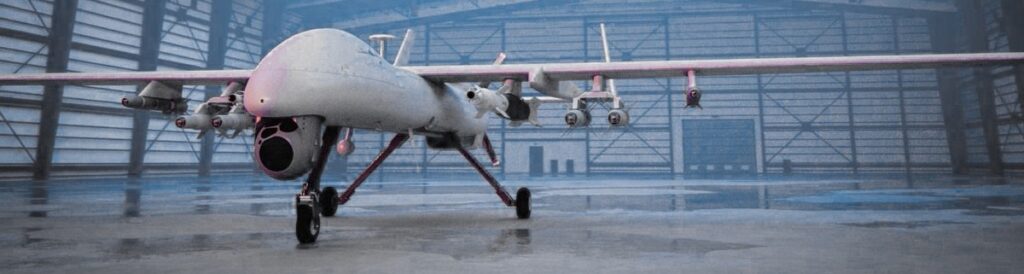
Cyber capabilities, electronic warfare and information operations can influence a conflict before conventional weapons produce visible effects.
This creates a battlespace where speed and clarity can matter as much as firepower.
The force that detects a threat earlier can gain valuable time. The force that processes information faster can gain an operational advantage. The force that coordinates its assets effectively can respond with greater precision.
The Pakistan Air Force has travelled a long way since 1947.
Its aircraft have changed. Its technology has advanced. Its operational environment has also become more complex.
Future conflicts may extend from the skies into cyberspace, the electromagnetic spectrum and space. Artificial intelligence and autonomous systems could further transform how forces detect threats and make decisions.
Yet technology alone cannot define military effectiveness.
Training, discipline, leadership and readiness remain essential.
For the PAF, the central challenge is to combine these qualities with modern technology. Its future strength will depend not only on what it flies, but also on how effectively its people, platforms and networks operate together.
The force’s history reflects a long process of adaptation. Its future will require the same willingness to learn and innovate.
The battlespace is changing rapidly. So is the Pakistan Air Force.
Its enduring objective remains the same: maintaining readiness and contributing to the defence of Pakistan.









[…] Pakistan Air Force: Redefining the Battlespace […]
[…] Pakistan Air Force: Redefining the Battlespace […]