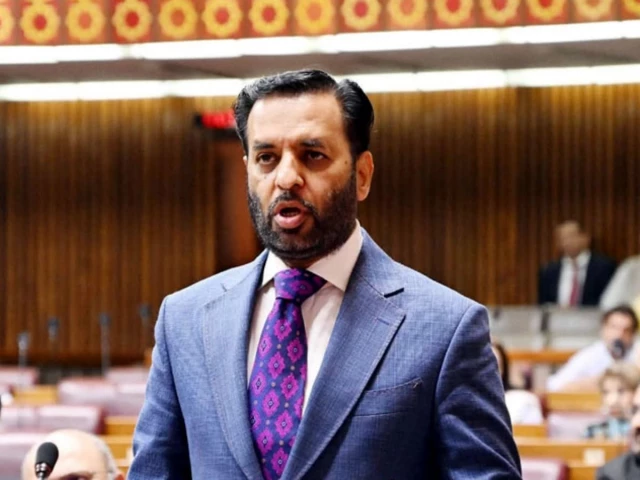
Federal Health Minister Mustafa Kamal has described the creation of smaller provinces as a national necessity, saying Pakistan’s existing administrative structure cannot effectively manage the country.
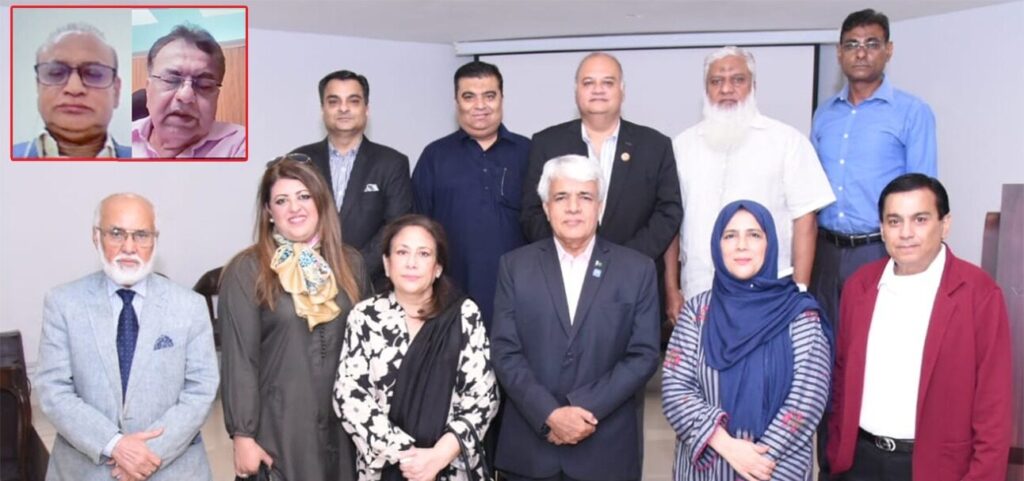
Speaking at the inauguration of a regional office of the Allied Health Professionals Council in Karachi, Kamal said creating new provinces had become essential to save and run the state.
“The creation of new, smaller provinces isn’t anyone’s wish but Pakistan’s need,” he said. He added that establishing new provinces had “become indispensable to save and run the state.”
His remarks came amid renewed political debate over administrative restructuring and the possibility of holding a referendum on new provinces.
A day earlier, Minister for Parliamentary Affairs Tariq Fazal Chaudhry said Parliament and provincial assemblies could not be bypassed or disregarded in the process.
His statement followed Interior Minister Mohsin Naqvi’s renewed call for a referendum. Naqvi has argued that the public should have the final say, while maintaining that any initiative would require the consent of all allied parties in the ruling coalition.
Kamal Questions Provincial Devolution
During his address, Kamal highlighted the size of Pakistan’s four provinces. He said Punjab was larger than 180 countries, Sindh exceeded 175 countries in size, Khyber-Pakhtunkhwa was larger than 162 countries, and Balochistan exceeded 185.
He also raised concerns about the distribution of public funds.
Trump, Putin and Xi to Hold Historic Trilateral Meeting in China Next Week
” In a divisible pool, 57.5% of the money gets parked with the provinces,” Kamal said. He claimed the four provinces had received Rs8.84 trillion during the current fiscal year, but the funds were not reaching villages.
According to the minister, the central problem was the lack of effective devolution within the provinces.
Kamal also described Karachi as Pakistan’s revenue engine, arguing that the city had yet to realise its economic potential.
“The IMF cannot pull Pakistan out of this economic quagmire, Karachi can,” he said, adding that less than 10% of the city’s potential had been utilised.
Using a family analogy, the minister said expanding a household did not mean breaking it apart.
“When a family grows, a new room has to be built; that does not break up the home,” he stated.
Minister Renews Call for Administrative Restructuring
Earlier this month, Kamal reiterated his support for creating new provinces and administrative units. He argued that Pakistan could not be governed effectively under its existing administrative model.
He said years of raising concerns about Karachi had produced little progress. The minister also questioned why the city continued to seek its rights from the federal government despite its economic contributions.
“The people of Karachi earn and contribute, yet they still have to beg the federal government for their rights,” he said.
Kamal further claimed that the federal bureaucracy in Islamabad was displeased with Karachi residents.
“I honestly believe the existing government system cannot work. The longer we delay the creation of new administrative units, the greater the damage will be,” he said.
In August, the minister had also called for new administrative units, describing the existing governance system as paralysed. He cited Pakistan’s population of approximately 260 million and argued that four provinces were insufficient to meet the country’s administrative needs.
Political Debate Over New Provinces Intensifies
The current debate gained momentum on July 30 when Interior Minister Mohsin Naqvi called for additional administrative units or provinces as part of wider governance reforms.
Naqvi argued that structural changes were necessary to improve public services, ensure justice and expand opportunities for young people.
The proposal drew strong opposition from the Pakistan Peoples Party (PPP), particularly in Sindh. Chief Minister Murad Ali Shah rejected Naqvi’s assessment of the governance system and opposed dividing the province.
The Muttahida Qaumi Movement-Pakistan (MQM-P), meanwhile, supported the creation of new provinces and called for a national dialogue among political parties. The party cited population growth, governance challenges and the concentration of political authority as reasons for administrative devolution.
The PPP maintained that improving governance and dividing Sindh were separate matters. Sindh Minister Syed Nasir Hussain Shah said the provincial government was willing to discuss administrative reforms but opposed any move to divide the province.
On September 3, the Sindh Assembly unanimously passed a resolution rejecting proposals to divide Sindh or change its territorial boundaries. The resolution described the province as a historic, civilisational and constitutional entity and declared: “Sindh is one and shall remain one.”
Naqvi subsequently reiterated his support for new provinces, saying public opinion should guide the decision. He argued that people should first understand the advantages and disadvantages of administrative restructuring.
Constitutional Process Remains a Key Question
The debate has also raised questions about whether a referendum could determine public support for new provinces.
Article 48(6) of the Constitution allows a matter of national importance to be referred to a referendum following approval by a joint sitting of Parliament.
However, a referendum alone cannot establish a new province. Any change to provincial boundaries must follow the constitutional procedure.
Political leaders have also called for consensus before any restructuring takes place.
Pakistan Tehreek-e-Insaf (PTI) Chairman Barrister Gohar Ali Khan warned against dividing Sindh or any other province without the consent of its people and representatives. He called for a commission and wider consultations.
Defence Minister Khawaja Asif also said any final decision should emerge through consensus. He suggested Islamabad could serve as a starting point for administrative restructuring.
Prime Minister’s Adviser Rana Sanaullah similarly called for discussions at relevant forums and consensus among political parties.
The debate now centres on whether Pakistan’s governance challenges can be addressed through stronger administrative devolution or the creation of additional provinces, and how any proposed changes could secure the required constitutional and political support.









[…] New Provinces Pakistan’s Need, Not Anyone’s Wish, Says Mustafa Kamal […]