Iran and Oman have reached the final stage of talks on a temporary safe route through the Strait of Hormuz, Iranian state media reported Monday.
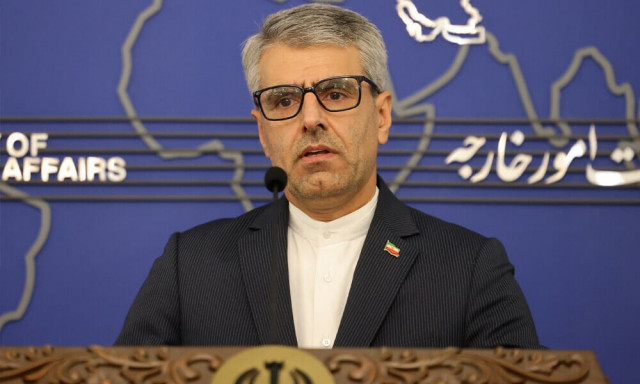
Iranian Foreign Ministry spokesperson Esmail Baghaei said the two countries could register an agreement with the International Maritime Organization within the coming days.
Baghaei urged other countries not to interfere with the process. He expressed hope that “ill-intentioned parties” would allow the talks to continue.
The proposed route could help commercial vessels navigate the strategic waterway amid heightened tensions in the region.
Iran Warns Against Further Pressure
Baghaei also addressed Iran’s wider dispute with Western countries during a press briefing.
He said Iran would respond if the UN nuclear watchdog adopted a new resolution against Tehran.
The spokesperson criticised European countries seeking such a resolution. He argued that the ongoing conflict has restricted access to Iran’s nuclear facilities.
Baghaei also rejected US Vice President JD Vance’s description of the conflict. He called the situation “overt aggression” rather than a war.
A Qatari delegation also travelled to Tehran on Sunday to support de-escalation efforts, according to Baghaei.
He added that a technical delegation from Iran’s Armed Forces General Staff had recently travelled to Qatar. The team will investigate the case involving missing pilots.
Iran Warns South Korea Over Gulf Presence
Baghaei also warned South Korea against joining military operations in the Gulf or Strait of Hormuz.
He said Tehran would view any South Korean military participation as support for US actions against Iran.
Baghaei stressed that Iran values its long-standing relationship with South Korea. He noted that the two countries have maintained diplomatic ties for more than 64 years.
However, he said Iran currently considers itself engaged in defending against US actions.
Baghaei further warned that any country supporting US military operations could face serious consequences.
Ghalibaf Warns US Energy Interests
Iranian Parliament Speaker Mohammad Bagher Ghalibaf issued a separate warning to Washington.
He said US energy assets in the Gulf could face Iranian retaliation if American forces target Iran’s oil and gas infrastructure.
Ghalibaf said Iranian energy facilities remain exposed to attack. He warned that any strike on Iranian assets could trigger retaliation against US interests in the region.
His remarks followed warnings from the United States over attacks on American naval forces.
Belgian Mosque Vandalised With Swastikas, Hate Messages and Dog Faeces
US Central Command recently released footage showing what it described as operations against Iranian vessels.
CENTCOM commander Brad Cooper warned Iran against attacking US ships. He said Washington could respond by targeting Iran’s oil fleet.
US Defence Secretary Pete Hegseth later repeated the warning on X. He said US forces could destroy Iranian oil tankers if Iran attacked American naval vessels.
Iran Plans Restricted Zone Around Hormuz
Iranian Supreme National Security Council Secretary Mohsin Rezaei also announced plans for a restricted zone around the Strait of Hormuz.
Iranian state media reported that authorities could announce details of the zone in the coming days.
Rezaei said the zone would cover parts of the Gulf. He added that authorities could place ships entering the area on a sanctions list.
The announcement adds another layer of uncertainty around commercial shipping through the strategic waterway.
Baghaei later said Iran had kept the Strait of Hormuz open until February 28. He accused the United States and Israel of disrupting commercial shipping through their military actions.
According to Baghaei, the conflict has halted some tanker movements, disrupted trade and pushed energy prices higher.
Economic Pressure Adds to Iran’s Challenges
Iran also faces growing economic pressure from US sanctions and restrictions on oil exports.
Iranian officials say the government plans to tackle the economic impact through domestic reforms.
Economy Minister Ali Madanizadeh rejected the idea that US sanctions would force Tehran to change its political course.
He said Iran’s government and people must lead economic reforms rather than the US Treasury.
Deputy Economy Minister Morteza Zamanian also said Iran’s Economic War Headquarters would intensify efforts to address problems linked to the conflict.
Iranian officials have cited inflation, currency volatility, unemployment and market management among the country’s major economic challenges.
Kharg Island Remains Key Oil Hub
Kharg Island remains central to Iran’s oil exports. Iran exported most of its crude through the island before the conflict, according to Iranian officials.
US restrictions have disrupted those flows since mid-April.
US Central Command said it had redirected 92 commercial vessels, disabled three vessels and boarded two as part of its campaign against Iran’s oil exports.
Iranian Oil Minister Mohsen Paknejad said Kharg Island had faced hundreds of attacks in previous months but continued to operate.
The island has also featured in US President Donald Trump’s recent warnings. Iranian authorities have vowed to respond strongly if the United States attacks the oil hub.
The Strait of Hormuz remains a major concern for global energy markets. Any prolonged disruption could affect oil supplies and fuel prices worldwide.
US Energy Secretary Chris Wright, however, said oil continues to move through the waterway. He said current transit levels remain significant despite the conflict.
US Central Command also said Saturday that its forces struck three Iranian vessels after the Islamic Revolutionary Guard Corps launched ballistic missiles at two US Navy ships.
The competing claims highlight the growing risks around the Strait of Hormuz as Iran, the United States and regional actors continue to exchange warnings.










[…] Iran-Oman Talks Near Deal on Safe Strait of Hormuz Route […]