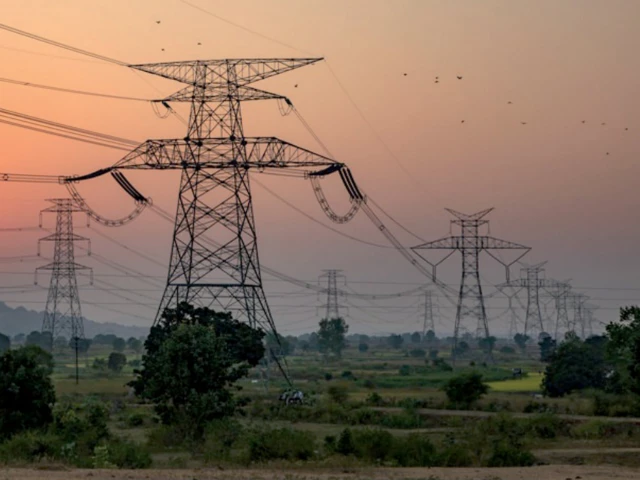
The government has proposed a two-tier business model for privatised power distribution companies (Discos). The plan would allow successful bidders to retain ownership of poles and wires while outsourcing electricity sales, billing and collections to private suppliers.
The proposed system would also transfer legacy power capacity obligations to competitive suppliers. However, the model still requires approval from the power sector reform steering committee and the federal cabinet.
Under the plan, the government would regulate only the original buyer of each distribution company. Officials have proposed calling this entity the “supplier of last resort”.
Faisalabad, Gujranwala and Islamabad are currently among the distribution companies offered for privatisation.
Private Suppliers Could Take Over Electricity Sales
The proposed model would allow third-party investors, known as competitive suppliers, to operate in a deregulated market.
However, these suppliers would first have to acquire customers and the associated legacy capacity obligations from the new owners of distribution companies.
Those obligations include capacity payments that currently cost consumers around Rs1.7 trillion annually.
Sofia Franklyn Revisits Alex Cooper Feud in New Memoir ‘Daddy Issues’
The proposal would not immediately reduce electricity prices. Consumers would still face an estimated Rs17 per-unit charge linked to idle generation capacity.
Nevertheless, officials believe competition could gradually lower tariffs over the medium and longer term. Private suppliers could offer electricity below officially approved rates to selected consumers.
A Privatisation Commission official involved in the proposal said the model aims to remove legacy independent power producer (IPP) obligations from the electricity purchasing process.
The plan also seeks to establish a competitive supply market and introduce private investment and market-based efficiencies.
FESCO Could Become the First Test Case
The government may initially apply the model to Faisalabad Electric Supply Company (FESCO). The Privatisation Commission aims to complete its sale by early next year.
Under the proposed arrangement, the Central Power Purchasing Agency-Guaranteed (CPPA-G) would auction FESCO’s contracted capacity to private suppliers.
The auction would include the corresponding customer base. Successful bidders would assume CPPA-G’s position as buyers of electricity from the national power pool. They would also take over the new distribution company’s commercial relationship with those customers.
The commission official said CPPA-G’s existing agreements with independent power producers would remain unchanged.
However, CPPA-G would sign separate agreements with third-party suppliers. These agreements would allocate electricity supply and customers to the successful bidders.
The second-tier suppliers would handle several commercial functions, including:
- Electricity procurement
- Customer management
- Billing and collections
- Related commercial obligations
Protected Consumers to Retain Tariff Support
The proposal would maintain regulated tariff protection for protected consumers.
These consumers would remain part of the customer portfolios transferred to competitive suppliers. The government also intends to preserve existing cross-subsidy arrangements during the transition.
Officials say this approach would prevent additional pressure on public finances. It would also stop suppliers from separating commercially attractive customers from their protected-consumer obligations.
The commission official said private investors would not accept legacy capacity payment risks without receiving a matching customer base.
Therefore, the proposed solution would transfer contracted electricity supply and corresponding demand to private suppliers together. The government could complete the transfer in one step or through a limited number of stages.
Competitive suppliers would then assume the related capacity payment obligations. They could sell the acquired electricity to customers at deregulated rates.
However, protected consumers would remain subject to their existing tariff safeguards.
Multiple Suppliers Could Replace Single-Buyer System
The model would allow several private suppliers to perform functions that CPPA-G currently handles as the central electricity buyer.
This change could create competition in the electricity supply market.
The Privatisation Commission official said potential investors had shown strong interest in acquiring idle capacity during the government’s investor consultation exercise.
The government hopes to make the power sector more sustainable by reducing distribution losses, improving bill recovery and raising service standards.
It also aims to strengthen accountability and reduce the sector’s dependence on government support.
Distribution Networks to Remain Regulated
A central feature of the proposal is the separation of electricity distribution from electricity supply.
The distribution company would retain its regulated network business. However, private suppliers could compete to provide electricity by acquiring supply capacity and customer portfolios.
The Privatisation Commission expects competition to encourage innovation, lower tariffs and give consumers greater choice. It also sees opportunities for new energy solutions and private investment.
However, the government faces a major challenge. More consumers are shifting to alternatives such as solar power than the national grid is gaining through new connections.
Under the proposed system, the original buyer of a distribution company would act as the supplier of last resort. This arrangement would protect consumers if a competitive supplier failed to provide electricity.
Competitive suppliers would need to offer lower tariffs than the supplier of last resort. The price difference would compensate the original buyer for maintaining a minimum customer load.
The government also plans to offer battery storage services as an additional business opportunity. These systems could help manage peak-hour demand and reduce pressure on the electricity network.










[…] Government Proposes Two-Tier Model for Privatised Power Distribution Companies […]