Transgender community representatives and civil society organisations have presented a five-point charter of demands to the Sindh government, calling for action on rights and public services.
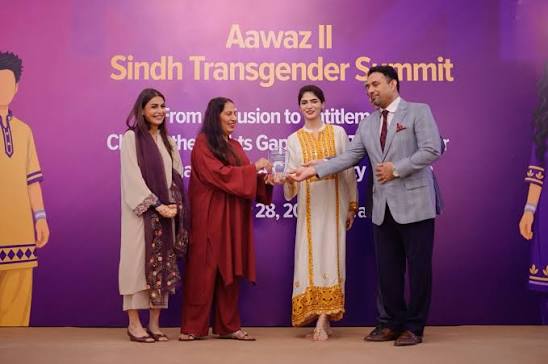
The Sindh Transgender Summit was organised by the Legal Aid Society (LAS) with the Gender Interactive Alliance (GIA) under the Aawaz II Programme.
The programme is led by CARE Pakistan and funded by UK International Development from the UK government.
The Sindh government has also highlighted the importance of inclusive social welfare and equal access to public services for transgender persons.
Community representatives highlight key gaps
The summit brought together officials from several provincial departments and public institutions.
Representatives from Social Welfare, Health, Education, Home, Labour, BISP/Ehsaas and NADRA attended the event.
The Sindh Human Rights Commission and Sindh Commission on the Status of Women also took part.
NBP Finance Minister discusses banking priorities with bank leadership
Community leaders, civil society groups and development partners joined the discussions.
A panel moderated by Legal Aid Society advocate Maliha Zia examined challenges faced by transgender and Khawaja Sira people.
Five-point charter presented
Aradhiya Khan presented the charter on behalf of the community.
The five demands focus on safe housing, education, employment, healthcare and social protection.
Safe homes: The community called for emergency safe houses managed by transgender-led organisations.
Education: It called for full implementation of Sindh’s Transgender Education Policy, along with scholarships and protection from discrimination.
Employment: The charter seeks enforcement of the 0.5% government job quota and removal of medical certification requirements.
Sindh has a 0.5% job quota for transgender persons. However, a 2026 report said implementation remained stalled over the medical examination requirement.
Healthcare: The community called for dedicated wards in public hospitals and sensitive, gender-affirming care.
Social protection: The charter seeks inclusion in BISP and immediate financial assistance for registered Khawaja Sira individuals.
Education policy also under discussion
The summit called for implementation of Sindh’s Transgender Education Policy.
The Sindh government approved a draft of the policy in 2024. It proposed measures to improve access to education and reduce discrimination against transgender students.
The government later directed the Education Department to develop the province’s first transgender education policy.
Government promises action
Munawar Ali Mithani, Secretary of the Sindh Social Welfare Department, acknowledged the gap between legal commitments and people’s experiences.
He said the government would work across the five areas raised at the summit.
Mithani also called for cooperation between government departments, civil society organisations and the transgender community.
Amir Ali Khan, Director General of NADRA, reaffirmed the authority’s commitment to improving registration and access to services.
He said NADRA would work with the Social Welfare Department and other stakeholders to identify gaps and improve services.
Organisers call for follow-up
Adil Sheraz, Country Director of CARE Pakistan, said the summit should help turn legal rights into practical outcomes.
Haya Emaan Zahid, CEO of the Legal Aid Society, urged government departments to use the summit’s Commitment Tracker as a roadmap for follow-up action.
She also reaffirmed LAS’s commitment to legal aid, monitoring and advocacy alongside the Khawaja Sira community.
The summit ended with a call for continued action on the five demands and stronger implementation of existing rights and services across Sindh.









[…] Transgender Sindh summit calls for action on five-point rights charter […]