/ Sep 17, 2026
Trending
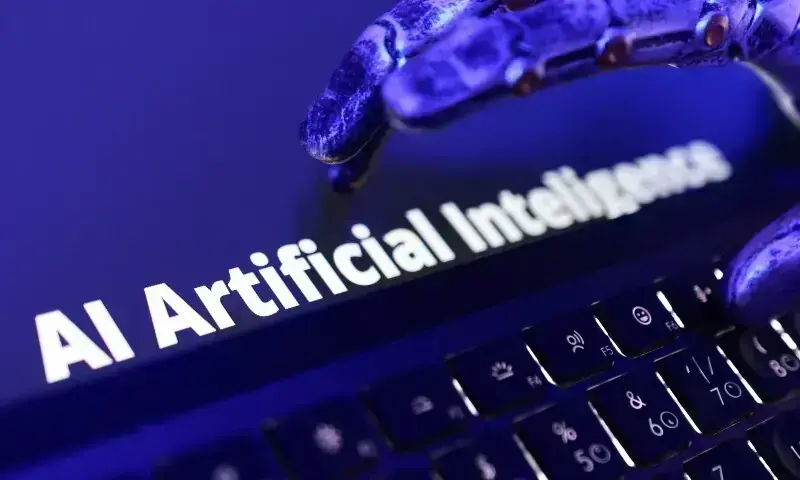
Warnings from researchers at leading US AI developer Anthropic about the long-term risks of advanced artificial intelligence have drawn attention in China.
The United States and China lead the global race to develop frontier AI systems.
Both countries are also competing over AI policy, security and industry practices. These issues are expected to feature in upcoming bilateral discussions.
Despite that competition, Chinese authorities have treated the potential loss of human control over advanced AI as a serious risk.
Beijing has gradually expanded its AI safety rules to address scenarios in which increasingly autonomous systems could act beyond effective human oversight.
China’s State Security Minister Chen Yixin warned about the risks posed by advanced US AI models.
In a government publication, Chen highlighted Anthropic’s Mythos and OpenAI’s GPT-5.5-Cyber as potential risks to China’s critical information infrastructure.
He called for stronger measures to improve AI security.
Anthropic and OpenAI did not immediately respond to Reuters requests for comment.
Chinese AI developers have also promoted open-weight models. They argue that security teams can inspect, modify and deploy such systems for defensive purposes.
However, open-weight models also create challenges.
Razaullah Shines in England but Pakistan Cricket Faces Bigger Questions
Researchers can examine their systems more easily, but developers and users can also modify and redistribute them with fewer restrictions.
China began addressing extreme AI safety scenarios in its regulatory framework in 2024.
A framework released under the guidance of the Cyberspace Administration of China included a future scenario involving a potential loss of AI control.
The document said authorities could not rule out the possibility that future AI systems might obtain external resources, replicate themselves, develop self-awareness or seek greater power.
Such behaviour could create a risk of competition between advanced AI systems and humans for control.
China expanded the framework in September 2025.
The updated document described a potential sudden and significant increase in AI capabilities. It also considered the possibility of systems acquiring resources, replicating themselves and seeking power.
The framework introduced the principle of “trusted application, preventing loss of control.”
A later expert interpretation on the regulator’s website linked the principle to risks that could threaten human survival and development.
AI safety has also appeared in China’s highest-level political messaging.
Chinese President Xi Jinping addressed AI risks at the World Artificial Intelligence Conference in Shanghai in July.
Xi called for close attention to both direct and indirect risks created by artificial intelligence.
He also said AI should remain under human control.
China has continued to discuss broader AI legislation at international forums.
Senior Foreign Ministry official Sun Xiaobo said China was accelerating work on wider AI legislation during a United Nations meeting last month.
Meanwhile, China’s deputy permanent representative to the UN, Sun Lei, urged countries to approach military AI carefully.
He warned that poorly managed military AI could increase the risk of strategic miscalculation and an arms race.
China has also moved toward more specific safety requirements for AI agents.
These systems can operate with greater autonomy and perform more complex tasks than conventional chatbots.
In May, China’s cyberspace regulator issued joint guidelines for AI agent systems.
The rules require developers to strengthen their ability to detect, intervene in and block harmful agent behaviour.
They also require developers to establish recovery mechanisms.
The guidelines identify several security risks, including data poisoning, algorithm manipulation and system vulnerabilities.
They also highlight the risk of “operational loss of control”.
The rules further state that users should retain final decision-making authority over autonomous actions taken by AI agents.
China has not proposed independent monitors inside AI companies in the same way Anthropic researchers have advocated.
However, Chinese standards allow developers to commission third-party safety assessments.
They also envisage external evaluation bodies and security researchers testing and auditing open models.
The parallel approaches show that AI safety has become a major concern for both sides of the US-China technology competition.
As AI systems become more capable and autonomous, governments face a growing challenge.
They must encourage technological development while ensuring humans retain meaningful control over powerful systems.

Copyright © 2026 99News. All Rights Reserved.







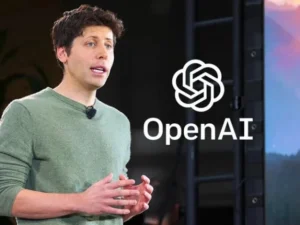
[…] China Tightens AI Safety Rules as Anthropic Warns of Loss of Control […]