Apple has reportedly begun testing memory chips from China’s ChangXin Memory Technologies (CXMT) across products including iPhones and MacBooks as manufacturers face a growing component shortage driven by the AI boom.
The Wall Street Journal reported on Sunday that Apple had held early discussions with CXMT, China’s largest memory-chip maker by market value, about supplying components for some devices sold in China.
People familiar with the discussions said Apple was considering using CXMT memory chips in selected products.
Reuters said it could not immediately verify the report. Apple and CXMT did not respond to Reuters requests for comment.
The reported discussions come as the global demand for memory chips continues to surge.
Artificial intelligence data centres require enormous quantities of memory components. The rapid expansion of AI infrastructure has therefore changed the economics of a sector that was once considered a relatively low-margin part of the semiconductor industry.
CXMT has emerged as a major player in that market.
The company has become the world’s fourth-largest memory-chip manufacturer, producing DRAM chips used in smartphones, laptops and servers.
Apple’s reported interest in CXMT could give the company another source of memory components at a time when supply remains tight.
Laptop manufacturers are already turning to Chinese suppliers to ease shortages.
According to the Wall Street Journal, HP and Acer have started using CXMT memory chips in devices sold outside the United States.
CXMT and Yangtze Memory Technologies Corp (YMTC), China’s major flash-memory producer, spent years expanding their businesses with government support while absorbing significant losses.
The AI boom has dramatically changed their prospects.
The construction of AI data centres by major technology companies has pushed memory chips into one of the world’s most competitive semiconductor markets.
Demand has risen sharply as companies build systems capable of training and running increasingly sophisticated AI models.
The resulting shortage has also strengthened the bargaining power of memory-chip manufacturers.
Chinese memory producers are increasingly able to select customers and influence prices.
In some cases, they have reportedly charged prices above those of larger South Korean competitors Samsung and SK Hynix as Chinese companies compete for increasingly scarce supplies.
The shift has also intensified tensions between Chinese semiconductor companies and Washington.
The Pentagon has designated CXMT and YMTC as Chinese military companies, citing their alleged role in China’s military-civil fusion strategy.
Both companies have denied the allegations.
YMTC is already included on the US Entity List. The designation restricts its access to certain US-origin suppliers, software and manufacturing equipment.
CXMT’s growing position in the global memory market therefore presents a complicated situation for multinational technology companies.
Apple must balance supply requirements with the geopolitical and regulatory risks surrounding Chinese semiconductor suppliers.
The reported testing of CXMT components also comes as the world’s largest memory-chip manufacturers struggle to satisfy demand.
Samsung, SK Hynix and Micron remain the three biggest producers of memory chips globally.
Nooh Dastgir Butt Warns Pakistan’s Weightlifting Crisis Is Costing Medals
All three have indicated that they are facing difficulties keeping pace with demand.
Their recent financial results have benefited from higher semiconductor prices, reflecting the strength of the memory market.
Much of that demand comes from the rapid expansion of AI infrastructure.
Technology companies including OpenAI, Google and Microsoft are investing heavily in data centres designed to support AI services.
Those facilities consume large amounts of memory chips, encouraging manufacturers to prioritise higher-margin data-centre products over components for consumer electronics.
That shift has raised concerns for smartphone and PC manufacturers.
Apple’s reported talks with CXMT suggest the company is exploring additional ways to protect its supply chain as the AI-driven shortage continues.
If the testing leads to wider adoption, CXMT could gain another major international customer while Apple could secure an additional source of memory components for products sold in China.
The development would also underline how the AI boom is reshaping the semiconductor industry, creating new opportunities for Chinese chipmakers even as geopolitical tensions continue to constrain their access to Western technology.





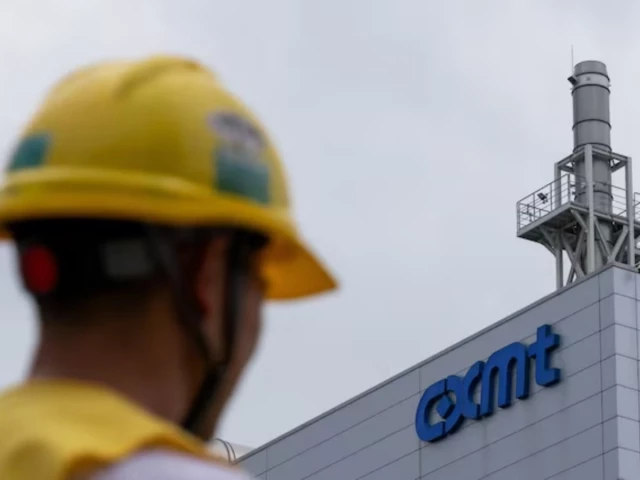







[…] Apple Tests China’s CXMT Memory Chips as AI Boom Tightens Global Supply […]