/ Sep 17, 2026
Trending
TEHRAN: Hormuz Strait tensions escalated on Wednesday after Iran rejected Oman’s proposal to equally divide shipping transit routes between the two countries, warning that the strategic waterway could remain closed if Muscat refuses Tehran’s counterproposal.
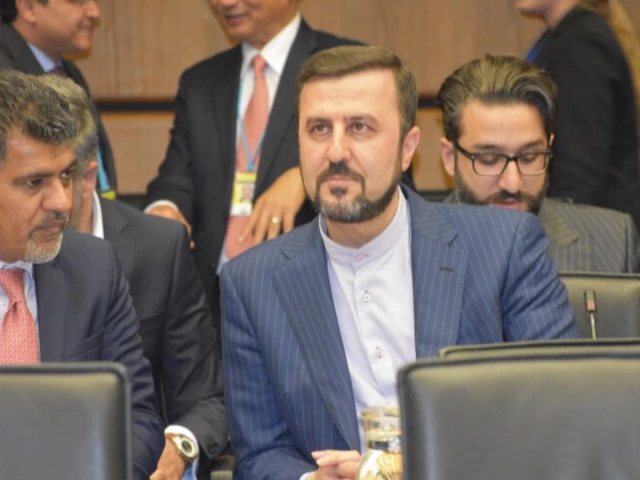
Iranian Deputy Foreign Minister Kazem Gharibabadi told state television that Oman had suggested a navigation route split evenly between Iranian and Omani territorial waters. Under the proposal, vessels would enter through Iranian waters and exit via Omani territory.
However, Tehran rejected the plan, insisting that while part of the shipping lane could remain within Omani waters, Iran should retain operational control over that section. Gharibabadi said the Strait of Hormuz would stay closed if Oman declined the revised proposal, adding fresh uncertainty over one of the world’s busiest energy corridors.
More than 100 words into the crisis, Hormuz Strait security dominated regional diplomacy as the European Union, Gulf states, the United States and Iran exchanged warnings following renewed military confrontations across the Middle East.
Gold Prices Edge Lower in Pakistan as Per Tola Rate Drops Below Rs420,000
EU foreign policy chief Kaja Kallas said she discussed Gulf security with Iranian Foreign Minister Abbas Araghchi, stressing that the current pause in fighting should create space for renewed diplomacy and help prevent another full-scale regional conflict.
Kallas also condemned Iran’s temporary detention of two French diplomats and renewed calls for Tehran to end its military support for Russia. She welcomed recent contact between Iran and Ukraine aimed at reducing tensions following an attack on an Iranian vessel in the Caspian Sea.
Meanwhile, Saudi Foreign Minister Prince Faisal bin Farhan held separate discussions with his counterparts from Qatar, Kuwait and Bahrain. The ministers emphasized protecting freedom of navigation in both the Strait of Hormuz and the Bab al-Mandeb while reaffirming joint Gulf coordination to reduce regional instability.
The US military said it intercepted multiple Iranian ballistic missiles allegedly launched toward American forces in the Middle East, describing the attack as an attempted surprise strike.
Iran’s Islamic Revolutionary Guard Corps (IRGC) claimed responsibility for launching missiles toward a US military base and a Central Command facility in Jordan, describing the operation as retaliation against American actions targeting Iranian interests.
Washington later announced that US and Saudi forces carried out coordinated strikes against Iranian-backed militant sites in eastern Iraq, saying the operation targeted logistics and weapons facilities linked to attacks on American troops and Saudi energy infrastructure.
Saudi Arabia confirmed its participation, describing the operation as an act of self-defence following drone attacks on its oil facilities while insisting it does not seek broader military escalation.
Jordan’s armed forces said air defence systems intercepted five Iranian missiles heading toward the kingdom early Wednesday without reporting casualties or damage.
Separately, Iran denied responsibility for projectiles launched from other countries toward Saudi Arabia, warning that blaming Tehran for every regional attack could further inflame tensions.
The IRGC Navy also announced that it intercepted and stopped three oil tankers in the Strait of Hormuz after the vessels allegedly ignored Iranian warnings. Authorities did not disclose the ships’ identities or specify the alleged violations.
The latest developments have intensified concerns over regional stability, global energy supplies and maritime security as diplomatic efforts continue alongside growing military activity across the Middle East.

Copyright © 2026 99News. All Rights Reserved.








[…] Hormuz Strait Tensions Deepen as Iran Rejects Oman Plan and Warns Shipping Could Halt […]