Kashmiris across the world are observing Kashmir Black Day. People on both sides of the Line of Control (LoC), across Pakistan and abroad are holding protests and rallies. They are demanding the right to self-determination for the people of Jammu and Kashmir.
The Ministry of Kashmir Affairs and Gilgit-Baltistan organised a special ceremony at D-Chowk in Islamabad. Sirens sounded during the event, followed by one minute of silence in solidarity with Kashmiris.
Ishaq Dar Calls for Global Action on Kashmir
Deputy Prime Minister and Foreign Minister Ishaq Dar addressed the ceremony. He said Pakistan observes Kashmir Black Day every year to highlight India’s actions in Jammu and Kashmir.
Dar described raising the Kashmiri people’s voice internationally as a fundamental responsibility. He said Pakistan had raised the issue across the world, including at the Organisation of Islamic Cooperation (OIC).
The OIC has 57 member states. Dar said Pakistan had used the organisation and other international platforms to keep the Kashmir dispute on the global agenda.
He also criticised India’s August 5, 2019, actions in Jammu and Kashmir. He said those measures had made the dispute more complicated. Dar further condemned India’s decision to change the region’s constitutional status.
The deputy prime minister said Pakistan would continue raising Kashmir at every international forum. These include the United Nations General Assembly and other diplomatic platforms. He also referred to Pakistan’s efforts at recent meetings in Shanghai.
Sindh Government Spokesperson Urges Global Action on Kashmir, Says Hemnani
Dar expressed confidence that Kashmiris would eventually secure their rights. He reaffirmed Pakistan’s commitment to the political and diplomatic support of the Kashmiri people.
He also accused India of violating the UN Charter. Dar claimed that restrictions on foreign delegations prevented the international community from witnessing conditions in the territory.
Amir Muqam Highlights Kashmiri Resilience
Federal Minister for Kashmir Affairs and Gilgit-Baltistan Engineer Amir Muqam also addressed the gathering.
Muqam said the large crowd at D-Chowk strengthened his belief in Kashmir’s future. He expressed confidence that Kashmiris would achieve their aspirations. He stressed that the Kashmiri people must receive their rights.
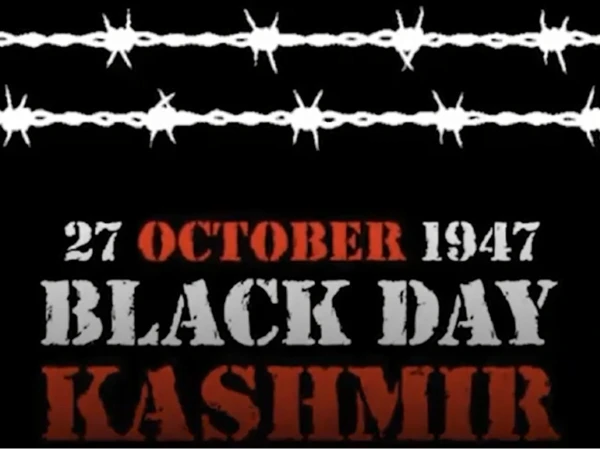
He described October 27, 1947, as a dark day in Kashmir’s history. On that day, Indian forces entered Srinagar and began their military presence in the region.
Muqam said decades of conflict had not weakened the Kashmiri people’s determination. He cited a figure of more than 97,000 people killed in the territory. He also highlighted the suffering of widows and orphaned children.
Despite these hardships, Muqam said Kashmiris remained determined to pursue their rights.
Why Kashmiris Observe Black Day on October 27
October 27 marks the anniversary of the arrival of Indian troops in Srinagar in 1947. Pakistan and many Kashmiri groups describe the event as the beginning of India’s military occupation of Jammu and Kashmir.
Kashmiris observe Black Day each year to draw global attention to the dispute. They also demand the right to self-determination under relevant United Nations resolutions.
In Indian-administered Jammu and Kashmir, groups announced a shutdown and protest demonstrations for the occasion. Kashmiris living abroad are also holding rallies and other activities.
These events aim to press the international community for a peaceful settlement. They also call for the protection of Kashmiri rights under applicable UN resolutions.
In Muzaffarabad, organisers planned a march along Srinagar Highway towards the Line of Control. Participants were expected to gather in Hattian Bala, in Jhelum Valley district, to protest against India.
Shehbaz Sharif Reaffirms Pakistan’s Position
Prime Minister Shehbaz Sharif issued a message on Kashmir Black Day. He said the day recalls a tragic chapter in Jammu and Kashmir’s history. Indian forces entered Srinagar 79 years ago, he noted.
Sharif said the consequences of those events continue to affect the region. He added that Kashmiris still cannot exercise their right to self-determination, which relevant UN Security Council resolutions recognise.
The prime minister said people in Indian-administered Jammu and Kashmir had endured immense suffering and repression. However, he stressed that their determination to secure fundamental rights remained strong.
He described the sacrifices of successive generations as evidence of their struggle for freedom, dignity and justice.
Sharif also expressed concern over the prolonged detention of Kashmiri political leaders, activists and human rights defenders. He called for respect for legal safeguards and fundamental freedoms. He urged the international community to pay greater attention to conditions in the region.
The prime minister said India had pursued unilateral measures in Jammu and Kashmir since August 5, 2019. These measures include restrictions on fundamental freedoms, he said. According to Sharif, they have also affected the region’s political, legal and demographic status.
He called for greater international scrutiny of these developments. Pakistan, he added, continues to demand a settlement based on international law and applicable UN Security Council resolutions.
Sharif stressed that South Asia cannot achieve lasting peace without a just and peaceful resolution of the Kashmir dispute. He said any settlement must reflect relevant UN resolutions and the aspirations of the Kashmiri people.
The prime minister reaffirmed Pakistan’s moral, diplomatic and political support for Kashmiris. He pledged to continue raising their rights at national and international forums.
President Zardari Urges International Intervention
President Asif Ali Zardari also issued a message on Kashmir Black Day. He urged the international community to take serious notice of the human rights situation in Indian-administered Jammu and Kashmir.
He specifically called on the United Nations and international human rights organisations to play an effective role. Their efforts, he said, should support a just, peaceful and lasting settlement of the dispute.
Zardari said October 27, 1947, marked the start of a prolonged and painful chapter in Kashmir’s history. Indian forces arrived in Srinagar on that day, he noted.
The president said the anniversary offered an opportunity to renew support for the Kashmiri people. He reaffirmed their right to self-determination as a fundamental and inalienable right.
Azad Kashmir Residents Express Solidarity
Residents of Azad Jammu and Kashmir also expressed solidarity with people in Indian-administered Jammu and Kashmir.
They said the Kashmiri people’s struggle against Indian control had continued since October 27, 1947. They described that control as illegal and called for an end to the dispute.
The residents urged the international community to help Kashmiris decide their political future under relevant UN resolutions.
They also highlighted the close ties between Kashmiris and Pakistan. Some described Kashmir as vital to Pakistan’s national interests and reaffirmed their support for the Kashmiri people.
Kashmir Black Day activities across Pakistan and abroad seek to keep the dispute on the international agenda. Participants are calling for a peaceful settlement and the protection of the Kashmiri people’s right to self-determination.









[…] Kashmir Black Day Observed Worldwide as Pakistan Reaffirms Support for Kashmiri People […]