The International Monetary Fund (IMF) has warned that Pakistan’s fiscal position could weaken over the medium term. Rising imports and a possible slowdown in remittances could put pressure on the country’s economic buffers.
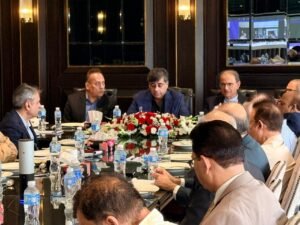
IMF Resident Representative Dr Mahir Binici delivered the warning on Thursday at the Pakistan Prosperity Forum. The Policy Research Institute of the Market Economy (PRIME) organised the event.
“To be candid on the medium-term outlook, we also project that the fiscal position over the medium term can weaken as imports rise and remittances moderate, so we have to continue building buffers,” Binici said.
His remarks focused on Pakistan’s disappointing economic growth, global economic conditions and the reforms needed to improve the country’s outlook.
However, Binici did not clearly say whether Pakistan could avoid another IMF programme after its current $7 billion bailout package expires.
IMF Says Pakistan Needs Deeper Structural Reforms
Binici said Pakistan had achieved economic stability, but sustained reforms remained essential to support long-term growth.
“Pakistan has the stability to start, but sustained, fair and well-sequenced reform is what can turn that stability into higher, more sustained growth and also prosperity,” he said.
He described Pakistan’s weak economic growth as structural rather than cyclical. He also argued that economic policies had favoured established interests and misallocated domestic resources.
According to Binici, the country has underinvested in physical and human capital. Weak investment, low productivity and subdued exports have reinforced one another.
He said exports had fallen to around 10% of GDP. Meanwhile, many workers remained employed in low-productivity agriculture.
Oil Prices Rise on Houthi Attacks and Strait of Hormuz Disruptions
“Stabilisation has been necessary but not sufficient, and there is a need for a certain push on structural growth to change the trajectory over the medium and longer term,” Binici said.
He also cautioned that Pakistan’s economic buffers remained moderate. Weaker policy discipline could reverse recent gains.
IMF Outlook Raises Questions About Another Programme
Pakistan’s three-year Extended Fund Facility programme is due to end in September next year. Its expiry has already prompted discussion about whether the country will need another IMF arrangement.
Binici did not directly address whether Pakistan could avoid another programme for the next five years.
He explained that Pakistan’s economic structure involved a gap between savings and investment. This made a current account deficit a natural outcome.
“Our assessment is that over the medium term the (current account) deficit remains below 1% of GDP,” he said.
Binici stressed the need for reforms in fiscal policy, trade and the external sector. These measures, he said, would help Pakistan build stronger and more resilient economic buffers.
He identified exports as a key driver of economic growth and external sustainability. He also called for a broader, more predictable taxation system to strengthen government finances.
IMF Highlights Tax Reforms and Economic Risks
Binici said Pakistan needed to improve tax administration and broaden its revenue base.
He identified several priorities, including changes to the organisation of the general sales tax (GST). He also called for a wider tax base across retail, agriculture and other sectors.
Additionally, he recommended phasing out distortionary withholding and minimum tax regimes while maintaining revenue neutrality.
The IMF representative also warned that tighter global financial conditions could test Pakistan’s recently built buffers.
He identified several major risks, including escalating conflicts, higher commodity prices, tighter international financing conditions and trade disruptions.
Binici said Pakistan needed to maintain policies that could absorb external shocks. These included exchange rate flexibility, monetary policy focused on medium-term inflation and energy price adjustments supported by targeted assistance.
He also called for better fiscal prioritisation.
PRIME Economist Criticises IMF Policies
The forum also heard strong criticism of the IMF’s economic prescriptions.
Supply-side economist Rizwan Rawji criticised the Fund’s programmes and their impact on economic growth.
“The IMF has been peddling wrong advice, which is delivered with brutal diktat and is anti-growth,” Rawji said.
He also described the IMF’s focus on economic buffers in sharply critical terms. Rawji said tax targets had come at the expense of stronger economic growth.
British High Commission Advisor Stresses Export Growth
Senior Economic Advisor at the British High Commission, Louie Dane, highlighted the importance of exports in sustaining economic growth.
He said international evidence showed that countries achieving income growth above 7% for 15 years also recorded annual economic growth of more than 10% during that period.
Dane added that no country had achieved sustained growth in per capita income without expanding exports.
He said successful economies had listened to exporters and reduced business costs. Pakistan, he argued, needed simpler regulations and closer alignment with international standards.
He also stressed the importance of reliable testing systems that international buyers could trust.
Minister of State for Finance and Revenue Bilal Azhar Kayani said the government had held extensive discussions with exporters. He said officials had acted on their recommendations, including abolishing the Export Development Surcharge and reducing taxes.
Kayani Calls for Devolution and NFC Review
The forum also featured discussion about creating new provinces and improving the distribution of resources.
Kayani said devolution remained important for improving Pakistan’s social and economic indicators.
“We have to achieve devolution one way or the other,” he said.
The minister also argued that cash grants could not resolve the country’s long-term fiscal challenges. He called for a serious review of the National Finance Commission (NFC) resource distribution formula.
His remarks referred to the Rs1.035 trillion in cash grants that provinces have pledged during the current fiscal year. The contributions are intended to support defence requirements and the construction of large dams.
PRIME Chief Proposes Reforms Without Foreign Loans
PRIME Chief Executive Ali Salman outlined several reforms that he believes could help Pakistan achieve faster economic growth.
He called for restructuring the Planning Commission, reforming the tax system and harmonising business regulations.
Salman also proposed abolishing the Economic Coordination Committee.
“For these reforms we do not need foreign loans,” he said.
The discussions highlighted differing views on Pakistan’s economic challenges. However, speakers broadly focused on the need to improve productivity, expand exports and strengthen institutions to support sustainable growth.







[…] IMF Warns Pakistan’s Fiscal Position Could Weaken as Imports Rise, Remittances Moderate […]
[…] 99 News, “IMF Warns Pakistan’s Fiscal Position Could Weaken as Imports Rise, Remittances Moderate” — https://99news.com.pk/imf-warns-pakistans-fiscal-position-could-weaken-as-imports-rise-remittances-m… […]