Japan has launched a new National Disaster Management Agency to strengthen its readiness for major natural disasters. The agency aims to improve the country’s response to potential megaquakes, volcanic eruptions and other emergencies.
More than 350 employees will oversee disaster preparedness, emergency response and reconstruction. The new body will also coordinate efforts across government departments.
The agency is not being established in response to any specific predicted disaster. Instead, it aims to address concerns about Japan’s ability to manage a major crisis similar to the 2011 earthquake and tsunami in northern Japan.
That disaster killed nearly 20,000 people and triggered the Fukushima nuclear crisis.
Japan lies along the Pacific Ring of Fire, making it one of the world’s most disaster-prone countries. However, it has not previously had a dedicated national agency responsible for coordinating disaster management.
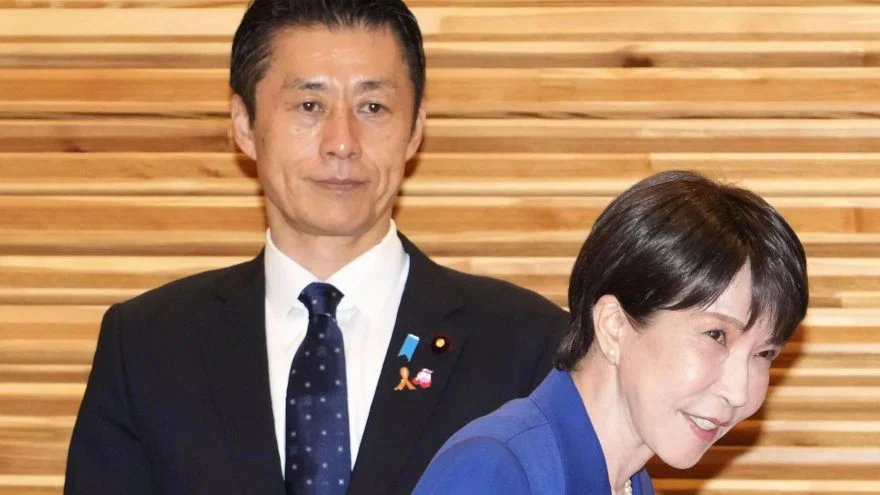
Reconstruction Minister Goshi Hosono said the agency would serve as the central command centre for disaster response. He said its priority would be protecting lives and property while strengthening national preparedness.
Agency Calls for Nationwide Preparedness Reviews
On Monday, Hosono issued emergency requests urging local authorities and residents to review their disaster preparations.
He called on municipalities and households to check the earthquake resistance of buildings and secure furniture. He also urged people to review evacuation procedures and maintain emergency supplies.
Ishaq Dar Praises China’s People-Centred Governance Model
These supplies should include enough drinking water and portable toilets for at least three days.
Hosono said he wanted to use his experience managing the Fukushima nuclear crisis after the 2011 disaster to strengthen the new agency.
However, concerns remain about gaps in Japan’s disaster preparedness. According to figures cited by Hosono, fewer than half of municipal officials had received disaster management training during the previous five years.
Furthermore, only 15% of municipalities had evacuation contingency plans for elderly people and residents with disabilities who require assistance.
Previously, Japan relied on temporary response teams. Officials from different ministries and departments would come together during emergencies, but the country lacked a permanent cross-government command centre.
Japan Faces Risks from Major Earthquakes
Experts have warned that Japan could face major earthquakes in the coming decades. Although scientists cannot predict the exact timing or location of such events, officials are urging the public to prepare.
One major concern is a possible megaquake along the Nankai Trough, an undersea trench off southeastern Japan.
Government estimates suggest such an earthquake could cause up to 298,000 deaths. It could also leave 6.5 million people displaced and destroy approximately 2.35 million homes.
Hosono warned that a disaster of this scale could have serious consequences for Japan’s future.
The government has also assessed the potential impact of other major earthquakes. A quake along two troughs off Japan’s northern coast could cause nearly 200,000 deaths.
Meanwhile, a major earthquake in the Tokyo metropolitan area could kill an estimated 18,000 people. It could also force 4.1 million residents to evacuate and destroy around 400,000 homes.
A Mount Fuji eruption presents another major risk. Government estimates suggest it could affect 790,000 people and damage homes, transport networks, power lines and other critical infrastructure.
New Agency Targets Better Evacuation Centre Conditions
The new agency also aims to improve conditions in emergency shelters across Japan.
The country has faced criticism over evacuation centres that often rely on school gymnasiums, community centres and classrooms. These facilities can lack privacy, proper bedding, clean toilets and hot meals.
Experts have linked difficult shelter conditions to health problems and deaths among displaced people.
To address these concerns, the agency plans to promote better facilities. These include clean portable toilets, kitchens serving hot meals, hot bathing facilities and cardboard beds.
The need for better shelter conditions became clear after the March 2011 disaster. The magnitude 9.0 earthquake and subsequent tsunami killed nearly 19,800 people.
Of these deaths, around 3,810 were linked to conditions following the disaster, including harsh living conditions.
The source also cites a magnitude 7.1 earthquake in southwestern Japan’s Kumamoto Prefecture in July. It says the earthquake killed 38 people and damaged or destroyed more than 69,000 homes.
The disaster reportedly left large areas without water and electricity for weeks.
Extreme heat has also exposed weaknesses in evacuation facilities. Many shelters lacked air conditioning, prompting some residents to remain in their vehicles or nearby parking areas instead.
Through the new agency, Japan aims to improve coordination, strengthen emergency planning and provide safer conditions for people affected by future disasters.












[…] Japan Launches National Disaster Management Agency to Strengthen Emergency Preparedness […]