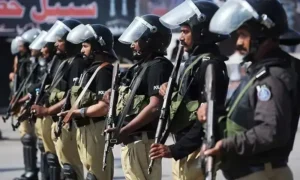
School closures, partial internet restrictions, blocked roads and an increased security presence marked a tense period in Khyber Pakhtunkhwa after the federal government imposed emergency measures and suspended the provincial government led by Pakistan Tehreek-e-Insaf (PTI).
The move has intensified the standoff between former prime minister Imran Khan’s party and Pakistan’s federal authorities. Critics warn that the decision could fuel political instability instead of easing security concerns.
The federal government says the constitutional measure aims to protect residents from militant threats.
Federal Information Minister Attaullah Tarar accused the PTI-led provincial government of links with militants. “The PTI KPK government was hand in glove with the terrorists,” he told journalists on Sunday. He did not provide evidence at the time but promised further details.
Two days later, officials had not publicly provided the promised evidence, according to the supplied report. Schools had reopened in Peshawar and much of the province, while internet services had also returned.
Five Family Members, Including Two Children, Found Dead in Karachi’s Malir
Police did not confirm whether authorities had detained political activists. However, the report described an ongoing crackdown intended to prevent protests, with several PTI leaders reportedly in hiding.
Protests Continue Amid Security Restrictions
On Tuesday, dozens of PTI supporters took to the streets in Bara, Khyber district, the hometown of provincial Chief Minister Sohail Afridi. Reports also emerged of tear gas being used in the area.
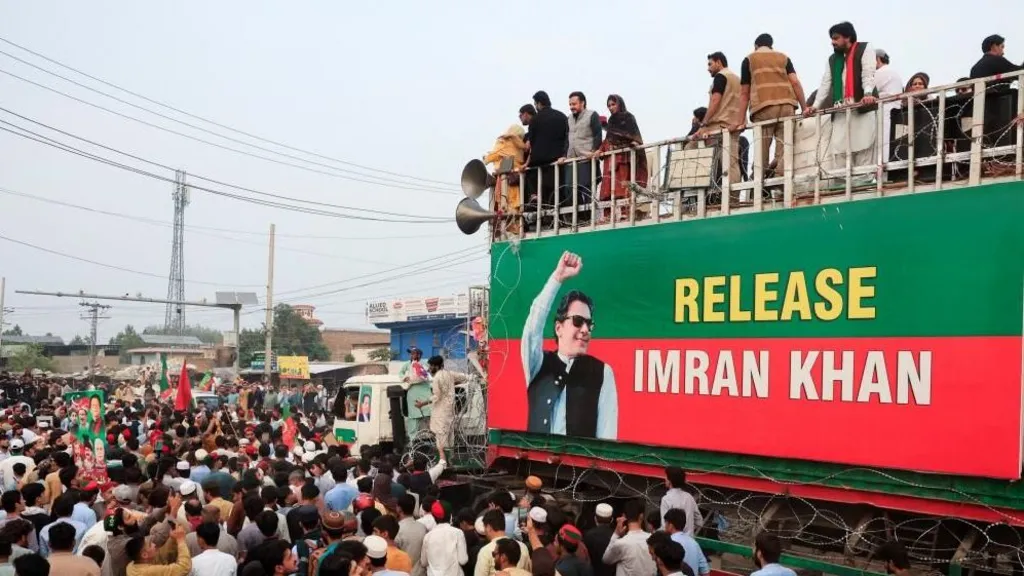
The unrest followed a week of demonstrations by thousands of Khan supporters across Khyber Pakhtunkhwa. The protesters demanded Khan’s release after the PTI had governed the province for years.
Some observers questioned whether security concerns alone explained the timing of the federal government’s decision.
“The charitable response would be to say that it sounded disingenuous,” said Farzana Sheikh, an associate fellow at Chatham House.
Journalist and commentator Arifa Noor also questioned the connection between terrorism and the political measures.
“I do not see the link with terrorism,” Noor said. She added that the long march might not have been the sole reason for the decision, suggesting that the government might also be unwilling to leave a provincial administration in opposition hands.
The government has defended its actions, while PTI supporters view them as another attempt to restrict the party.
Chief Minister’s Whereabouts Remain Unclear
Afridi’s whereabouts remained unclear in the supplied report. PTI said authorities had arrested him, while the government maintained that he was in protective custody.
The measures followed earlier action against Khan’s family and supporters. Three of his sisters were arrested in September on allegations that included mobilising supporters, according to the report.
Khan has remained in prison since August 2023. He faces convictions in several corruption cases, which he says are politically motivated.
His access to family members and lawyers has also become a point of concern for supporters. Two of his sisters reportedly saw him in August, including one visit connected to concerns about his health. He was subsequently returned to prison.
The government has previously accused Khan of violating prison rules by using meetings to discuss politics.
Analysts See Political and Military Dimensions
Analysts disagree over the motives behind the federal government’s decision, but several believe the confrontation reflects a broader struggle for political power.
Michael Kugelman, a senior South Asia fellow at the Atlantic Council, said PTI supporters had grown increasingly restless amid concerns about Khan’s health.
“There is a sense that perhaps now is the time to send a very strong message to the party and make it more difficult for them to be able to put pressure on the government,” Kugelman said.
Tarar rejected suggestions that the decision had a political motive.
“There was no political agenda. They could have gone on with their march,” the information minister said. He pointed to discussions between the two sides before the announcement as evidence that the government had pursued dialogue.
Noor, however, argued that the government was becoming less willing to tolerate disagreement or negotiate its way out of political conflicts.
Zahid Hussain, an Islamabad-based author and defence analyst, pointed to the military establishment’s influence.
“The balance of power is completely shifted to the military establishment,” Hussain said.
Sheikh suggested that the military might feel more confident because of its relationship with the United States and its role in diplomatic efforts involving Washington and Tehran.
Pakistan Faces Wider Security Challenges
The political confrontation comes as Pakistan faces several security and diplomatic challenges.
Militant violence has increased in recent years, while relations with neighbouring Afghanistan remain strained. Islamabad has repeatedly carried out air strikes against targets in Afghanistan, accusing the Afghan Taliban government of allowing militant groups to operate from its territory. Kabul has denied supporting such groups.
Relations with India also remain a potential source of regional instability.
Pakistan has additionally pledged support for Saudi Arabia’s defence amid rising regional tensions involving the Houthis, according to the supplied report.
Analysts warn that expanding security operations while intensifying political restrictions could place further pressure on the country’s institutions.
Kugelman cautioned that the decision could backfire if it increases public anger and resentment.
“You’re playing with fire because if this move ends up adding to the anger and the discontent among so many there, then you have a very big problem on your hands,” he said.
Hussain described the move as reckless given the country’s multiple challenges. He also expressed concern that authorities might extend similar measures elsewhere.
Sheikh warned that more extensive military operations could bring additional risks, including casualties among security personnel and questions within the armed forces if losses became significant.
Concerns Over Pakistan’s Political Future
Pakistan has a history of military intervention in civilian politics, and analysts warn that removing an elected provincial government could have lasting consequences.
Noor said leaders on both sides appeared aware of the risks but remained trapped in an escalating confrontation.
She argued that the federal government’s actions could create future political costs, while PTI might also recognise that protests alone would not secure Khan’s release.
The immediate challenge is whether the federal government can address security concerns without deepening political divisions. Critics warn that restrictions and the suspension of provincial authority could intensify public anger at a time when Pakistan is already dealing with serious domestic and regional pressures.








[…] Governor’s Rule in Khyber Pakhtunkhwa Deepens Political Tensions in Pakistan […]