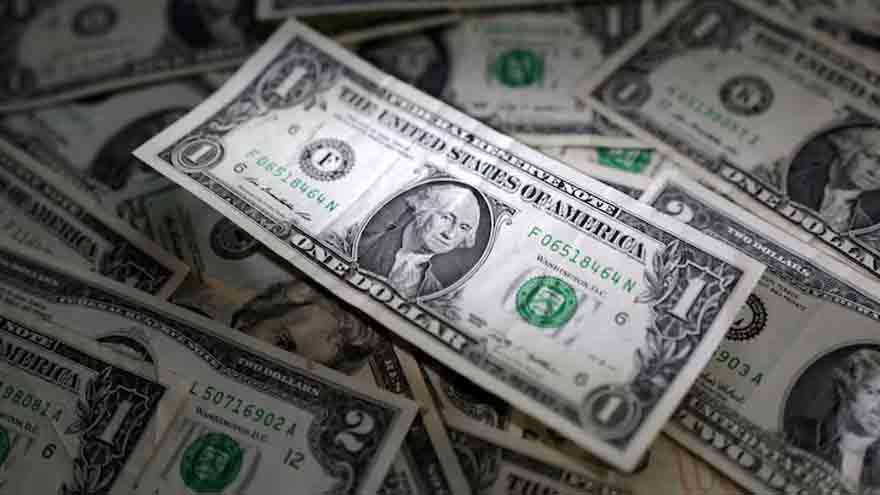
The US dollar remained near an 18-month high in early Asian trading on Monday. Investors weighed escalating Middle East tensions ahead of key US inflation data due later this week.
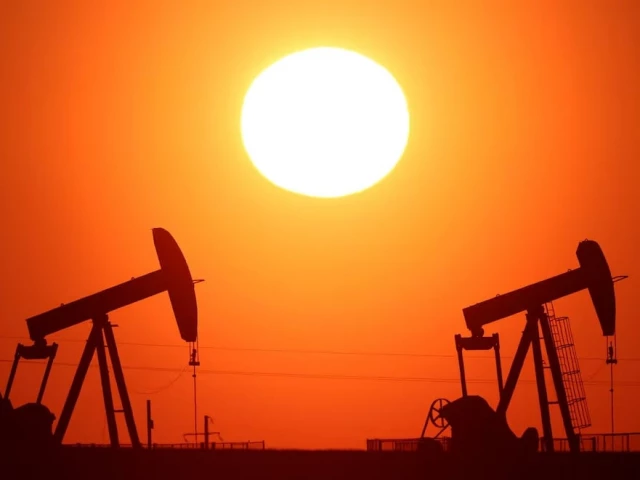
Oil prices fluctuated as Yemen’s Iran-backed Houthis intensified attacks on Saudi Arabia. Two tankers also came under attack over the weekend, adding to concerns about regional energy supplies.
Meanwhile, US President Donald Trump announced an energy ceasefire between Ukraine and Russia on Sunday. Brent crude futures fell 1% to $103.55 per barrel during Asian trading.
The dollar index, which tracks the US currency against six major currencies, slipped slightly to 102.14. However, it remained close to last week’s 18-month peak.
Trading remained subdued as Japanese markets closed for a public holiday. The closure reduced liquidity across the region.
“We expect the Houthis to continue their attacks on Saudi Arabian energy assets, supporting gains in the oil price and the USD,” Commonwealth Bank of Australia analysts said in a note.
The analysts also noted that Iran had confirmed receiving a US peace proposal through intermediaries. However, they added, “we do not expect a breakthrough this week.”
Dollar Movements Against Major Currencies
The US dollar fell 0.14% against the Japanese yen to 158.160 yen.
The Australian dollar traded nearly flat at $0.6988. The New Zealand dollar also remained steady at $0.5614.
The euro gained nearly 0.1% to $1.121. However, it had recorded five consecutive weeks of losses amid concerns about France’s fiscal position and political uncertainty ahead of its 2027 presidential election.
The British pound remained little changed at $1.3245. The offshore Chinese yuan also traded steadily, with the dollar at 6.6927 yuan.
US Inflation Data in Focus
Investors are now turning their attention to Wednesday’s US Consumer Price Index (CPI) report. The release ranks among the final major economic indicators before the Federal Reserve’s late-October interest rate meeting.
Fake Instagram Story Drags Sajal Aly Into India’s Political Debate
Recent data showed that US consumer sentiment weakened further in early October. Rising living costs linked to the Middle East conflict have added pressure on households.
The Federal Reserve raised interest rates last month for the first time since 2023 to curb inflation. Investors are monitoring fresh economic data for clues about its next policy move.
According to the CME FedWatch tool, traders see an 81% probability that the Fed will leave rates unchanged this month. That estimate stood at 51% a month earlier.
Barclays analysts said the dollar’s rally could pause in the near term. They also warned of a possible pullback.
Sharp bond market moves have tightened global financial conditions. Barclays said these pressures could encourage Fed officials to adopt a more reassuring tone before the October meeting, particularly if inflation data comes in below expectations.
Recent bond market sell-offs have also unsettled investors. Borrowing costs have climbed to multi-decade highs in several markets amid concerns about inflation, energy prices, and rising government debt.
Euro Faces Pressure From French Political Risks
The euro has struggled as investors assess France’s fiscal outlook. Political uncertainty ahead of the 2027 presidential election has added to concerns about government finances.
“It is still too early to tell whether higher borrowing costs will be sufficient to impose greater fiscal discipline on the French government,” OCBC foreign exchange strategists said.
The strategists expect the euro-dollar pair to consolidate. They said intense French fiscal and political headlines may ease, but Europe’s structural challenges could limit any euro recovery.
Bitcoin and Ether Edge Higher
Cryptocurrency markets posted modest gains during Asian trading.
Bitcoin rose 0.2% to $83,788.50, while ether gained 0.15% to $2,540.08.
Investors remain focused on geopolitical developments, energy prices, and US inflation data as they assess the outlook for currencies and financial markets.











[…] Dollar Near 18-Month High as Middle East Tensions Lift Market Risks […]