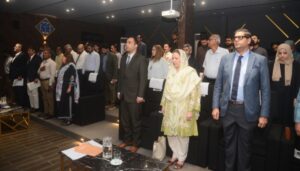
Parliamentary Secretary Osama Leghari announced the plan while speaking as chief guest at the Pakistan Agricultural Coalition’s Agri Connections Conference and Expo in Lahore on Thursday.
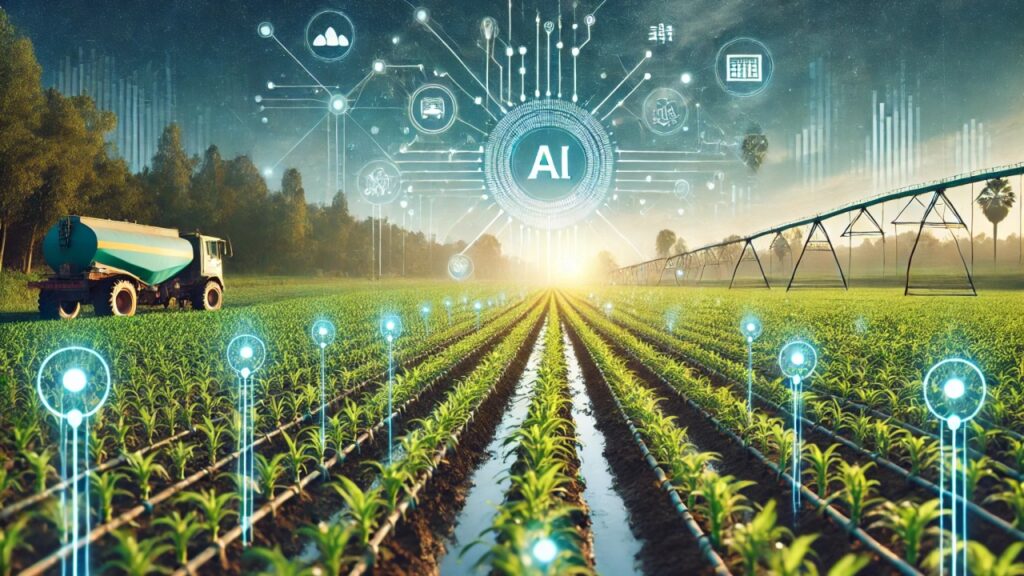
Leghari said the Punjab government aims to lay the foundation for farmers to use AI within the remaining two and a half years of its current term.
He said farmers could use the technology to forecast crop yields and improve productivity.
Government focuses on value chains
Leghari said Punjab had declared the current year the “Year of the Value Chain” under the vision of the provincial government.
He described farmers as participants who buy inputs at wholesale prices, sell their produce at retail and bear transport costs.
The government wants corporate businesses to work directly with farmers and add value to agricultural products, he said.
Leghari said this approach could reduce the role of middlemen. It could also increase farmers’ earnings while creating profitable opportunities for businesses.
Climate and population pose challenges
Advisor to the Federal Finance Minister Adnan Pasha said Pakistan faces major challenges from climate change and population growth.
Auto Policy PAMA Seeks Draft Before PM Approval
He said both issues connect closely with food security, water security and wider social concerns.
Adnan said Pakistan’s population could reach between 370 million and 390 million over the next two decades.
He said the country could turn these challenges into opportunities through long-term planning and investment.
Pakistan cannot finance agricultural transformation through public funds alone, Adnan said. He called for stronger public-private partnerships.
Under such a model, he said, the government could provide the necessary ecosystem and share risks with private investors.
Climate-resilient agriculture needs investment
Adnan said the World Bank was working with Pakistan under its new country partnership framework.
The framework includes a focus on agriculture and climate resilience. It connects water, agriculture, food and nutrition security with private-sector investment.
He said the approach could create a pipeline of investable projects instead of isolated initiatives.
Adnan highlighted climate-resilient seeds as one potential area for investment.
He said Pakistan needs private investment in seed multiplication, processing, testing and distribution. The seeds should withstand heat, drought, floods and disease.
Water management also requires greater attention, he said.
Pakistan cannot achieve sustainable food security if it treats water as an unlimited resource. Adnan called for better on-farm water management and water-saving farming methods.
Small farmers face market barriers
Pakistan Agricultural Coalition Chief Executive Kazim Saeed said the conference aimed to identify ways to accelerate agricultural development.
He said global trade was changing rapidly, with rising protectionism, shifting alliances and new investment patterns.
Kazim said Pakistan needed stronger leadership in agriculture.
He noted that Pakistan imports commodities that farmers have produced for generations, including wheat, cotton and lentils.
He also said the country’s agricultural exports remain below their potential. He attributed the gap partly to low competitiveness and food safety concerns.
World Bank highlights fragmented production
During a session on food security and changing trade dynamics, World Bank Lead Agriculture Specialist Olivier Durand highlighted the fragmented nature of agricultural production in Pakistan.
He said many small farmers have limited links with markets, processors and buyers.
Durand identified market access for small farmers as a major challenge for Pakistan’s agricultural trade.
He also highlighted concerns about access to healthy diets.
According to Durand, wheat and wheat flour remain widely accessible. However, around 60 per cent of Pakistan’s population may struggle to afford a healthy diet.
He said Pakistan had doubled agricultural production over the past 30 years. The country had also narrowed the gap with some middle-income countries in the Middle East and North Africa region.
However, he said Pakistan still lagged behind comparable economies in fruit and vegetable production.
The conference also included a presentation by Siham Jabrane of OCP Morocco on the impact of input markets on food security.
Syngenta Pakistan delivered a presentation during the event. Another session examined ways to deregulate agricultural supply chains in partnership with the International Finance Corporation.