China’s automotive industry is expanding rapidly into international markets, and Pakistan is emerging as an important destination for Chinese vehicle manufacturers.
Chinese automakers are seeking new markets as Western trade barriers increase and domestic overcapacity remains a challenge.
For Pakistan, the shift presents both an opportunity and a risk.
Chinese companies can provide access to electric vehicle technology, batteries, motors, power electronics and software. However, Pakistan must ensure that new investment creates domestic productive capacity rather than simply increasing imports of Chinese components.
The key question is no longer whether Chinese vehicles will gain market share.
It is whether Pakistan can use Chinese technology and capital to move from low-value vehicle assembly towards manufacturing, technology transfer, supplier development and eventually exports.
China Pushes Further Into Global Auto Markets
China’s vehicle exports have reached unprecedented levels as manufacturers expand their international footprint.
New energy vehicles, including battery-electric and plug-in hybrid models, have become an increasingly important part of the export drive.
Western trade restrictions have also encouraged Chinese manufacturers to explore markets across Asia, the Middle East, Africa and other emerging economies.
Pakistan could benefit from this expansion because Chinese companies already possess technologies that would take years for local manufacturers to develop independently.
The challenge is to turn that technological access into domestic capabilities.
Simply importing vehicles or components and assembling them locally would limit the long-term economic benefit.
Chinese Brands Challenge Pakistan’s Traditional Market
For decades, Toyota, Honda and Suzuki dominated Pakistan’s passenger-car market.
Taylor Swift’s Patient Zero Video Sparks Easter Egg Hunt
High tariffs and limited competition helped protect the established manufacturers.
However, economic pressures, foreign exchange shortages and higher fuel costs have created space for new competitors.
Chinese brands such as Haval, Changan, Chery, BAIC and Jetour have expanded their presence, particularly in SUVs and crossovers.
Electric vehicle manufacturers are also entering the market.
BYD, through Hubco subsidiary Mega Motor Company, has expanded into Pakistan, while Changan’s Deepal and Dewan Honri are adding further competition in the EV segment.
The market is therefore becoming more diverse rather than simply shifting from Japanese to Chinese manufacturers.
Japanese companies retain established dealer networks and supplier relationships. Chinese manufacturers, meanwhile, bring faster product cycles and greater experience in electric vehicles and automotive software.
New Energy Policy Creates Fresh Incentives
Pakistan’s New Energy Vehicle Policy 2025-2030 provides a framework for expanding vehicle electrification.
The policy targets a 30% share for new energy vehicles by 2030, rising to 50% by 2040.
It also targets the development of 3,000 public fast-charging stations by 2030.
Other measures include concessional duties on CKD and SKD kits and incentives for EV adoption.
The government has also proposed a carbon levy on conventional vehicles to help finance incentives for cleaner vehicles.
These measures link transport policy with energy security.
Pakistan spends substantial foreign exchange on petroleum imports. At the same time, its electricity sector has faced periods of excess generation capacity.
Greater use of electric vehicles could therefore reduce oil demand while creating additional electricity consumption.
However, the overall foreign exchange benefit will depend on how much of the EV value chain is produced locally.
An imported EV assembled in Pakistan may reduce fuel imports while increasing imports of batteries, electronics and other high-value components.
Localisation Will Determine the Long-Term Gains
Pakistan risks repeating its traditional assembly model with a new technology.
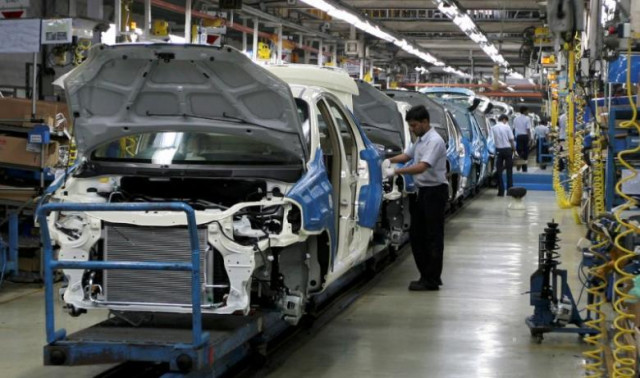
Under that model, imported components enter the country, vehicles are assembled locally and much of the higher-value technology remains abroad.
A stronger strategy would encourage manufacturers to gradually increase local production.
Pakistan does not need to manufacture every EV component domestically.
Battery cells and advanced semiconductors, for example, require enormous scale and capital.
Instead, local industry could initially focus on areas such as battery-pack assembly, wiring harnesses, castings, plastics, vehicle interiors, charging equipment and thermal-management systems.
These areas could create opportunities for local suppliers while building technical expertise.
Charging Network Remains a Major Challenge
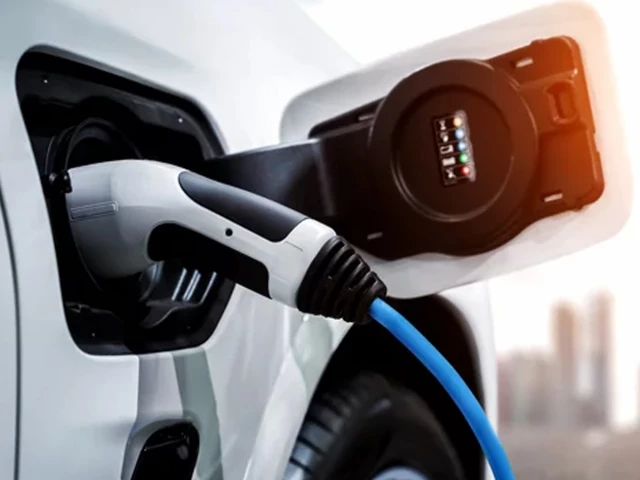
Pakistan’s EV transition will also depend on charging infrastructure.
The target of 3,000 public fast-charging stations requires sustained private investment, grid improvements and common technical standards.
Low EV adoption can make charging stations commercially difficult to operate.
At the same time, limited charging infrastructure can discourage consumers from buying electric vehicles.
Existing petrol stations could eventually become charging locations.
Battery-swapping systems and dedicated charging networks could also prove useful for motorcycles, rickshaws, taxis and commercial fleets.
These segments may offer significant opportunities because they are used intensively and consume large quantities of fuel.
Competition Could Extend Beyond Passenger Cars
Pakistan’s electrification strategy does not need to focus only on premium passenger vehicles.
Motorcycles, three-wheelers, taxis and commercial vehicles represent large and heavily used parts of the transport market.
Electrifying these segments could potentially deliver greater fuel savings per rupee of government support.
It could also create opportunities for local production of batteries, motors, charging systems and other components.
Competition from Chinese manufacturers may also push established Japanese companies to accelerate their own hybrid and electrification strategies.
Greater competition could encourage improvements in pricing, technology and after-sales services.
Pakistan Needs a Manufacturing Strategy
The Automotive Industry Development Policy 2026-31 adds another layer to Pakistan’s automotive strategy by emphasising localisation, investment and exports.
This creates an opportunity for Pakistan to negotiate deeper partnerships with Chinese manufacturers.
Market access could be linked to supplier development, technology transfer, workforce training and export-oriented production.
The objective should be to integrate Pakistani companies into international automotive supply chains.
Pakistan’s domestic market alone may not provide enough scale for a globally competitive EV industry.
An export-focused approach could provide that additional scale.
Chinese manufacturers already operate extensive international supply chains. Pakistani suppliers could potentially become part of those networks if they meet the required standards, cost targets and quality requirements.
From Assembly to Global Supply Chains
The long-term opportunity lies beyond selling more Chinese vehicles in Pakistan.
Pakistan could use Chinese investment to develop local suppliers, technical skills and manufacturing capabilities.
The country could begin with components that are commercially realistic and gradually move into more complex products.
Over time, those capabilities could support exports to regional markets.
China has already developed the technology and manufacturing scale needed for mass EV production.
Pakistan faces a different challenge.
It must capture a meaningful share of the economic value created by that technology.
The success of the EV transition should therefore be measured not only by the number of electric vehicles sold.
It should also be measured by foreign exchange savings, domestic value addition, supplier development, technology transfer, skilled employment and exports.
The bigger story is not simply whether Chinese EVs replace Japanese cars.
It is whether Pakistan can turn China’s automotive expansion into an opportunity to move from assembling vehicles for its domestic market to manufacturing products that compete in global markets.










[…] Can Chinese EVs Help Pakistan Move Beyond Car Assembly? […]