Iran has warned Gulf countries against assisting the US military, saying any support or facilitation for American forces would amount to participation in US military operations as tensions across the region continue to rise.
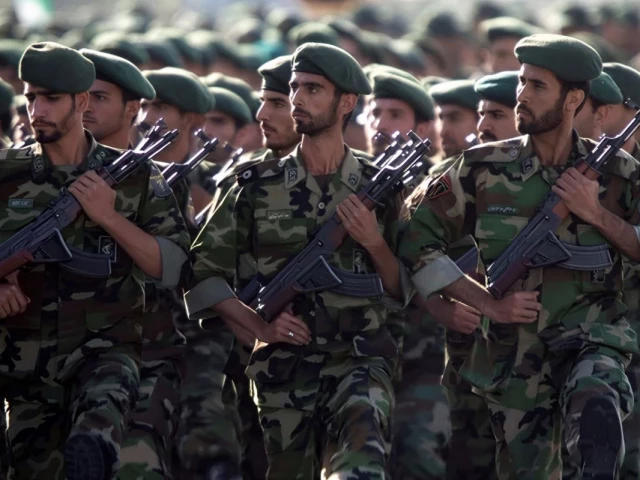
Iranian armed forces chief of staff Ali Abdollahi issued the warning on Wednesday, according to Iran’s Mehr news agency.
“We wish to warn that any assistance or facilitation provided to the aggressor US military amounts to participation in the US military operation,” Abdollahi said.
The warning comes as several Gulf states face growing security concerns linked to the conflict and increasing tensions around the Strait of Hormuz.
South Korea faces pressure over Iran
South Korea also found itself caught up in the wider diplomatic fallout.
Foreign Minister Cho Hyun said US President Donald Trump’s decision to reduce joint military drills appeared partly aimed at pressuring Seoul to support Washington’s efforts in the Iran conflict.
Cho said the US message also involved other unresolved issues between Washington and Seoul.
“I think President Trump’s message includes pressure over several pending issues concerning the South Korean government,” Cho said.
He added that Washington was also sending a message to North Korea and seeking to break the deadlock in the Iran conflict.
Investment commitments could become another source of tension between the allies.
South Korea agreed to invest $350 billion in the United States under a trade deal signed last year. Seoul has yet to announce detailed plans for the investment.
Cho said Washington had provided Seoul with a proposal outlining possible projects. However, South Korea has moved cautiously while assessing commercial viability and completing legal procedures.
The two countries announced Wednesday that they would reduce their annual military drills from 11 days to five. They will also scale back some field training following Trump’s call for a substantial reduction in US participation.
South Korean Unification Minister Chung Dong-young said the move could also indicate that Trump is preparing for another meeting with North Korean leader Kim Jong Un.
UAE reports Iranian missile launches
The United Arab Emirates said it detected two ballistic missiles launched from Iran on Tuesday.
The incident marked the first such report since a May 4 strike on Fujairah port, according to UAE authorities.
The UAE Defence Ministry later said its assessment indicated that the missiles targeted maritime traffic. Both missiles eventually fell into the sea.
Iran rejected the UAE’s account. Foreign Ministry spokesperson Esmaeil Baghaei described the statement as “baseless” early Wednesday.
Following the reported missile threat, the UAE announced a suspension of trade activities, commercial exchanges and financial transactions with Iran until further notice.
The UAE said the escalation threatened regional and international peace and security.
The missile incident came after a 60-day period for US-Iranian peace talks ended Monday without a breakthrough. The failure to reach an agreement has increased concerns about a fresh escalation.
The conflict has also disrupted shipping through the Strait of Hormuz since February, raising concerns about one of the world’s most important energy and trade routes.
The UAE Defence Ministry said it remained fully prepared to respond to threats against the country.
Earlier Tuesday, the UAE Interior Ministry sent an alert to residents after a missile warning. Authorities later told residents that the situation was safe and urged them to resume normal activities.
The UAE has also accused Iran of attacking state-owned ADNOC vessels travelling through the Strait of Hormuz. Iran has not claimed responsibility for those incidents.
Iran’s Revolutionary Guards have previously threatened action against vessels using the strategic waterway if they are linked to Tehran’s adversaries or fail to follow Iranian directives.
Iranian parliament speaker visits Baghdad
Against this backdrop, Iranian Parliament Speaker Mohammad Bagher Ghalibaf arrived in Baghdad on Wednesday for talks with Iraqi officials.
The Iraqi News Agency reported that Ghalibaf travelled with a high-level delegation.
Iraq’s parliament said First Deputy Speaker Adnan Fayhan received the Iranian delegation at Baghdad International Airport.
Before leaving Tehran, Ghalibaf said his visit would focus on expanding cooperation between Iran and Iraq.
The talks are expected to cover economic, political, cultural, social and security issues.
Ghalibaf also planned meetings with senior Iraqi officials, including the Iraqi president, as well as economic and cultural figures.
He described relations between Tehran and Baghdad as “very important and fundamental” to developments across the region.
Ghalibaf also said the Middle East could witness a “new order” in the future.
ABHI Bank Profit Surges as Half-Year Earnings Cross Full 2025 Result
US and UAE discuss Strait of Hormuz
US Secretary of State Marco Rubio also spoke with UAE National Security Adviser Sheikh Tahnoon bin Zayed Al Nahyan on Tuesday.
The US State Department said the officials discussed several regional security issues, including Lebanon and continued coordination against Iran and groups Washington describes as terrorist proxies.
Rubio also stressed the importance of maintaining freedom of navigation through the Strait of Hormuz.
The waterway remains central to the regional crisis because of its importance to global energy and maritime trade.
The UAE had suspended trade and financial transactions with Iran earlier Tuesday after reporting the two missile launches.
Cargo ship damaged off Yemen
Regional maritime security concerns also extended beyond the Gulf.
The UK Maritime Trade Operations centre said a cargo ship was struck by multiple unidentified projectiles off Yemen’s western coast on Tuesday.
UKMTO said it received a report of the incident around 40 nautical miles, or 74 kilometres, southeast of Mokha.
The vessel was unmanned when the incident occurred. The damage was severe enough to result in what UKMTO described as a “complete constructive loss.”
Authorities are investigating the incident.
UKMTO urged ships travelling through the area to remain cautious and report any suspicious activity.
The series of incidents highlights the widening security risks facing shipping routes and governments across the Middle East as diplomatic efforts struggle to contain tensions between Iran and the United States.









[…] Iran Warns Gulf States as Regional Tensions Rise Over US Military Operations […]