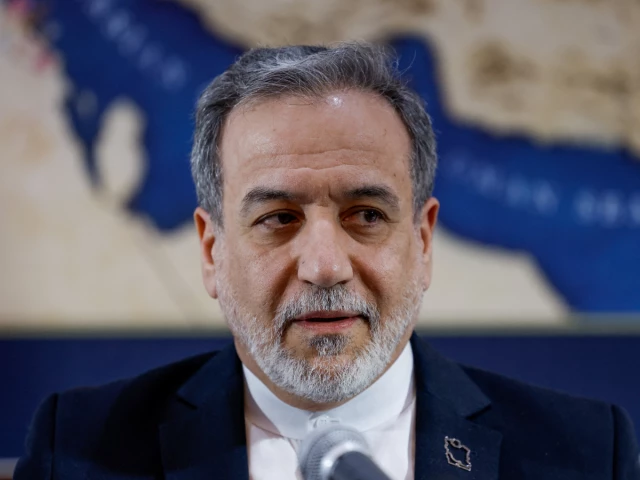
Iran-US tensions intensified on Tuesday as Foreign Minister Abbas Araghchi claimed that Washington had sought negotiations with Tehran just weeks after US President Donald Trump demanded Iran’s “unconditional surrender” at the start of the conflict.
Speaking at a televised press conference carried by Iranian state television, Araghchi said Trump had initially made clear that Washington wanted Iran to surrender, but later sought negotiations after the conflict continued.
“The US President wrote two words at the beginning of the war: ‘Unconditional surrender’,” Araghchi said, according to Al Jazeera. He added that the same side was seeking negotiations about 20 days later.
Araghchi also said Iran had demonstrated its ability to withstand pressure from the United States and its allies.
He said foreign officials had told Iranian representatives that Tehran had surprised the international community by resisting the United States. Araghchi argued that Iran had faced the US with support from Israel, Western countries and other states.
The Iranian foreign minister’s remarks came as Tehran continued diplomatic discussions with Oman over the future of maritime traffic through the Strait of Hormuz, a crucial route for global energy shipments.
Araghchi held a telephone conversation with German Foreign Minister Johann Wadephul on Monday and blamed the insecurity surrounding the waterway on what Tehran described as US and Israeli military aggression against Iran.
He briefed Wadephul on consultations with Oman aimed at establishing a safe route for maritime traffic through the strategic waterway. The two ministers also discussed bilateral relations and wider regional and international developments.
Araghchi called on the international community to hold Washington accountable for the security and economic consequences of the disruption in the Strait of Hormuz.
He maintained that restoring security in the waterway required an end to US military actions, what Iran describes as a maritime blockade and other measures that Tehran says violate previous commitments.
The diplomatic dispute comes as the possibility of a broader agreement between Washington and Tehran remains uncertain. Trump has continued to keep military escalation on the table while demanding compensation from Iran for damage and deaths that he attributes to Tehran.
Trump has also claimed that the United States controls the Strait of Hormuz and that US forces have cleared mines from the waterway. Iran, however, has maintained that Washington must meet its demands, including an end to military pressure and sanctions, before Tehran agrees to fully restore maritime access.
The standoff has already affected global energy markets. Oil prices jumped more than 5% on Monday after Trump said a major escalation against Iran remained possible, with Brent crude reaching its highest level in nearly two weeks.
The strategic waterway is particularly important because a significant share of global oil and liquefied natural gas shipments traditionally passes through the Strait of Hormuz.
Iranian officials have also continued to accuse Israel of escalating regional tensions. Foreign Ministry spokesman Esmaeil Baghaei on Tuesday condemned Israeli attacks in southern Lebanon and criticised what he described as silence by the United Nations Security Council.
Baghaei said Israeli attacks had killed and injured Lebanese civilians and damaged homes and infrastructure. He accused the international community, particularly the Security Council, of failing to prevent further violations of Lebanon’s territorial integrity and sovereignty.
He also criticised the United States for what Tehran considers comprehensive support for Israel across Lebanon, the occupied Palestinian territories and the wider region.
Baghaei expressed solidarity with the Lebanese people and praised what he described as their resistance against Israeli aggression and occupation.
Israeli aircraft reportedly struck areas near Al-Mansouri in southern Lebanon’s Tyre district, while Israeli artillery targeted the Ali al-Taher Hill area in Nabatiyeh governorate.
Meanwhile, Iran is attempting to restore energy infrastructure damaged during the conflict. The Iranian oil ministry said the country expects to restore 95 million cubic metres per day of natural gas production capacity by the end of September.
Oil Minister Mohsen Paknejad said the recovery would follow repairs to damaged gas-processing facilities in Assaluyeh. Iran lost around 230 million cubic metres per day of gas production capacity after strikes damaged energy infrastructure during the conflict.
Paknejad said other gas-processing facilities had used spare capacity to offset much of the shortfall while reconstruction work continued at four damaged plants.
He said debris had been removed, reconstruction systems were operational and contractors had begun work. Some restored capacity, however, may not be available during the winter, requiring Iran to carefully manage both gas production and domestic consumption.
At the same time, US media reported that Trump secretly changed aircraft during his departure from Türkiye last month following an alleged Iranian assassination threat.
According to The Washington Post, Trump initially boarded an older Air Force One aircraft in Ankara before being transferred to a smaller Air Force C-32A using an airport catering vehicle.
The report said the manoeuvre was intended to conceal the president’s location from the public, journalists and some White House personnel.
Trump had travelled to Ankara for a NATO summit on July 7 and 8 when the alleged threat emerged. The reported aircraft transfer came after US forces resumed strikes against Iran following a breakdown in negotiations between Washington and Tehran.
White House Communications Director Steven Cheung defended the security measures, saying the aircraft used by the president had been equipped with advanced security protections and that officials were using available measures to protect him.
The wider conflict has also affected US military operations in the region. Israeli media reported that the United States was reducing the number of aerial refuelling aircraft stationed at Ben Gurion Airport near Tel Aviv.
Channel 12 reported that the number of US tanker aircraft had moved closer to levels seen during an earlier ceasefire, when around 20 aircraft were reportedly stationed at the airport.
The report did not specify how many US tanker aircraft remained at the airport at the height of the conflict.
The reported reduction came amid speculation that Washington and Tehran could be moving closer to an understanding on navigation through the Strait of Hormuz.
US aircraft have used Ben Gurion for aerial refuelling since the conflict began. Israeli authorities previously raised concerns that the military aircraft were occupying space needed for civilian operations.
Israel temporarily prevented additional US aerial refuelling aircraft from landing at Ben Gurion on July 14 after their reported number reached 33. The decision was reversed the following day after objections from US Central Command.
Pinkchyu Wins Drake’s Speed Dating Show After Asking Rapper to Bark for Her
The competing diplomatic and military signals have left negotiations over the Strait of Hormuz in a fragile position.
Iran has said discussions with Oman were progressing constructively and that the two sides had reached an understanding on a proposed shipping-route map. Technical issues involving safe navigation, environmental protection, maritime services and efforts to combat crime remained under discussion.
Tehran has also demanded an end to sanctions and military threats as part of any broader arrangement.
US officials, meanwhile, have rejected the idea of an agreement that would allow Iran to charge fees for access to the waterway.
The latest developments indicate that the dispute over the Strait of Hormuz extends beyond shipping. The waterway has become a central bargaining point in the wider confrontation between Washington and Tehran, with its future directly linked to energy prices, regional security and the prospects for ending the conflict.
As diplomatic contacts continue, both sides remain publicly divided over the terms of any settlement. Iran insists that military pressure and sanctions must end, while Trump continues to threaten escalation and demand compensation from Tehran.
The competing positions have raised concerns that negotiations could remain stalled, keeping pressure on energy markets and prolonging uncertainty across the Middle East.










[…] Iran-US Tensions Deepen as Araghchi Says Washington Sought Talks After Trump’s Surrender Demand […]