Islamic Finance can play a transformative role in strengthening Pakistan’s economic growth by improving cross-border investment links with regional and Gulf markets, according to a new report released by Standard Chartered on Thursday. The study highlights growing opportunities to connect liquidity-rich economies with countries seeking long-term capital through Shariah-compliant financing.
The report, titled Islamic Banking for Financial Institutions: The Islamic Finance Connector Era, estimates that Islamic Finance assets have reached nearly $6 trillion across almost 100 jurisdictions, underscoring the sector’s expanding influence on global trade, investment and infrastructure development.
AKU Manual of Pediatrics Launched to Improve Child Healthcare Across Pakistan
According to the report, South Asia remains one of the world’s most underutilised destinations for Islamic capital despite its strong economic potential. It identifies Pakistan as a key market that could benefit from stronger financial connectivity with the Gulf Cooperation Council (GCC) and other fast-growing economies by attracting greater investment and supporting regional trade.
Khurram Hilal, Chief Executive Officer of Group Islamic Banking at Standard Chartered, said Islamic finance is becoming an increasingly important driver of international trade and capital flows.
“As trade routes become more interconnected, financial institutions need recognised financing structures and operational capabilities that allow Shariah-compliant capital to move efficiently across borders,” he said.
Rehan Shaikh, Chief Executive Officer and Head of Coverage at Standard Chartered Pakistan, said expanding financial links between the GCC, South Asia and other emerging markets would create new opportunities for Pakistani businesses to secure investment and access a wider range of Islamic financing solutions.
The report noted that although global Islamic finance liquidity continues to grow, the distribution of capital remains uneven. It found that only 6% of global Sukuk financing currently reaches South Asia and Africa, highlighting significant potential for increased cross-border investment in developing economies.
Beyond traditional financing, the study identifies private credit, digital infrastructure and tokenisation as emerging drivers of the next phase of Islamic finance, helping improve access to capital while strengthening regional financial integration.
Hilal said the challenge facing many economies today is not a shortage of liquidity but the ability to connect available capital with investment opportunities across borders. He added that institutions capable of building trusted links between investors, markets and digital financial infrastructure would be best positioned to support sustainable economic growth.
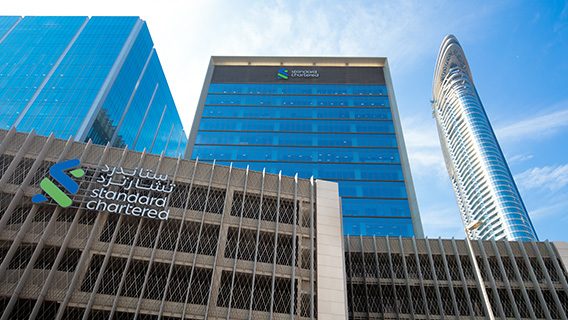
Standard Chartered also highlighted its long-standing presence in Pakistan, noting that it became the first international bank to receive an Islamic banking licence in the country. The bank said it continues to facilitate cross-border trade, investment and financing through its network spanning Asia, Africa and the Middle East.
The report concludes that stronger Islamic finance corridors could play an increasingly important role in supporting Pakistan’s long-term economic development while enhancing regional trade and investment connectivity.








[…] Standard Chartered Report Sees Islamic Finance Driving Pakistan’s Regional Growth […]