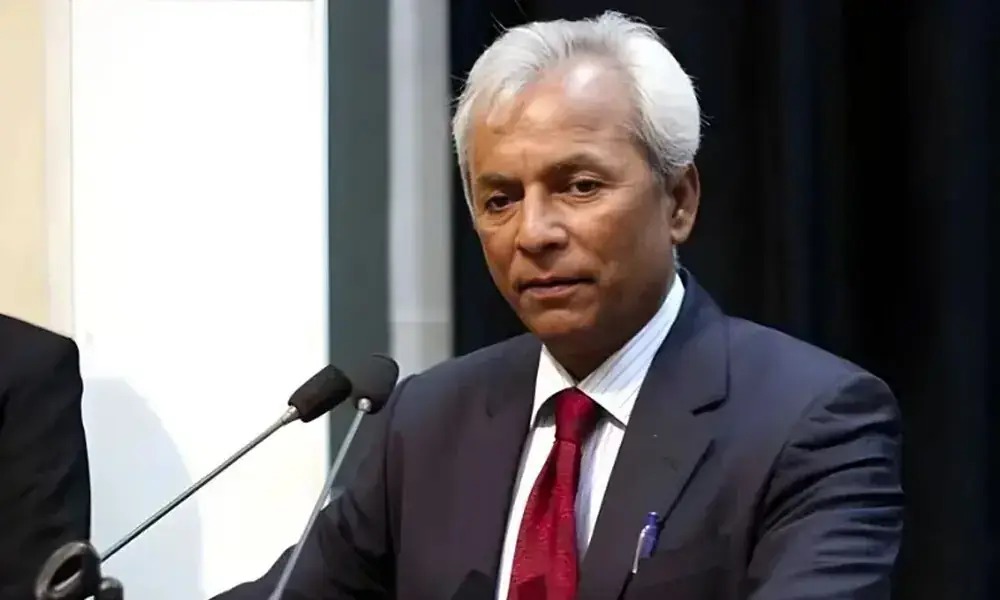
Governor Sindh Syed Nehal Hashmi has urged Pakistan to invest in youth creativity, research and technological innovation to strengthen national self-reliance and reduce dependence on foreign technologies.
He said Pakistani students and researchers have the potential to develop modern scientific and technological solutions if universities provide them with the necessary resources, opportunities and institutional support.
Hashmi expressed these views at the closing session of a two-day international conference titled “Reimagining Society in the 21st Century: Technology, Innovation and Sustainable Transformation.” The University of Karachi (KU) hosted the event at its Chinese Teachers’ Memorial Auditorium on Thursday.
The Office of the Dean of Arts and Social Sciences organised the conference in collaboration with the university’s Office of Research, Innovation and Commercialization.
Governor Calls for Greater Investment in Youth Innovation
Hashmi said Pakistan had considerable potential in research, innovation and modern technology. He urged the country to move beyond the perception that technological breakthroughs could only emerge from countries such as Japan, India and Russia.
He expressed confidence that Pakistani youth could make significant contributions to global science and technology if they received appropriate opportunities, resources and institutional support.
The governor also highlighted the importance of mentorship in developing students’ creative abilities. He expressed concern that unsupportive attitudes among some teachers and supervisors could hinder students’ progress.
He urged educators to guide students, help them turn ideas into practical innovations and support them in obtaining legal protection for their inventions, including patents.
AI Should Support Critical Thinking, Not Replace It
Addressing the role of artificial intelligence (AI), Hashmi described the technology as an important resource for accessing knowledge and supporting research.
However, he cautioned students against relying entirely on AI. He stressed the need to combine technology with independent thinking, sound judgment, creativity and critical analysis.
He also highlighted the importance of research and the pursuit of knowledge in Pakistan’s intellectual and religious traditions. Students, he said, should use technology to strengthen their academic work rather than become dependent on it.
Hashmi expressed confidence in KU Vice Chancellor Professor Dr Wasim Qazi, saying he believed the vice chancellor could help restore the university’s standing among leading international institutions.
He also hoped that KU would once again attract international students and produce graduates capable of advancing Pakistan through research and technological innovation.
KU Vice Chancellor Stresses Research With Practical Impact
KU Vice Chancellor Professor Dr Wasim Qazi said universities must prepare students to use modern technology and AI effectively, positively and responsibly.
He said higher education institutions should do more than impart knowledge. They must connect research with public welfare, social challenges and national development.
Qazi highlighted poverty, limited access to clean water, inadequate basic healthcare and youth development as areas requiring stronger contributions from universities, teachers and students.
He noted that KU researchers were working in fields such as food technology, agricultural technology and biotechnology. He stressed that researchers and relevant institutions should translate these efforts into practical outcomes that improve people’s lives.
He also called on universities to promote social awareness, responsibility and a spirit of public service among students to help build a more developed and welfare-oriented society.
KU Plans Academic Activities for Anniversary Celebrations
Qazi said KU was organising academic and research activities to mark its 75th anniversary and the 150th birth anniversary of Quaid-e-Azam Muhammad Ali Jinnah.
He said the Pakistan Studies Centre had planned programmes from August to December, with the concluding ceremony scheduled for December 14. The activities aim to encourage scholarly discussion on Pakistan’s history, ideological identity and development.
The vice chancellor also said the university was preparing to celebrate its 75th anniversary in the second week of December.
Academic Expert Warns Against Misusing AI
Professor Dr Sikandar Mehdi, former chairman of KU’s Department of International Relations and an expert on international affairs, urged students and young teachers to prioritise critical thinking and intellectual development when using AI.
He warned that copying and pasting AI-generated material into assignments and research papers might appear to offer a shortcut to better grades, but could undermine students’ learning and creativity.
“This practice damages the habit of hard work, creative abilities, and intellectual growth, while also depriving a person of the opportunity to employ his true potential,” he said.
Mehdi also acknowledged that AI could make books, scholarly material and research information more accessible, particularly for people who could not afford expensive publications.
He stressed that students and young teachers should compare the experiences and perspectives of different societies with the conditions in Pakistan. Such analysis, he said, could improve understanding of complex global developments and help inform effective solutions to local challenges.
IT Adviser Encourages Positive Use of Technology
Ali Rashid, Special Assistant to the Chief Minister of Sindh on Information Technology, urged students to maintain a positive outlook and make effective use of modern technology.
He said the impact of social media depended largely on how people used it. Responsible use of digital platforms, he added, could create opportunities for learning, research and personal development.
Rashid also stressed that an academic degree alone was not enough to meet the demands of the modern workplace. Students must acquire practical and professional skills alongside formal education.
Earlier, Aegis Group CEO Syed Farhan Ahmed, Oil Companies Advisory Council General Secretary Dr Nazir Abbas Zaidi and other speakers also addressed the conference.
The discussions highlighted the role of universities, responsible technology use, critical thinking and applied research in supporting Pakistan’s development and strengthening its capacity for innovation.