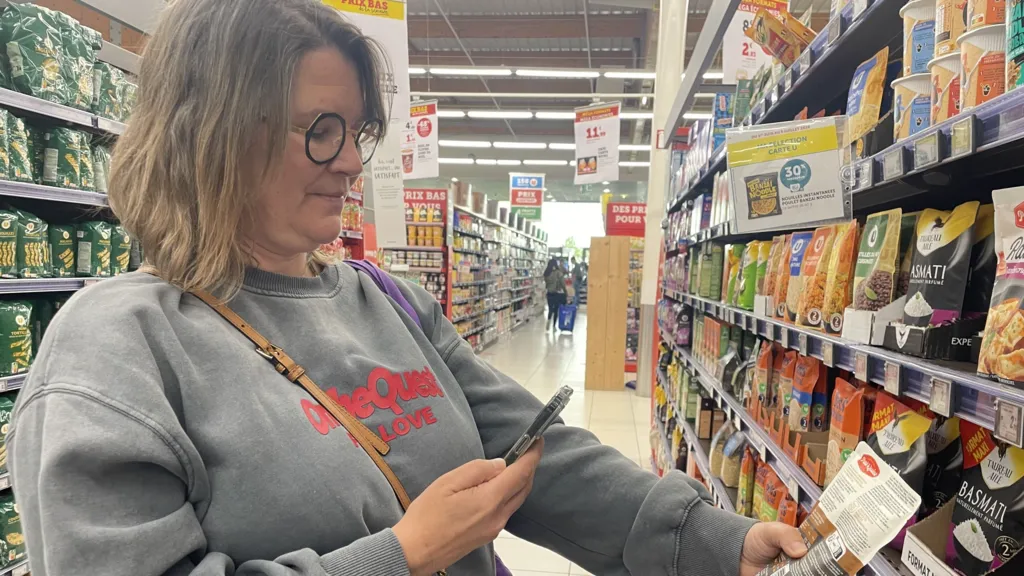
Standing in the biscuit aisle of a supermarket west of Paris, Nathalie points her smartphone at a packet of her son’s favourite biscuits. Seconds later, the Yuka app flashes a score of 0 out of 100 in red.
Sam Neill Jurassic Park star dies aged 78
The app warns that the biscuits contain high levels of sugar and saturated fat, along with several additives. One of them, E450, is linked to potential health risks when consumed in excess.
“Honestly, that they can put this sort of thing in food aimed at children drives me nuts!” Nathalie says.
The app recommends a healthier organic alternative made with whole wheat, fruit and fibre. Although she often follows the advice, Nathalie admits it usually increases her grocery bill.
Millions rely on the app
Yuka, launched in France in 2015, allows users to scan barcodes on food, cosmetics and personal care products. It instantly rates products with a simple colour system: green for healthier choices, yellow for moderate options and red for products that score poorly.
The platform now includes more than six million products and adds around 1,200 new items every day.
Today, Yuka has about 85 million users across 12 countries, including the United States, Canada, Australia and several European nations.
The United States accounts for its largest user base with around 28 million users. France follows with six million, while the United Kingdom has roughly five million.
Among its prominent supporters is US Health and Human Services Secretary Robert F. Kennedy Jr., who has publicly described it as his favourite app.
France’s food transparency movement
Yuka forms part of a broader movement in France that promotes healthier food choices through greater transparency.
In 2012, French programmer Stéphane Gigandet launched Open Food Facts, a free, community-driven database that now contains information on more than four million food products worldwide.
Later that year, France introduced the Nutri-Score labelling system, developed by nutrition researcher Serge Hercberg. The voluntary front-of-pack label gives packaged food an overall nutritional grade, making it easier for shoppers to compare products.
Unlike Nutri-Score, Yuka also evaluates additives and highlights ingredients commonly associated with ultra-processed foods.
Experts highlight strengths and limits
Food policy experts say digital tools can help consumers make informed choices but acknowledge that many shoppers lack the time or motivation to analyse every purchase.
Serge Hercberg also believes these tools mainly benefit more educated and affluent consumers rather than the groups most affected by diet-related health problems.
Yuka says it bases its ratings on scientific research and publicly available data. The company also incorporates Nutri-Score information into its assessments.
Chief Executive Julie Chapon says Yuka earns revenue through premium subscriptions rather than advertising or payments from food companies.
“We have never accepted money from brands to influence our ratings or recommendations,” she says.
Retailers respond to consumer demand
Yuka says its influence extends beyond consumers and has begun reshaping the food industry.
A company survey of 20,000 users in 2024 found that 94% put products back on supermarket shelves after receiving a poor rating.
French supermarket chain Intermarché says it has reformulated more than 3,000 own-brand products since 2017 to improve their Yuka scores. The retailer has also removed around 160 additives from its products and updated about 300 recipes in the past year alone











[…] Yuka app How a French shopping tool is changing the way people buy food […]